



Blue Glass Perfume Bottle
A blue glass perfume bottle brings functional vanity history into modern interiors through coloured vessels mounted in sterling silver and enamel.
Blue Glass Perfume Bottle
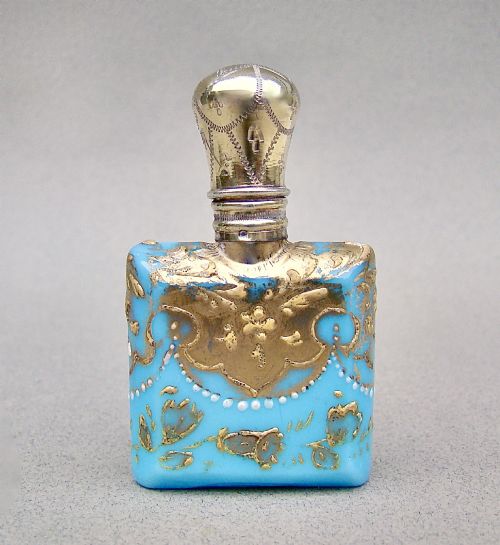
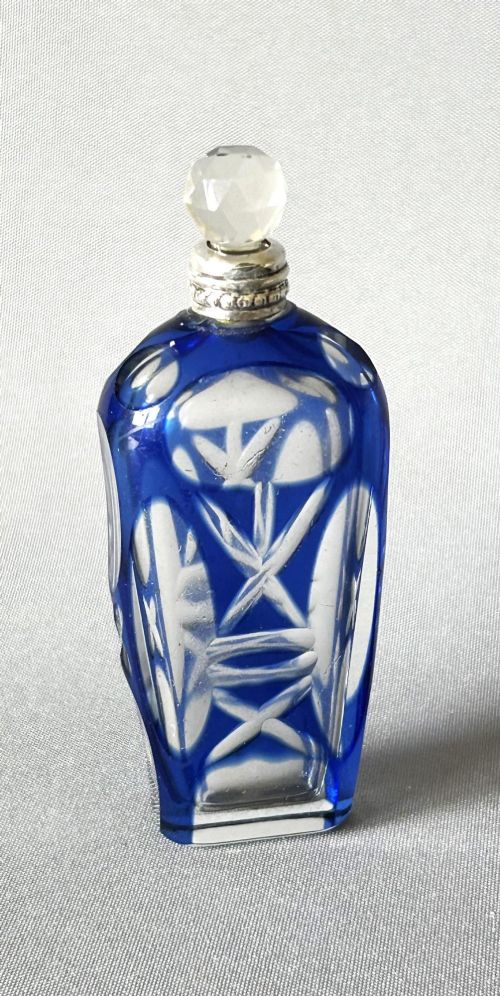
A blue glass perfume bottle spans production periods from the nineteenth century into the twentieth century, taking forms such as scent bottles, vanity glassware, and small vessels. Victorian examples commonly feature heavy cut glass paired with sterling silver mounts and overlay work, while later twentieth-century iterations lean towards Art Deco opalescent designs.
The pieces on this page originate predominantly from Victorian, Edwardian, and Art Deco eras, alongside mid-century studio examples and French production. Buyers encounter everything from pocket chatelaine scent bottles to larger dressing table bottles.
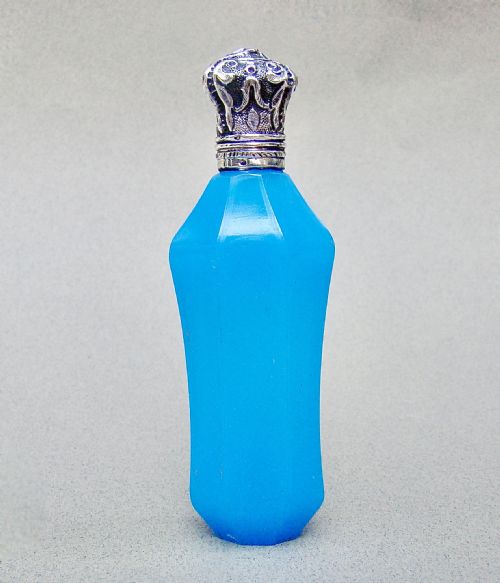
Makers and regional styles vary widely across the selection, encompassing French opalescent moulded glass, Bohemian production, and British sterling silver mounted wares. These vessels served practical dressing table roles before surviving as decorative collectibles.
What varies in quality
Quality reveals itself in the crispness of the glass cutting and the precision of the silver overlay work fitted to the exterior. Finer pieces demonstrate meticulous hand-finishing on both the glass body and any metal mounts, with secure hinges and well-fitted stoppers.
The weight and clarity of the material distinguish standard production from superior examples, particularly where opalescent effects or layered cased glass require high technical skill during the blowing process.
Blue Glass Perfume Bottle Retail Price Guide 2026
Typical asking prices for blue glass perfume bottle among the pieces listed under this phrase on Sellingantiques today, from the lower quarter to the upper quarter. They describe what is for sale here now, not the wider market.
Listings feature Victorian, Edwardian, and Art Deco periods alongside materials including opalescent glass, sterling silver, and enamel.
Rene Lalique·Sabino·Karl Palda·Franchini And Bigaglia·Laugharne Glass
The Blue Glass Perfume Bottle Glossary
- Opaline Glass
- Opaque or semi-translucent glass that displays a milky appearance, frequently produced in shades of blue during the nineteenth century.
- Silver Overlay
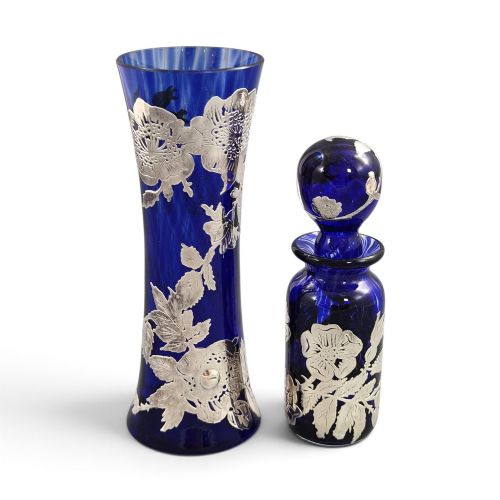
- A technique where sterling silver is applied directly onto the surface of a glass vessel in decorative patterns.
- Chatelaine
- A decorative belt hook worn with suspended accessories, including miniature perfume bottles designed for portable use.
- Guilloche
- An intricate mechanical engraving technique used on metal surfaces beneath translucent enamel layers.
- Unguentaria
- Small ancient glass vessels used for holding oils or perfumes, recovered from archaeological contexts.
Blue Glass Perfume Bottle: Frequently Asked Questions
How do I date a blue glass perfume bottle?
Dating relies on combining stylistic markers with hallmarks on the silver mounts where present. Victorian pieces often feature heavy cut overlay, whereas Art Deco examples display moulded opalescent figures or geometric lines.
Material composition also assists attribution, as nineteenth-century opaline differs significantly from mid-century studio output or earlier production techniques.
Are the stoppers original to the bottles?
Many surviving examples retain their matching original stoppers, which were ground to fit individual bottlenecks during manufacture. Checking the interior ground rim helps determine if the stopper belongs to the piece.
Replacements do occur due to the fragility of glass, so careful inspection of wear marks around the neck provides useful context.
What is silver overlay glass?
Silver overlay involves bonding molten or sheet silver directly onto the exterior of a glass bottle. Artisans cut patterns through the silver to expose the blue glass beneath.
This technique gained popularity during the Victorian period and continued into the early twentieth century across British and European workshops.
How were these bottles used historically?
These vessels held liquid scents for personal grooming on dressing tables or inside travelling vanity cases. Smaller chatelaine versions hung from waist belts for access outside the home.
Their dual role as functional containers and decorative vanity items ensured varied designs ranging from simple pocket vials to heavy display pieces.