




Geometric Cut Glass Bottle
A geometric cut glass bottle brings heavy Art Deco sparkle to a dressing table, prized for sharp facets and striking period colour.
Geometric Cut Glass Bottle
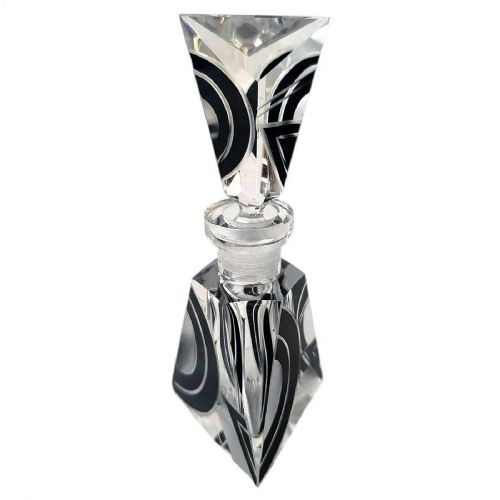
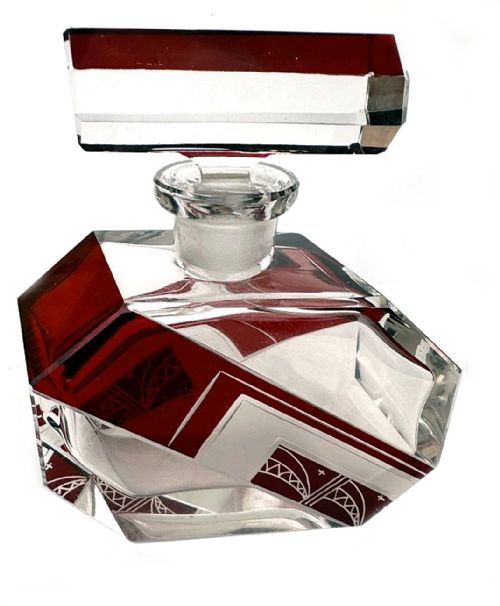
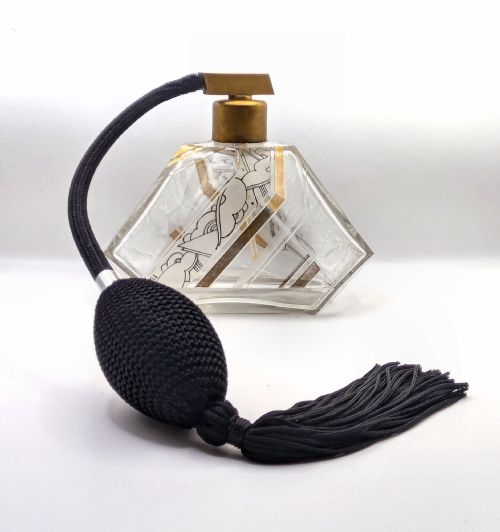
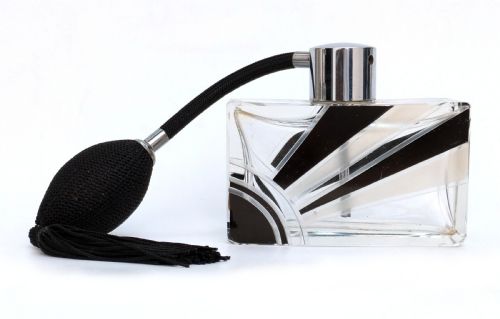
When you search for a geometric cut glass bottle, you enter the distinct world of Art Deco vanity items and barware from the nineteen-thirties. These pieces take the form of perfume bottles, atomisers, decanters and matching powder boxes designed with sharp angles and clean lines.
The version you are most likely to meet on this page is a Czech or English dressing table piece in cut glass, crystal or coloured glass, often finished with enamel, chrome or silver mounts. They serve as functional containers that double as sculptural objects of display.
How they were made
Makers cut deep geometric patterns into heavy glass blanks using abrasive wheels to create sharp refractions of light across the surface. This heavy cutting demands considerable precision from the glasscutter to maintain symmetry across complex multi-sided forms.
Many examples combine clear or coloured cut glass with applied black enamel, chrome fittings or silver collars typical of the Art Deco period. Atomiser versions integrate mechanical bulb sprays, while decanters pair the cut body with a matching stopper.
Some dressing table bottles arrived with matching powder boxes so a lady could powder her nose in matching geometric style.
What varies in quality
The quality of a piece rests primarily on the depth and crispness of the glass cutting, where sharper facets and thicker crystal blanks produce a heavier weight and a brighter visual catch. Finer examples display meticulous alignment between the geometric cuts and any applied enamel or metal mounts.
Material choice also distinguishes the range, moving from standard moulded glass up to heavy hand-cut crystal and decorated coloured glass. The presence of documented workshop attribution further elevates the standing of an individual piece.
Karl Palda
The Geometric Cut Glass Bottle Glossary
- Art Deco
- A design style of the nineteen-thirties characterised by geometric shapes, streamlined forms and sunray motifs. It represents a departure from florid historical styles into modernism.
- Atomiser
- A perfume bottle fitted with a spray mechanism and squeeze bulb. This device creates a fine mist of scent from the liquid inside.
- Decanter
- A vessel used for holding and serving liquids such as wine or spirits. These pieces feature a fitted stopper to preserve the contents.
- Enamel
- A glassy substance melted onto the surface of glass or metal for decoration. It provides bold areas of flat colour.
- Crystal
- A type of glass containing mineral additives that increase clarity and weight. This material allows for deeper and sharper facet cutting.
Geometric Cut Glass Bottle: Frequently Asked Questions
How do I clean a vintage perfume bottle?
Wash the glass gently in warm soapy water using a soft bottle brush to remove old residue. Avoid submerging metal mounts or enamel work to protect the vintage finishes.
Allow the piece to dry completely upside down before replacing any stopper or atomiser hardware. Harsh chemical cleaners will strip the original surface sheen.
Are these bottles safe for daily use?
Most of these items function adequately for holding liquids, though vintage atomiser mechanisms often require replacement rubber bulbs to operate correctly. Decanters hold liquids securely if the glass stopper fits snugly into the neck.
Treat the heavy cut glass with care around hard countertops to prevent chipping the sharp facets. Display them safely away from direct, prolonged heat sources.
How can I date an Art Deco bottle?
Examine the stylistic markers such as sunray motifs, stepped geometric cuts and the use of contrasting black enamel alongside clear crystal. These design elements point directly to the nineteen-thirties aesthetic.
Check for maker signatures or country of origin marks etched into the base. Construction methods like hand-cut facets rather than mould seams also help confirm the period.
What is the difference between glass and crystal?
Crystal contains added minerals that give the material a higher density and a much clearer transparency than standard glass. This extra weight allows cutters to achieve sharper and deeper geometric facets.
When struck gently, crystal produces a clear resonant ring rather than a dull thud. It catches and refracts light with greater brilliance across every angle.