
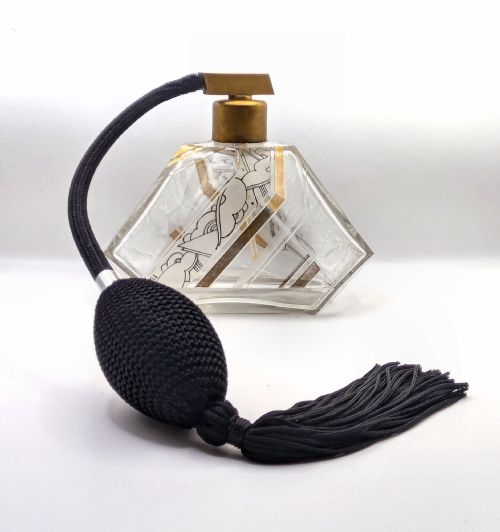


Cut Crystal Scent Bottle
These cut crystal scent bottle pieces combine brilliant faceted glass with precious metal and enamel mounts for the dressing table.
Identifying your cut crystal scent bottle
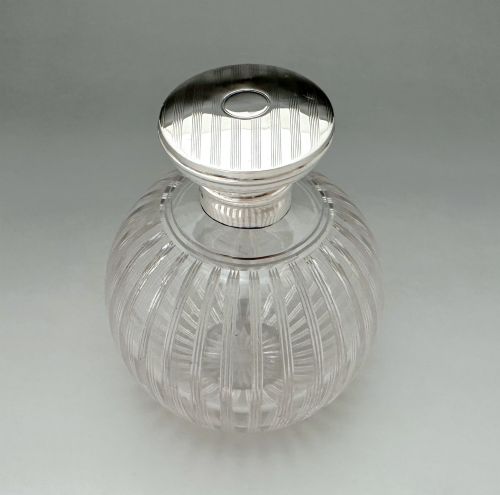
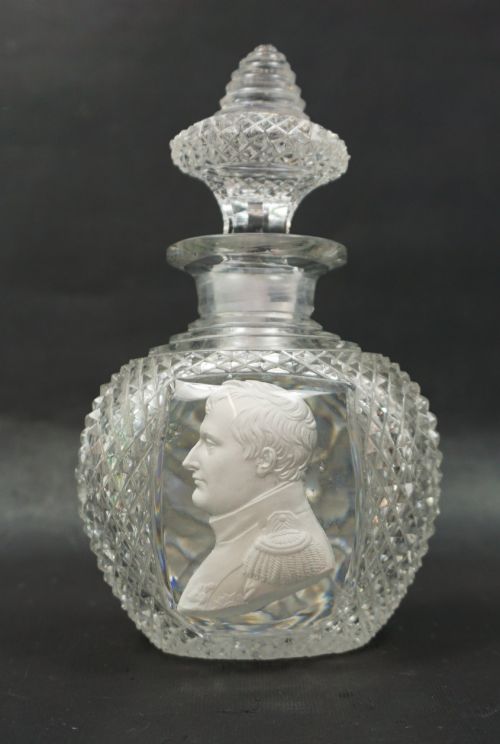
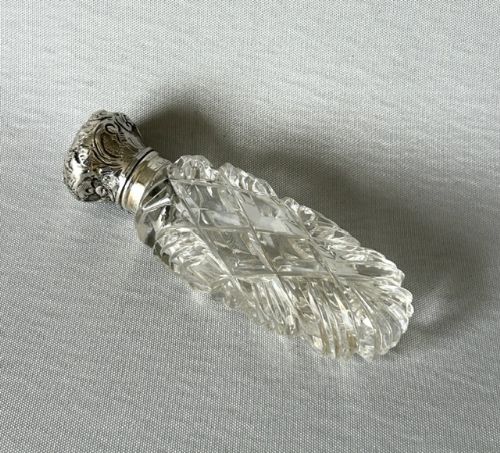
A cut crystal scent bottle brings together faceted glass containers and decorative metal collars from the Edwardian period and the early decades of the twentieth century. The forms range from compact pocket companions to substantial dresser pieces designed to hold perfume securely.
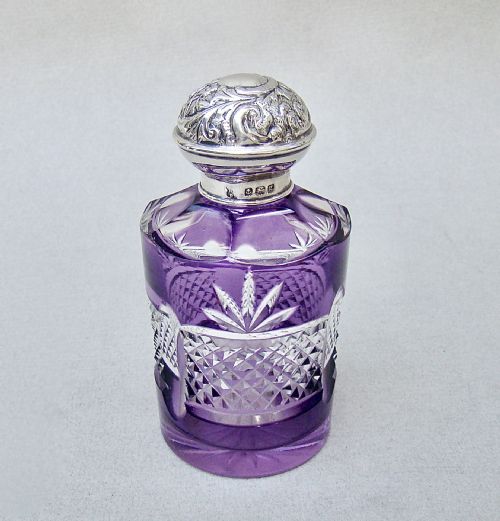
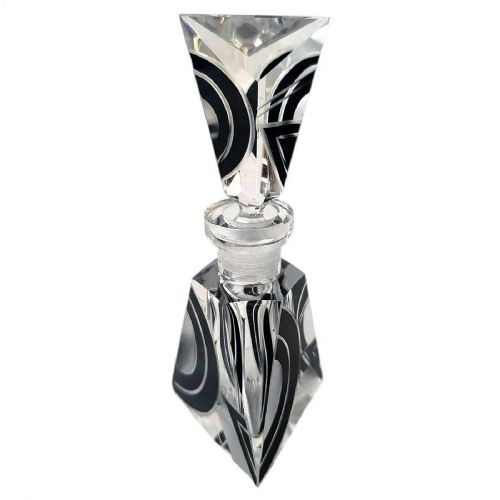
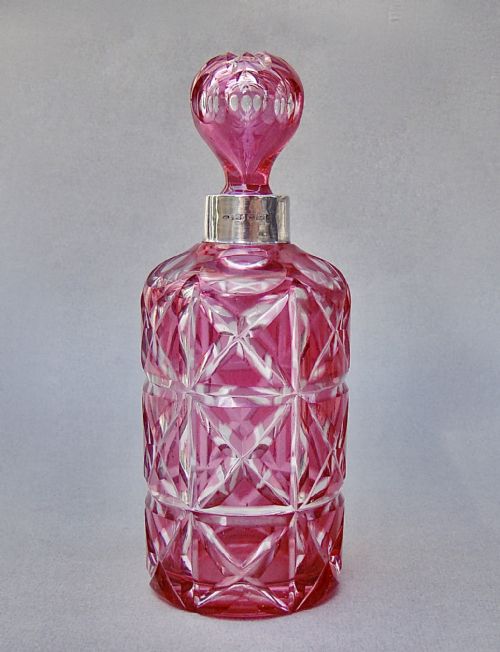
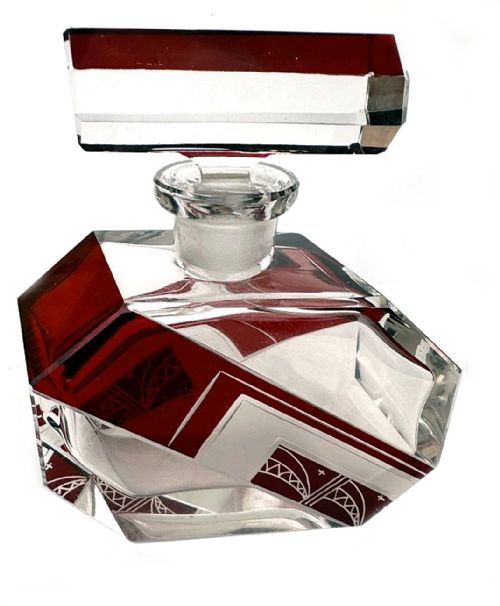
You will most frequently encounter Edwardian examples alongside pieces from the 1920s and 1930s, reflecting both traditional silver mounts and bolder Art Deco styling. These items span simple clear glass bodies to more elaborate vessels featuring coloured overlays or intricate geometric cutting.
The materials paired with the crystal include sterling silver, tortoiseshell, enamel, and occasionally gold leaf or emerald flashed glass. Makers such as George Unite and Karl Palda appear across the various production eras, marking both British silver workshops and continental glasshouses.
Materials and construction
The glass bodies are formed using cut glass and cut crystal techniques, shaping deep facets that catch the light from multiple angles. Metalwork components, particularly sterling silver, are shaped to form collars and hinged caps that secure the inner stopper.
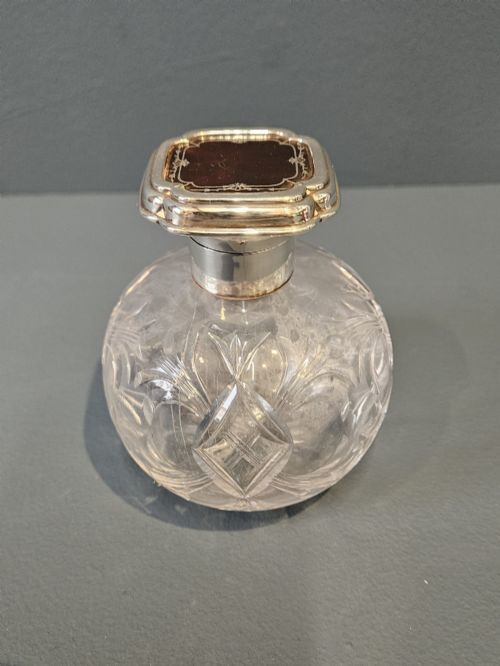
Surface decoration frequently incorporates engine turned enamel, tortoiseshell inlays, and overlay techniques applied directly to the crystal body. These mixed media elements require precise fitting between the glass neck and the metal mount to ensure a tight seal.
Retail Price Guide 2026
Typical UK retail prices for cut crystal scent bottle, calculated from the Sellingantiques database of over a million retail prices indexed since 2003. This retail price guide relies exclusively on Sellingantiques data; no external sources or auction records are used, so the figures do not describe the wider market.
Some Edwardian bottles are tiny enough to hide inside a closed palm, functioning as secret pocket companions for a drop of floral essence.
Judging the range
The distinction between standard production and the finest work lies in the crispness of the glass cutting and the weight of the crystal body. Sharp, deep facets and heavy material denote superior manufacturing standards.
Detailing on the mounts dictates the upper tier of quality, seen in crisp engine turned enamel work, genuine tortoiseshell panels, and fully hallmarked sterling silver collars. Maker attribution to notable workshops also elevates the standing of an individual piece.
Karl Palda·George Unite
The Cut Crystal Scent Bottle Glossary
- Cut Crystal
- High-clarity glass shaped by grinding and polishing geometric facets onto the surface. This technique maximises light refraction across the body of the bottle.
- Sterling Silver
- A silver alloy containing ninety-two point five percent pure silver by mass, widely used for the hinged caps and collars. It provides durability and polish for daily dressing table use.
- Engine Turned
- A decorative mechanical engraving technique producing precise, intricate geometric patterns on metal or enamel surfaces. It adds texture and visual depth to the cap or collar.
- Tortoiseshell
- The mottled shell material harvested from sea turtles, utilised historically for decorative inlay panels on dresser items. Its warm amber and brown tones contrast sharply with polished silver and clear crystal.
- Enamel
- A glassy substance fused to metal through high-temperature firing, providing colourful surface decoration. It appears frequently on Edwardian and Art Deco mounts.
Frequently Asked Questions
How do I date an antique scent bottle?
Dating relies primarily on the hallmarks stamped onto the silver mounts, which indicate the assay office and year of manufacture. Stylistic indicators, such as Edwardian floral motifs or geometric Art Deco cutting, provide further chronological context.
Changes in materials, including the presence of tortoiseshell or specific enamel colours, also help narrow down the decade of production from the early twentieth century.
Are original glass stoppers important?
Original inner glass stoppers significantly preserve the integrity and completeness of the piece. Finding a bottle with its matching stopper ensures it functions as originally intended.
Many surviving examples retain these delicate internal components, which prevent the evaporation of precious perfumes over time.
How should I clean a silver mounted bottle?
Cleaning requires careful separation of the glass body from moisture to protect any internal residues or delicate paper linings. Silver polish should be applied strictly to the metal mount using a soft cloth, avoiding contact with enamel or tortoiseshell.
Gentle wiping of the crystal exterior with warm soapy water restores its refractive clarity without risking damage to historic collars.
Did these bottles travel in handbags?
Smaller globular and cylindrical forms were indeed manufactured as portable accessories for reticules and travelling cases. Their robust silver screw caps or tight stoppers were engineered to prevent leakage during transit.
Larger dresser editions remained stationary on bedroom surfaces, reflecting a division between travel use and permanent display.