


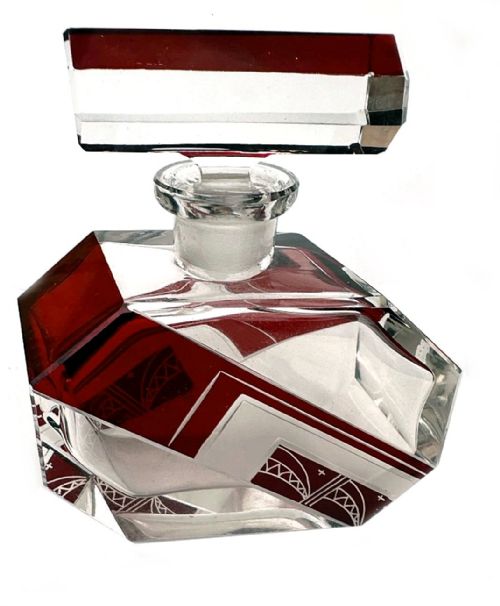


Czech Art Deco Glass
Czech art deco glass brings together striking geometry and rich colour from the interwar decades, offering a bold visual statement for any room.
Czech Art Deco Glass
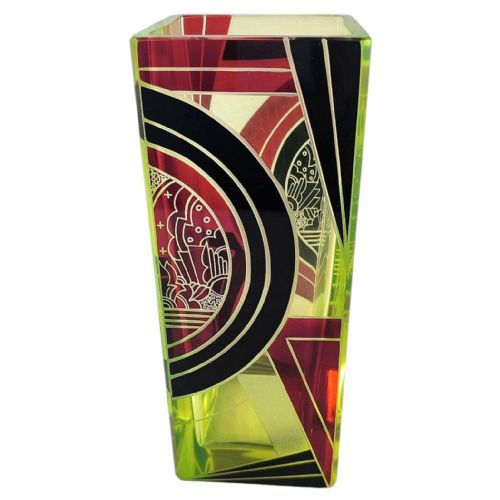
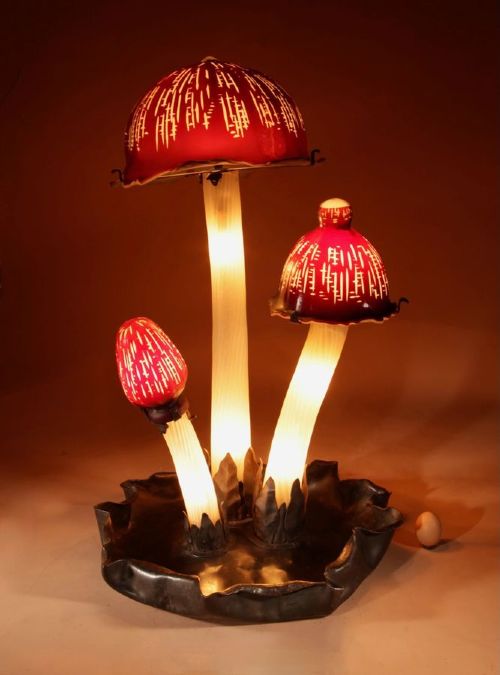
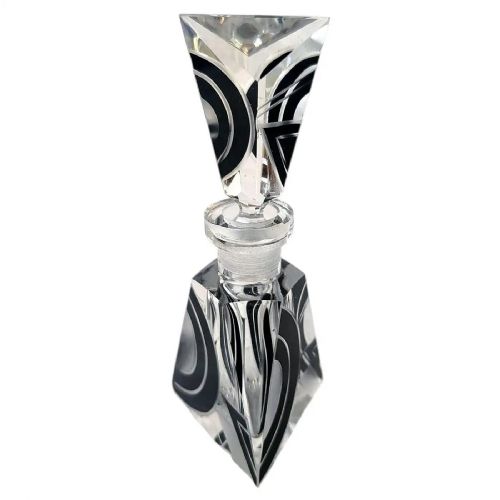
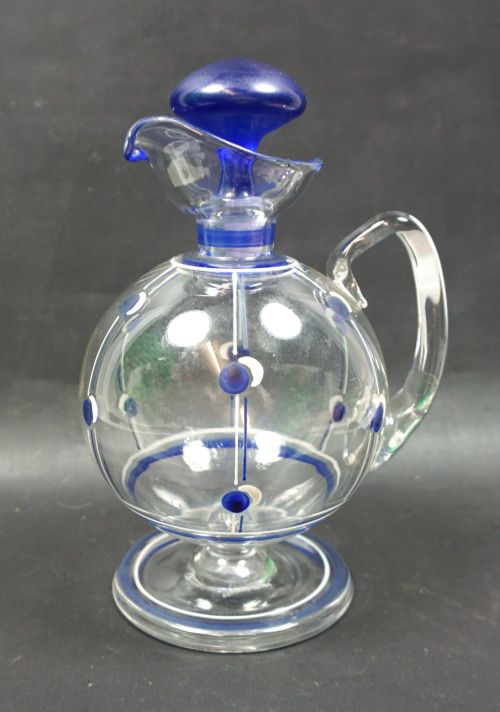
When you search for czech art deco glass, you encounter items originating from the 1920s and 1930s that showcase the characteristic modernist angles and patterns of the era. Vases, perfume bottles, decanter sets, candlesticks, and centerpiece bowls form the primary types available.
Vases and decanter sets dominate the selection, often produced in substantial sizes with striking silhouettes. Perfume bottles and smaller vessels also appear frequently, reflecting the period's dressing table elegance.
The objects stem from Bohemian and Czech workshops operating during the height of the modernist design movement. Pieces span from simple geometric forms to heavily decorated vessels combining multiple techniques.
How they were made
Makers utilised pressed glass, cut glass, crystal, and coloured glass as foundations for these items. Workers manipulated molten material into geometric moulds or shaped free-blown forms before applying surface decoration.
Enamel and gold leaf frequently enhance the exterior surfaces, adding opaque colour bands or metallic highlights to the transparent or translucent bodies. Etched designs cut directly into the glass provide tactile contrast against smooth panels.
Uranium glass appears regularly, incorporating specific mineral additives that create a distinct green hue and fluorescence under ultraviolet light.
Czech Art Deco Glass Retail Price Guide 2026
Typical asking prices for czech art deco glass among the pieces listed under this phrase on Sellingantiques today, from the lower quarter to the upper quarter. They describe what is for sale here now, not the wider market.
Listings feature items from the 1920s and 1930s, utilising enamel, cut glass, crystal, and uranium glass.
What varies in quality
The standard of design execution separates standard output from superior pieces, particularly in the precision of geometric cuts and enamel placement. Crisp lines and well-aligned patterns indicate skilled handwork during production.
The complexity of the object shape and the combination of decorative elements dictate the overall ambition of the piece. Items employing simultaneous etching, enamelling, and precious metal application demand greater technical proficiency.
Subtlety in colour choice and weight of the glass body contribute to the perceived authority of an item. Heavier crystal and carefully saturated coloured glass reflect a higher grade of manufacture.
Karl Palda·Libochovice
The Czech Art Deco Glass Glossary
- Uranium glass
- Glass containing trace amounts of uranium dioxide, producing a characteristic yellow-green colour. This material glows brightly when exposed to ultraviolet light.
- Enamel
- Opaque vitreous composition fused to the glass surface through firing. It creates bold bands and geometric patterns in various colours.
- Pressed glass
- Molten glass shaped by being forced into a metal mould using a plunger. This technique allows for repeatable geometric patterns across identical vessels.
- Decanter set
- A matched collection comprising a serving vessel and accompanying glasses, often arranged on a matching tray for liqueur or whisky.
- Geometric
- Design motifs based on straight lines, angles, squares, and circles. These shapes define the core aesthetic of the period.
Czech Art Deco Glass: Frequently Asked Questions
How do I identify uranium glass?
Uranium glass displays a distinctive yellow-green tint under normal daylight. The most reliable method of confirmation is applying a UV blacklight, which causes the material to emit a strong neon green glow.
This chemical addition was common in interwar manufacturing and poses no significant risk for display purposes. Pieces utilising this glass range from small perfume bottles to large vases.
What periods do these pieces date from?
The items generally date from the 1920s and 1930s, aligning with the interwar modernist movement. Production continued through the art deco era before industrial shifts altered manufacturing methods.
Most surviving examples carry characteristics of design trends from around 1930. Workshops in Bohemia produced the majority of these documented items.
How were decanter sets used?
Decanter sets served alcoholic beverages such as whisky or liqueurs in domestic settings. The collection typically included a stoppered bottle and several matching small glasses.
Owners displayed these sets on sideboards or drinks cabinets as functional ornaments. Geometric patterns on the decanters matched the accompanying vessels to present a unified aesthetic.
Can I use these vases for fresh flowers?
These vessels function well as decorative objects, but delicate surfaces require careful handling during use. Enamel and gold leaf decorations can suffer from abrasive cleaning or prolonged moisture exposure.
Hand washing in lukewarm water preserves the fragile enamel and etched details. Many collectors prefer to exhibit them dry to protect the historical surface.