





Geometric Glass Vase
These geometric glass vase examples bring striking Art Deco form to any room, offering collectors bold linear design from the nineteen thirties.
What a geometric glass vase is
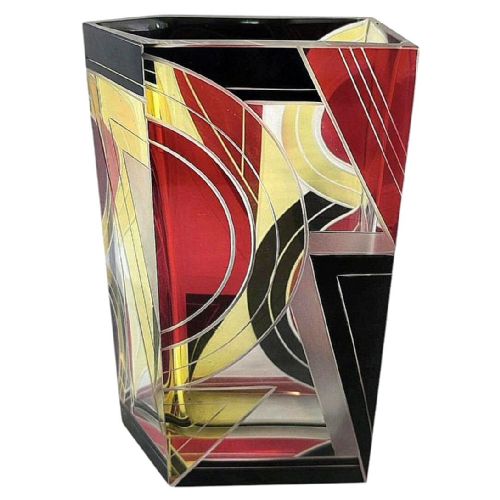
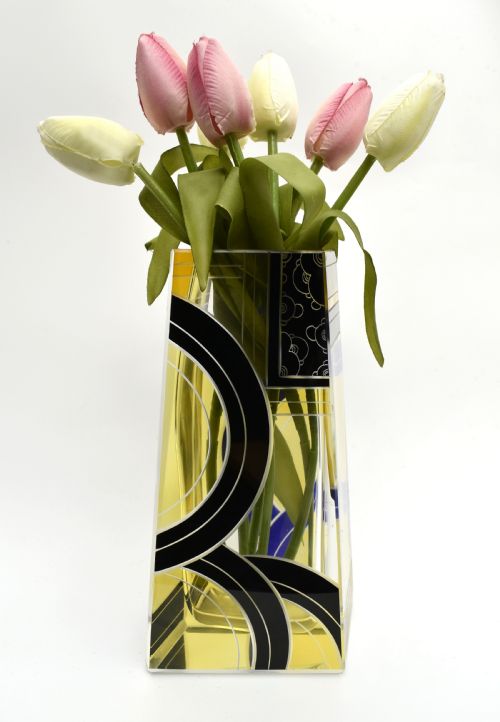
A geometric glass vase is a piece of decorative tableware defined by sharp lines, angular motifs, and distinct modernist patterns. Most examples encountered here belong to the Art Deco period, dating around nineteen thirty.
The objects take tall cylindrical or vessel forms, often originating from Czech workshops. They combine utilitarian function with the architectural aesthetics characteristic of early twentieth-century design.
How they were made
These items utilise glass, enamel, etched glass, frosted glass, and uranium glass. Makers applied contrasting black and coloured enamel to accent the surface patterns.
Techniques involve chemical etching to create matte surfaces against clear or opaque bodies. Surface decoration relies on precise hand-painting of geometric bands and linear motifs.
Retail Price Guide 2026
Typical UK retail prices for geometric glass vase, calculated from the Sellingantiques database of over a million retail prices indexed since 2003. This retail price guide relies exclusively on Sellingantiques data; no external sources or auction records are used, so the figures do not describe the wider market.
Every listed piece dates from the nineteen thirty period and adheres to Art Deco style.
What varies in quality
Quality rests on the crispness of the etchings and the precision of the enamel work. Pieces by known designers command attention through superior execution of linear motifs.
The choice of material elevates certain examples, particularly where glowing uranium glass or dense opaque bodies provide visual weight. The integration of surface decoration with the underlying vessel shape dictates overall success.
Karl Palda
The Geometric Glass Vase Glossary
- Art Deco
- A design style of the nineteen twenties and thirties characterised by stylised geometric motifs and streamlined forms. This aesthetic dominates the vessels listed here.
- Uranium glass
- Glass containing a small amount of uranium dioxide to impart a yellow or green tint that glows under ultraviolet light. It appears frequently in modernist decorative objects.
- Etched glass
- Glass treated with acid to produce a frosted design or textured surface. This technique allows for precise linear patterns against clear backgrounds.
- Opaque glass
- Non-translucent glass that obscures light entirely, often used as a solid ground for enamel decoration. It provides a stark canvas for geometric patterns.
Frequently Asked Questions
What is a geometric glass vase?
A geometric glass vase is a decorative vessel featuring angular patterns, straight lines, and modernist motifs typical of the Art Deco era.
These pieces function primarily as ornamental objects, showcasing the period's fascination with industrial forms and symmetry.
How old are these vases?
The pieces listed here date from around nineteen thirty, placing them firmly within the height of the Art Deco movement.
Production origins often trace to Czech workshops renowned for innovative glass techniques during this decade.
What materials are used?
Makers utilised standard glass, frosted glass, opaque glass, and uranium glass to achieve different visual textures and tones.
Surface decoration frequently incorporates enamel painting and acid etching to build up contrasting patterns.
How do I display one?
Position these vessels where direct light can interact with the etched surfaces and coloured enamels. They suit minimalist settings that highlight their architectural lines.
Keep them away from direct edges where accidental knocks might damage the delicate enamel work.