


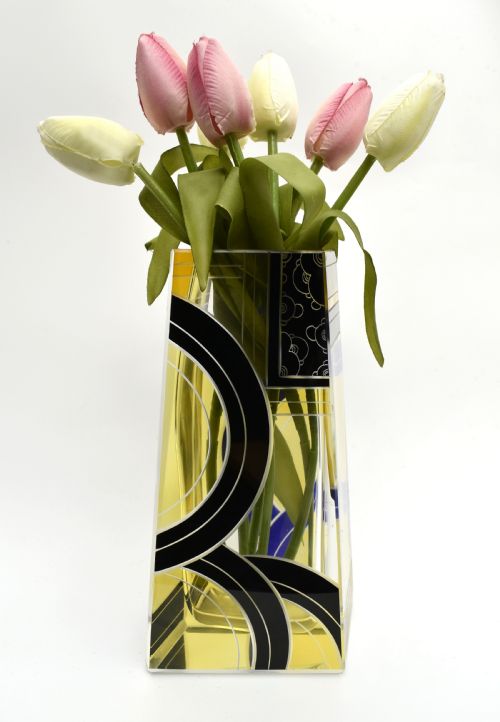


Czech Glass Vase
A czech glass vase brings vivid colour and striking geometric lines into a room, drawing the eye instantly.
Czech Glass Vase
When someone searches for a czech glass vase, they are looking for pieces that capture the bold spirit of early twentieth-century design. The version most commonly found here originates from the Art Deco period, standing tall and showing sharp lines or rich opaque finishes.
These vessels span several eras, reaching back to Victorian Bohemian pieces and stretching into the modernist forms of the nineteen-thirties. Makers utilised pressing, etching and enamelling to create decorative glassware that served as both centrepiece bowls and tall display vessels.
How they were made
Makers shaped molten material into pressed glass or utilised coloured glass, uranium glass, cobalt glass and amber glass to build deep tonal contrast. Artisans applied gold leaf, enamel details and silver overlay directly onto the cooled surfaces by hand.
Etched decoration often cuts through the top layer of opaque or black enamel glass to reveal the contrasting tone underneath. These techniques demand precise control over temperature and chemical composition during the blowing and cooling stages.
Czech Glass Vase Retail Price Guide 2026
Typical asking prices for czech glass vase among the pieces listed under this phrase on Sellingantiques today, from the lower quarter to the upper quarter. They describe what is for sale here now, not the wider market.
Certain animal decorations on centrepiece bowls stare back at you from the nineteen-hundreds.
What varies in quality
The division between ordinary and exceptional examples rests on the depth of the enamel work and the crispness of the etching. Pieces showing detailed figural motifs or complex geometric patterns require superior skill from the decorator.
Subtlety in the application of gold leaf and the clarity of the underlying coloured glass separate standard production items from masterworks. Weight, proportion and the precision of the silver overlay also determine the standing of an individual vessel.
Karl Palda·Libochovice
The Czech Glass Vase Glossary
- Uranium glass
- Glass containing small amounts of uranium oxide, which glows bright green under ultraviolet light. This material appears frequently in pieces from the Art Deco period.
- Silver overlay
- Pure silver deposited onto the glass surface in intricate decorative patterns. This technique requires an electroplating process onto the finished vessel.
- Enamel
- Opaque vitreous composition fused to the glass surface by heat. Artisans used this to add colourful geometric designs to plain bodies.
- Pressed glass
- Molten material shaped by being pressed into a metal mould with a plunger. This method allowed for mass production of consistent decorative glassware.
- Coloured glass
- Material dyed throughout its mass with metallic oxides during melting. Cobalt, amber and black versions provide rich backgrounds for surface etching.
Czech Glass Vase: Frequently Asked Questions
How do I spot uranium glass?
Uranium glass has a distinctive yellowish-green tint in normal daylight. Shine a blacklight on it to see a bright neon green glow.
This reaction comes from the uranium content added during manufacturing.
Are these pieces heavy?
Many examples use thick pressed or cased glass to achieve their bold forms. Taller vessels and centrepiece bowls carry substantial weight.
Smaller items remain lighter but still show thick walls characteristic of the period.
How do I clean enamel?
Clean gently with a soft cloth and lukewarm water without harsh detergents. Enamel and gold leaf can wear away if scrubbed aggressively.
Avoid soaking items that feature delicate silver overlay to protect the metal.
What defines Art Deco style?
Art Deco relies on geometric shapes, sharp angles and strong colour contrasts. Pieces often feature black enamel, amber glass or stepped profiles.
This aesthetic dominated European design during the nineteen-thirties.