


Cobalt Blue Glass
Cobalt blue glass brings deep, vibrant colour to domestic display through vessels and tableware shaped across the eighteenth, nineteenth, and twentieth centuries.
Cobalt Blue Glass
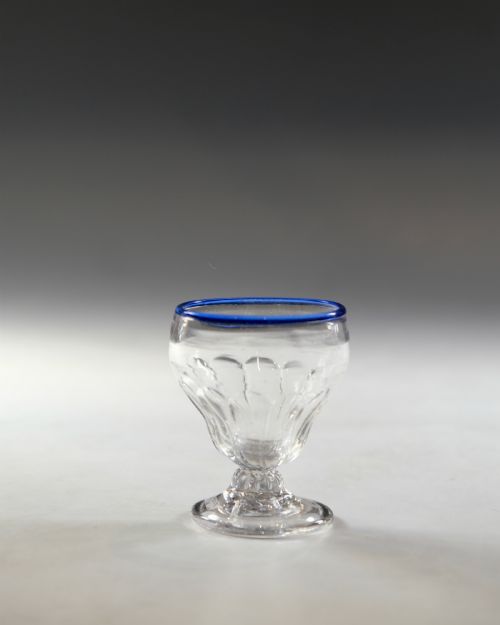
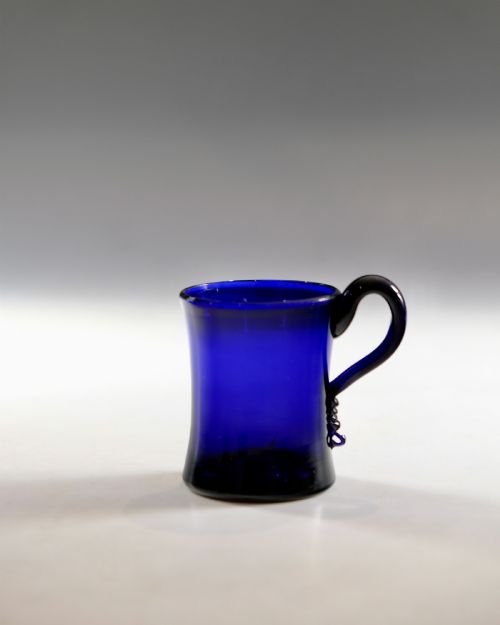
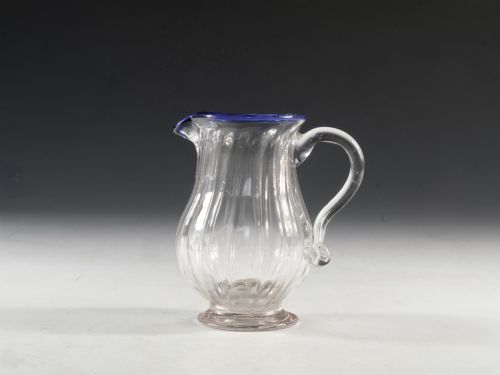
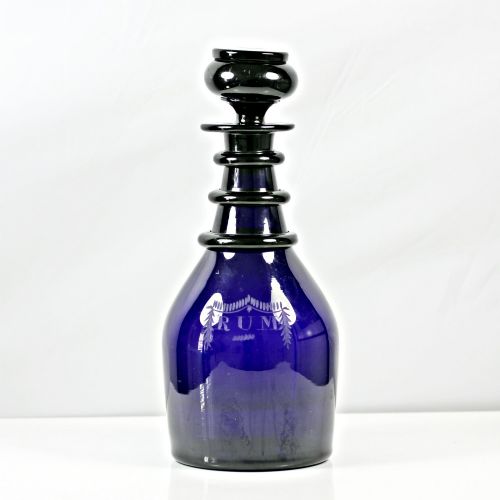
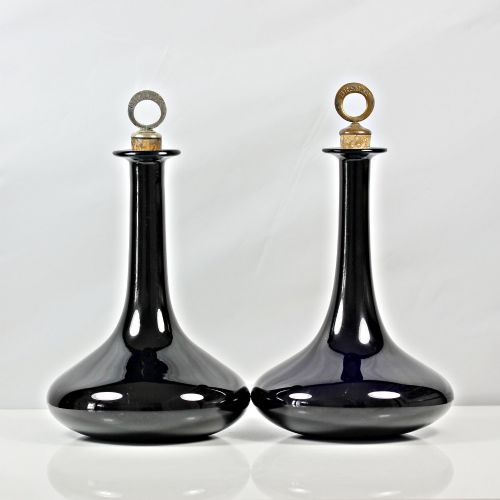
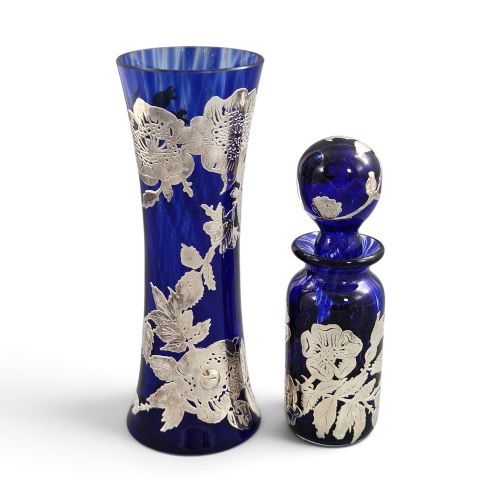
Cobalt blue glass encompasses functional tableware, decorative items, and desktop accessories produced across the eighteenth and nineteenth centuries, alongside later studio pieces. You will frequently encounter decanters, scent bottles, mustard pots, salt cellars, and vases shaped in this striking hue.
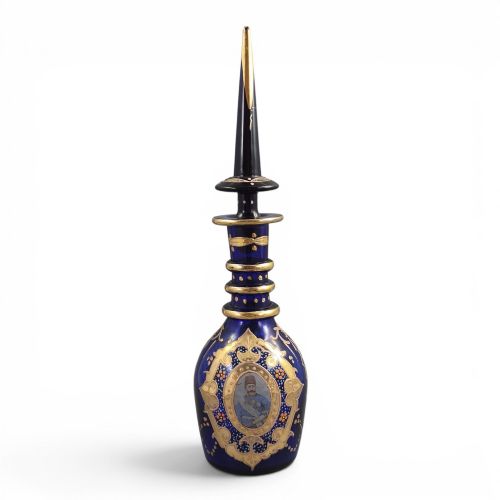
The selection ranges from Georgian drinking vessels and Victorian chemist bottles to Bohemian enameled decanters and Art Deco silver-mounted pieces. British output, particularly from Bristol, sits alongside continental European production from France, Belgium, and Bohemia.
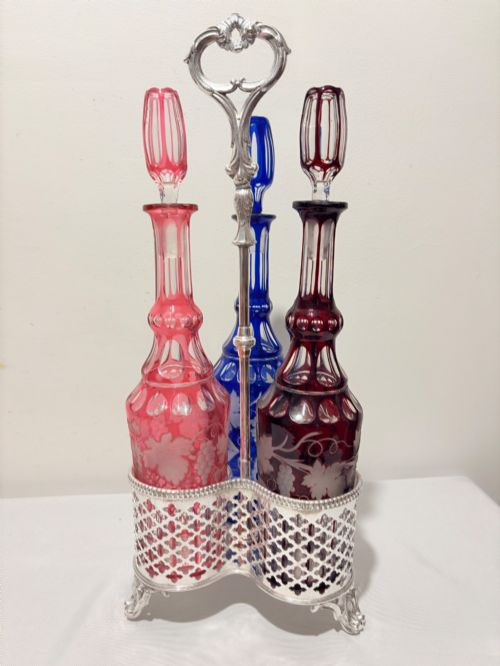
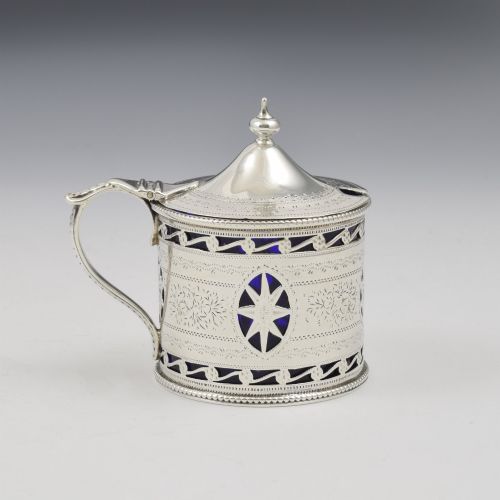
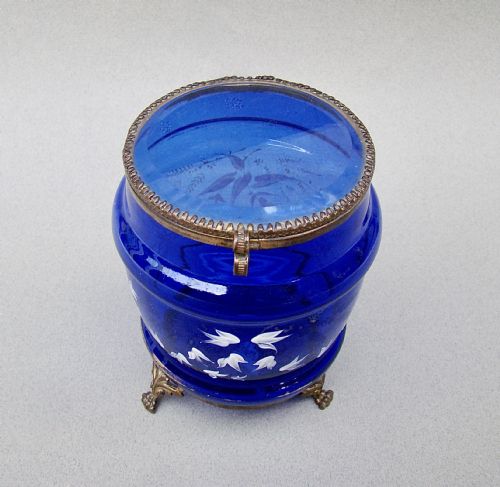
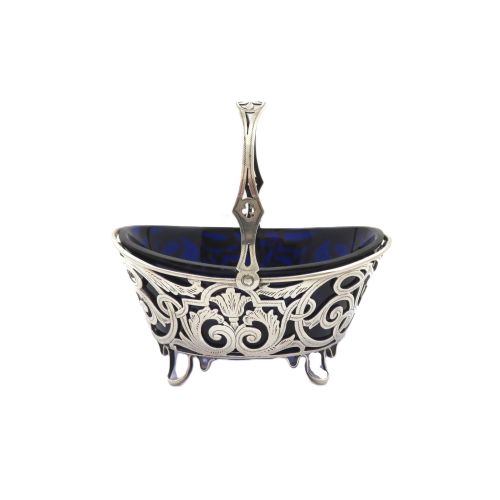
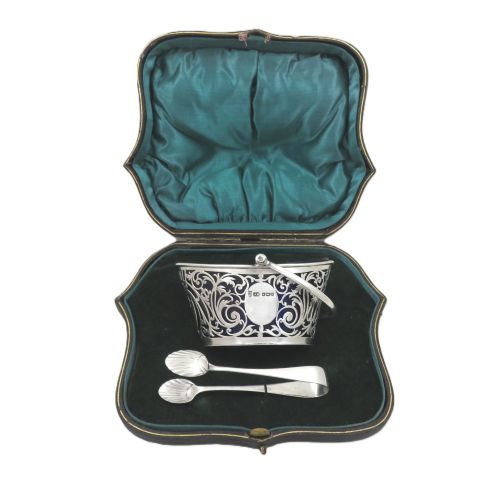
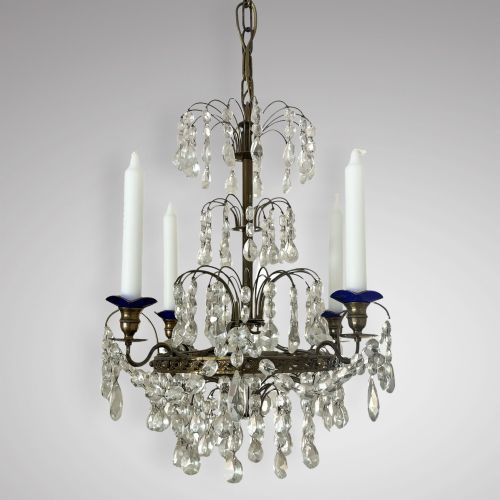
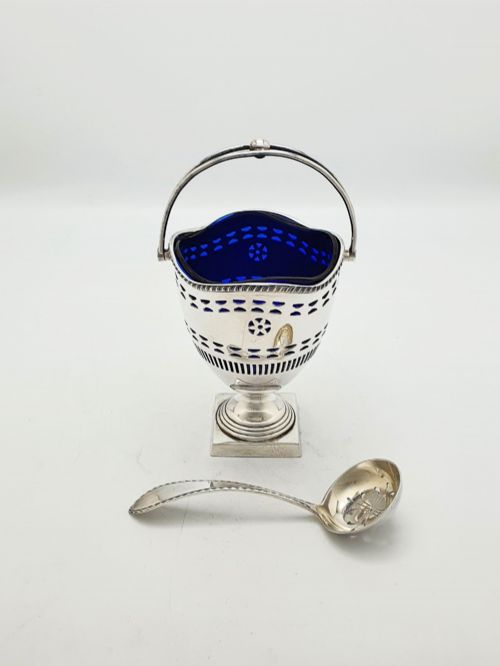
Many hollowware forms incorporate structural metal mounts, including sterling silver or silver-plated pierced frames, or ormolu trim. These combined items serve as cream pails, sugar baskets, and condiment tubs designed for formal dining.
Materials and construction
Makers achieved the intense colour by introducing cobalt oxide into the molten lead glass or crystal batch during production. This produced either solid-coloured vessels or layered pieces where a blue outer layer, known as overlay, was cut away to reveal clear glass beneath.
Hot-worked glass often received secondary decoration through cold-working techniques such as wheel-cutting, hand-painting, and white enamel work. Metalwork elements were separately cast, pierced, or forged in silver, ormolu, or brass to cradle or frame the glass bodies.
Listings span Georgian, Victorian, and Art Deco periods, featuring lead crystal, sterling silver, and enamel materials.
Factors of quality
Quality rests upon the depth and purity of the colour within the glass matrix, alongside the crispness of any cut facets or wheel-engraved details. Superior examples display even coloration free from heavy internal clouding or distracting bubbles.
The standard of the accompanying metalwork heavily influences the overall execution, where finely pierced silver frames, solid ormolu mounts, or precise hand-applied enamel decoration elevate the piece beyond standard utilitarian production.
Nathan & Hayes·Aldridge & Green·Franchini & Bigaglia·Joseph Simon for Val St. Lambert
The Cobalt Blue Glass Glossary
- Bristol blue
- A deep, rich shade of cobalt blue glass historically associated with glasshouses in the Bristol area during the Georgian and Victorian eras. The term often describes similar deep blue vessels produced elsewhere.
- Overlay
- A technique where a thin layer of coloured glass is fused over a clear or contrasting glass body before being cut away to create patterns. This process requires precise thermal control during manufacture.
- Ormolu
- Gilded bronze or brass used for decorative mounts, feet, and rims on nineteenth-century glass vessels. It provides a bright metallic contrast to the dark blue glass.
- Mary Gregory
- A style of white enamel decoration depicting Victorian children playing amidst foliage, typically fired onto a cobalt blue glass surface. The technique was widely used on dressing table items and glassware.
- Mell decanter
- A specific bottle shape featuring a wide base that tapers toward the top, commonly fitted with a stopper. These vessels were frequently produced in dark blue glass for spirits.
Cobalt Blue Glass: Frequently Asked Questions
What is Bristol blue glass?
Bristol blue glass is a distinctively deep cobalt blue glassware historically linked to West Country kilns during the late eighteenth and early nineteenth centuries. The term now commonly describes similar dark blue tableware from that broader period.
The intense colour comes from cobalt oxide added to the molten batch. Many pieces feature gilt accents or silver mountings for dining use.
How were cobalt glass decanters used?
Cobalt glass decanters served to store and pour wines, spirits, and cordials on dining tables and sideboards. Their dark colour helped protect light-sensitive contents from degrading.
Matching sets often sat within silver-plated or wirework bottle stands. They were paired with stoppers to preserve the aromas of the liquids inside.
How do I date antique blue glass?
Dating relies on examining the pontil mark on the base, the weight of the lead crystal, and the style of any silver hallmarks. Georgian pieces generally show heavy wear beneath and simpler hand-blown irregularities.
Victorian and later items often incorporate machine-pressed elements, standardised stoppers, or detailed silver mounts with legible date letters. Comparing the decorative motifs helps narrow the decade.
How should I clean cobalt glass?
Cleaning requires warm soapy water and a soft cloth, avoiding abrasive pads that can scratch the surface or wear down gilt details. Items with metal mounts or enamel work need careful handling to protect the joins.
Submerging antique metal-mounted items for long periods can weaken adhesives or tarnish the silver. Dry the glass thoroughly with a lint-free cloth after washing.