




Belgian Cut Crystal
Belgian cut crystal brings striking colour and heavy geometric form into a room, offering the bold geometry of Art Deco glassmaking at its finest.
Belgian Cut Crystal
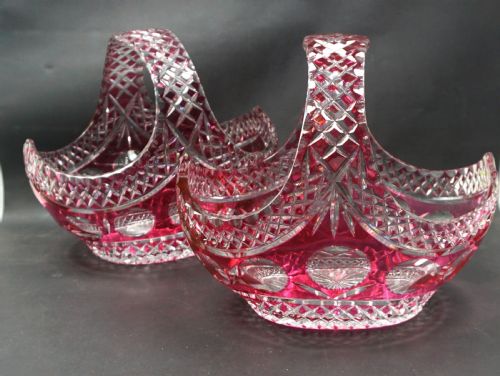
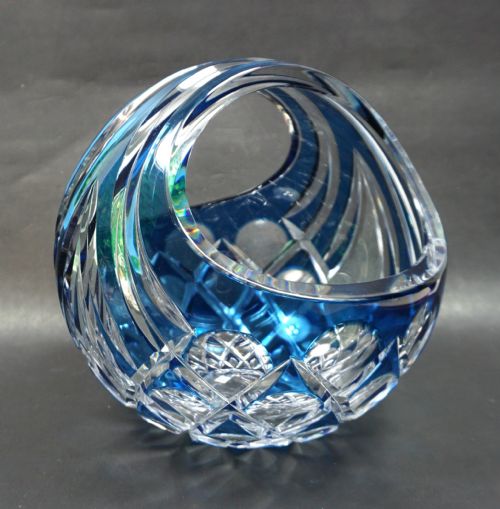
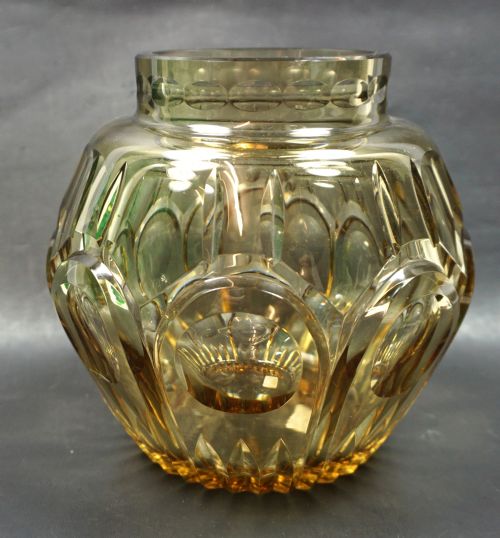
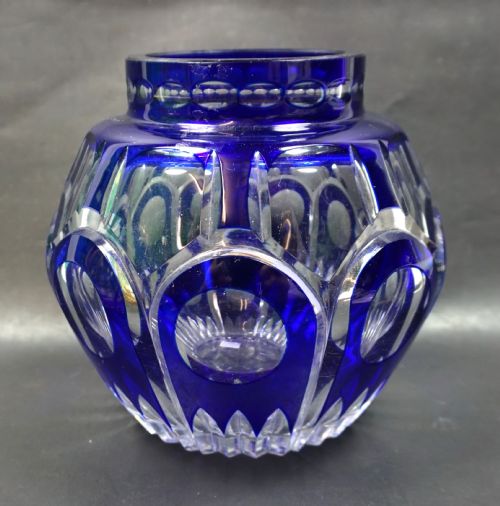
Belgian cut crystal comprises heavy decorative glassware originating from the nineteen-thirties, typically taking the form of vases, bowls, and baskets. These pieces showcase the distinct design aesthetic of the Art Deco period, marked by substantial weight and faceted surfaces.
Collectors searching for belgian cut crystal encounter pieces dominated by cased and overlay glass in vibrant shades of red, blue, green, and topaz. The objects available here represent signature creations from notable designers working in Belgium during the interwar years.
How they were made
Maker workshops utilised lead crystal, glass, and cased or overlay glass to build up deep layers of contrasting colour. Artisans then cut through the exterior coloured layer to reveal the clear crystal beneath, creating sharp geometric patterns.
The production relied on skilled glassblowers and cutters shaping heavy metal oxides into robust decorative glassware. Finished objects often received factory marks to identify the designer and origin before leaving the Belgian furnaces.
Green and blue remain the most stubborn colours to photograph accurately under modern indoor lighting.
What varies in quality
Quality rests in the precision of the cutting and the richness of the coloured overlay applied to the base crystal. Deeper colour saturation and sharper facet edges separate standard production from superior examples.
The presence of documented designer attribution and clear factory marks elevates an individual object. Weight and proportion also dictate the overall standard of the glassware.
Val St. Lambert·Joseph Simon·Charles Graffart
The Belgian Cut Crystal Glossary
- Cased glass
- Glass formed with two or more distinct layers of different colours fused together during blowing. This technique allows cutters to remove sections of the top layer to expose the contrasting colour underneath.
- Overlay glass
- A specific type of cased glass where a deeply coloured exterior layer covers a clear or lighter crystal body. Cutting through this outer skin produces bold visual contrast.
- Lead crystal
- Glass containing a high percentage of metallic lead oxide to increase brilliance, weight, and clarity. This heavy material accepts deep, sharp facet cutting much better than standard soda-lime glass.
- Art Deco
- The dominant design style of the nineteen-thirties characterised by geometric shapes, stylised motifs, and strong vertical lines. It heavily influenced European glass manufacture of the period.
Belgian Cut Crystal: Frequently Asked Questions
What is belgian cut crystal?
Belgian cut crystal refers to heavy decorative glass objects produced in Belgium during the nineteen-thirties. These pieces typically feature thick walls and bright colours.
Items take forms such as vases, bowls, and baskets designed in the Art Deco style. The glassware is known for its substantial weight and complex layered colours.
How do I identify nineteen-thirties glass?
Nineteen-thirties glass from Belgium is characterised by heavy lead crystal construction and geometric Art Deco styling. Look for thick cased layers in red, blue, green, or topaz.
Many pieces also feature factory marks or are attributed to specific designers from the era. The combination of deep cutting and vibrant overlay points directly to this interwar period.
How were these coloured pieces made?
The objects were produced by casing a layer of coloured glass over a clear or contrasting crystal base while hot. Once cooled, artisans cut geometric patterns through the top layer.
This subtractive cutting technique exposed the underlying crystal or colour. It required immense skill to ensure even depth across complex curved surfaces.
Where were these items produced?
These glass objects were manufactured in Belgium by prominent glassworks operating during the interwar period. Val St. Lambert served as the primary centre for this production.
Renowned designers working within these Belgian factories created the specific vase and bowl forms seen today. Their output defined the country's contribution to decorative glass.