




Val Saint Lambert Glass
Val saint lambert glass brings together striking Belgian lead crystal pieces from the Art Deco period that collectors prize for their bold colours and heavy cuts.
Val Saint Lambert Glass
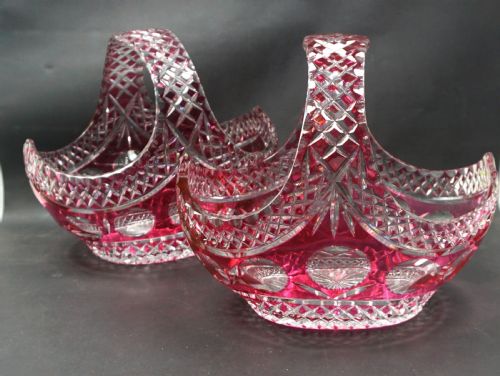
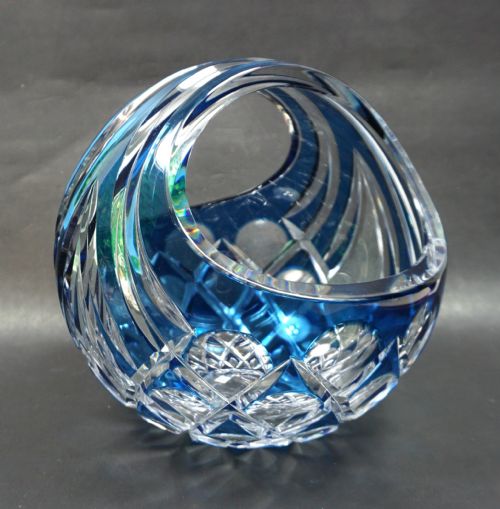
When you search for val saint lambert glass, you encounter substantial decorative objects and tableware originating from Belgium during the nineteen thirties. These items range from large coloured baskets and heavy vases to bowls and liquor services.
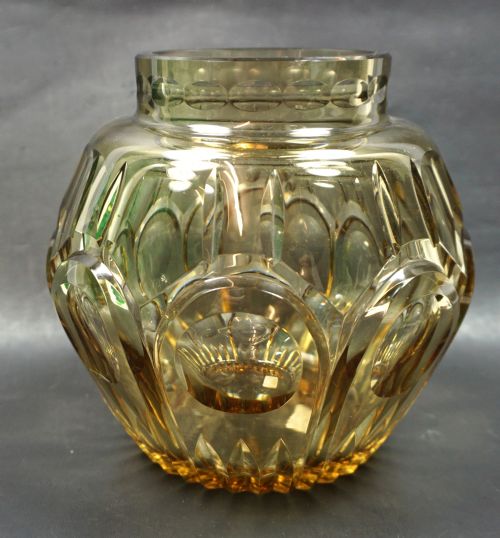
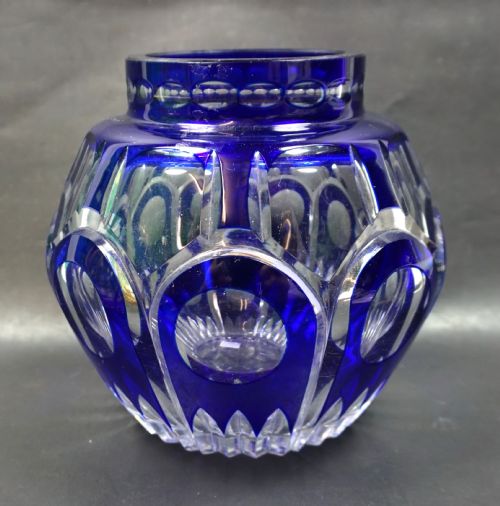
The pieces most frequently met on this page are cased glass and overlay glass vessels rendered in strong shades of blue, green, red, and topaz. They reflect the geometric sensibilities of the Art Deco era through deep cutting and layered hues.
Vases and decorative bowls dominate the selection, often bearing the distinct signatures of period designers. Alongside these display pieces, complete drink sets and wine glasses demonstrate the broader domestic output of the manufactory.
Materials and methods
Makers utilised heavy lead crystal and crystal glass as the foundation for these works, providing the necessary weight and clarity for deep optical effects. This dense material allows light to refract cleanly through the faceted surfaces.
Cased glass and overlay techniques involve fusing a layer of coloured glass over a clear or contrasting crystal body. Artisans then cut through the outer coloured layer to reveal the clear crystal underneath, creating bold geometric patterns.
Val Saint Lambert Glass Retail Price Guide 2026
Typical asking prices for val saint lambert glass among the pieces listed under this phrase on Sellingantiques today, from the lower quarter to the upper quarter. They describe what is for sale here now, not the wider market.
Distinguishing quality
The degree of precision in the cut crystal separates standard production from exceptional work. Crisp, sharp facets and clean lines where the coloured overlay meets the clear base demonstrate superior craftsmanship.
Design attribution also influences the standing of a piece, with works bearing known designer names or factory marks holding particular interest. The depth of the colour saturation and the overall balance of the heavy vessel complete the evaluation.
Joseph Simon·Charles Graffart·Val St. Lambert
The Val Saint Lambert Glass Glossary
- Cased glass
- A method of blowing glass with multiple distinct layers of different colours. This technique creates a rich optical depth when the outer layer is subsequently cut.
- Overlay glass
- Similar to cased glass, this involves a complete outer layer of coloured glass fused over a crystal body. Artisans grind away parts of this outer layer to create contrasting patterns.
- Lead crystal
- Glass containing a significant proportion of lead oxide, which increases weight, brilliance, and refractive index. This composition is essential for the sharp facets seen in these works.
- Art Deco
- The dominant design style of the nineteen thirties characterised by sleek geometric shapes and streamlined forms. Val saint lambert glass from this period embodies these architectural motifs.
Val Saint Lambert Glass: Frequently Asked Questions
What is val saint lambert glass?
Val saint lambert glass refers to artistic lead crystal and cased glassware produced in Belgium, particularly during the nineteen thirties. The works span heavy vases, bowls, baskets, and drink services.
Many of these objects feature vibrant coloured overlays cut back to reveal clear crystal beneath. They remain defining examples of Art Deco decorative glass design.
How do I identify nineteen thirties pieces?
Pieces from this decade typically exhibit distinct Art Deco geometric forms, heavy lead crystal construction, and layered cased colours. Stylistic cues include strong blue, green, red, and topaz hues.
Some items include period factory marks or bear the documented styles of designers associated with the firm during those years.
How were coloured overlays created?
Artisans fused a vibrant layer of coloured glass over a clear crystal core while hot. This layered blank was then subjected to deep cutting and polishing.
Cutting through the outer skin exposes the clear crystal underneath, generating sharp contrast and brilliant light refraction across the surface.
How should I display heavy crystal?
Place these substantial pieces on sturdy surfaces away from high-traffic edges where they might sustain knocks. Adequate lighting enhances the deep colours and refractive qualities of the lead crystal.
Keep them out of direct, prolonged sunlight if displayed near windows to protect the integrity of the coloured glass over time.