




Belgian Crystal Glass
Belgian crystal glass pieces from the Art Deco period combine heavy cut lead crystal with vibrant overlaid colours to create striking centrepieces.
Belgian Crystal Glass
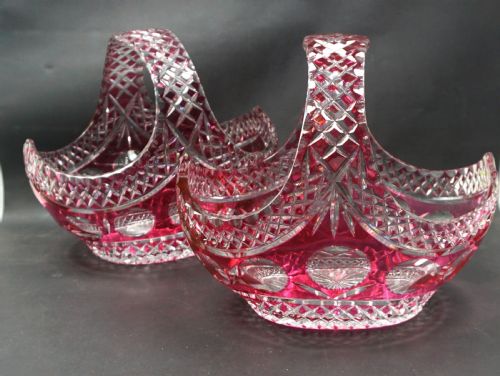
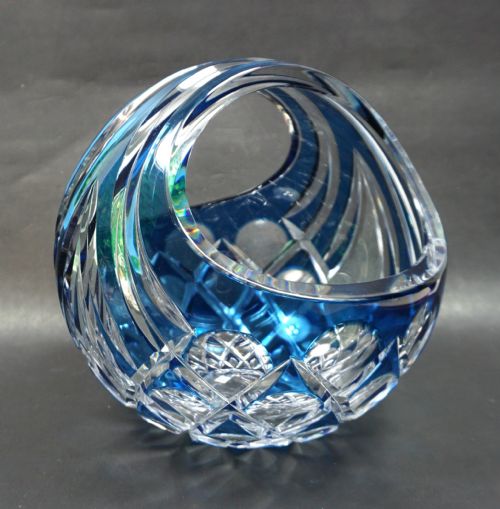
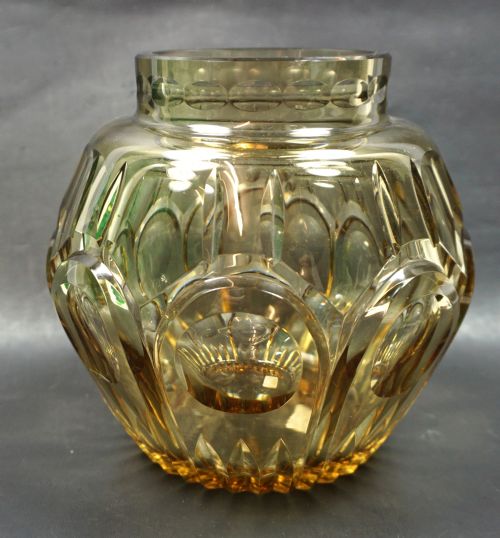
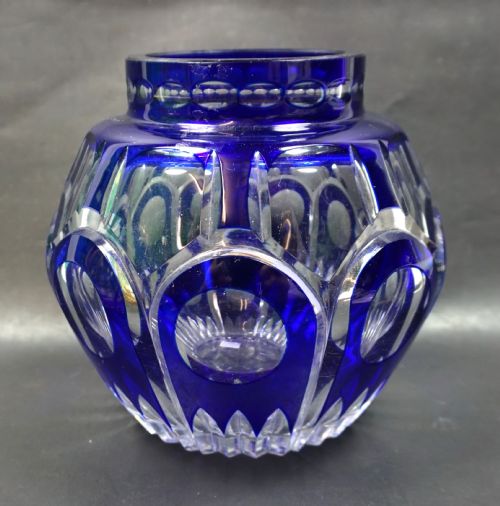
When you search for belgian crystal glass, you encounter substantial decorative objects originating from the nineteen-thirties. The most common forms on this page include vases, decorative bowls, decorative baskets, and decanter sets.
These items reflect the bold geometric and colourful sensibilities of the Art Deco period. Pieces span striking colourways such as red, blue, green, and topaz, frequently utilising overlaid techniques.
How they were made
Production relies heavily on lead crystal and glass, shaped into complex forms like vases and baskets. Artisans utilised cased glass and overlay glass methods to build deep colour saturation.
Makers applied cut lead crystal techniques to carve through the coloured outer layers, revealing the clear crystal beneath. This subtraction method forms sharp geometric patterns characteristic of the era.
What varies in quality
Depth and precision in the cutting separate standard output from superior examples. The crispness of the facets cut through the overlay dictates how sharply the underlying crystal catches the light.
The richness of the coloured glass layers also influences desirability. Uniformity in the cased glass thickness demonstrates higher technical control during the blowing and layering process.
Val St. Lambert·Joseph Simon·Charles Graffart
The Belgian Crystal Glass Glossary
- Cased glass
- A method of fusing one layer of coloured glass over another layer of a different colour or clear crystal. This technique allows cutters to carve away the exterior coat for dramatic contrast.
- Overlay glass
- A specific type of cased glass where a deeply coloured outer casing completely covers a clear or contrasting body. Cutting through this outer skin exposes the base material underneath.
- Lead crystal
- Glass containing a significant proportion of lead oxide, which increases weight, brilliance, and refractive index. It provides the heavy feel characteristic of these items.
- Cut lead crystal
- Crystal that has been shaped and patterned using mechanical grinding and polishing wheels. The resulting facets define the decorative motifs of the period.
- Art Deco
- A design movement dominating the nineteen-thirties that prioritised sleek lines, symmetrical patterns, and vibrant hues. It shapes the overall aesthetic of these objects.
Belgian Crystal Glass: Frequently Asked Questions
What periods do these pieces date from?
The items collected here date strictly from the nineteen-thirties, aligning with the height of the Art Deco design movement in Europe.
Production methods and stylistic choices from this era remain consistent across the documented vases, bowls, and liquor services.
How are different colours achieved?
Colours such as red, blue, green, and topaz are created through cased and overlay glass techniques. A layer of coloured glass is fused over a clear crystal base before cutting.
This process permits the artisan to carve away portions of the top layer to reveal the contrasting material underneath.
What forms do these items take?
The inventory consists largely of vases, decorative bowls, decorative baskets, and decanter sets. Each form utilises heavy crystal construction.
Functional and decorative vessels dominate the selection, reflecting the domestic uses of the period.
How do I identify a designer piece?
Designers and factories such as Charles Graffart, Joseph Simon, and Val St. Lambert are associated with these works. Specific pieces may also feature period factory marks.
Documentation on the items links particular aesthetic styles to these specific makers from the nineteen-thirties.