




Antique Ruby Glass Centrepiece
An antique ruby glass centrepiece brings deep crimson resonance to a table, combining rich tinted glass with worked metal mounts from the Victorian and Edwardian eras.
Antique Ruby Glass Centrepiece
An antique ruby glass centrepiece is a striking focal object designed for formal dining tables, drawing rooms and sideboards during the nineteenth and early twentieth centuries. These pieces combine deep red glass vessels with mounts, frames or stands fashioned from brass, silver plate, sterling silver or silver-gilt.
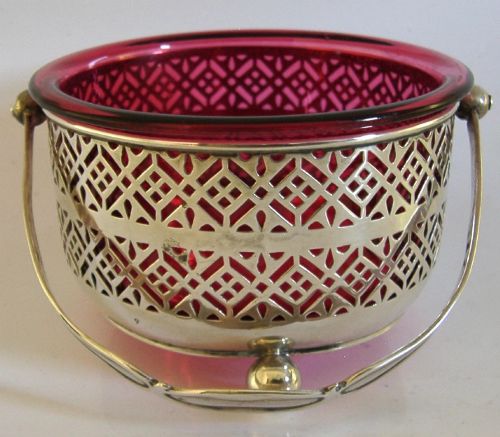
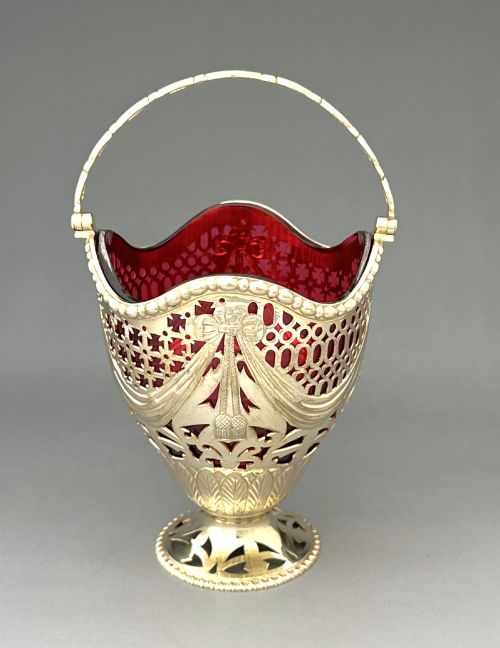
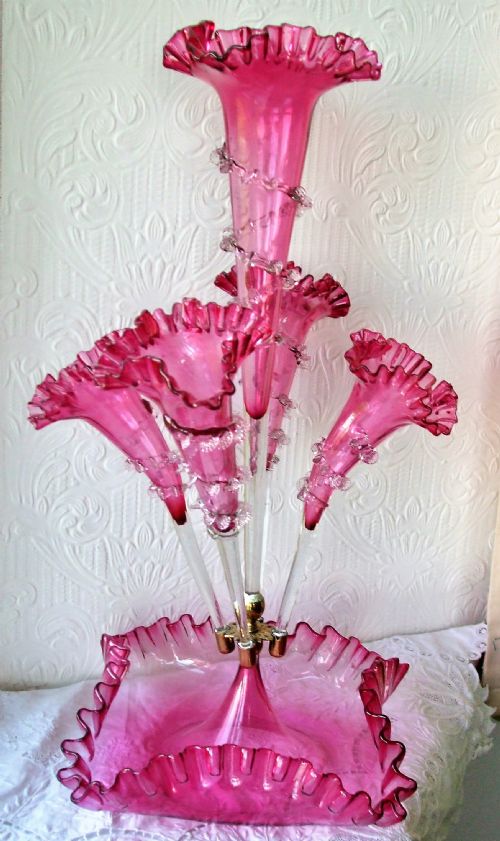
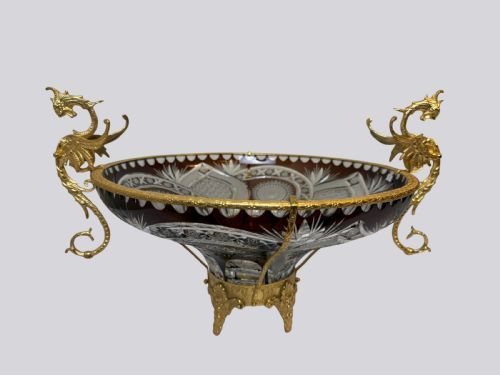
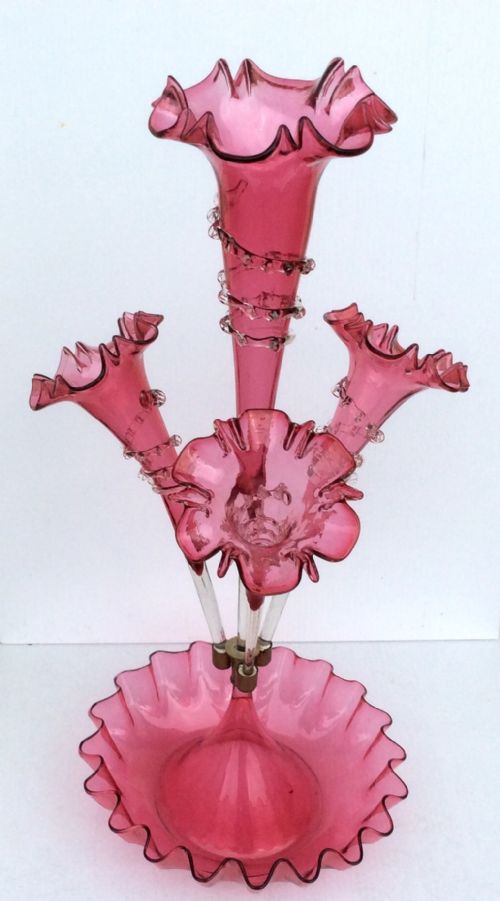
The versions most frequently met on this page include elaborate epergnes, swinging-handled sugar baskets and decorative bowls or dishes resting within pierced metal frames. Examples span from mid-Victorian ornate table furnishings to cleaner Edwardian designs and later Art Deco interpretations.
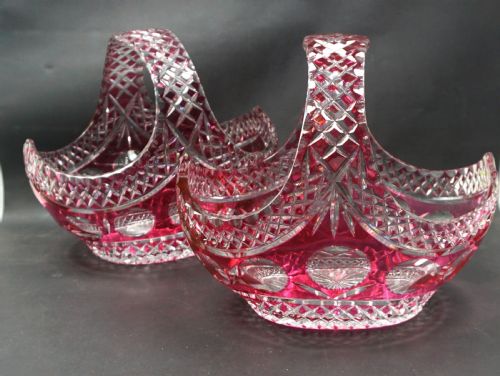
Many items utilise contrasting materials such as clear glass, gilt bronze or layered red-over-crystal glass to enhance their visual weight. Whether configured as a multi-trumpet epergne or a single gilded tazza, each form serves to anchor a room with saturated colour.
How they were made
The glass elements rely on traditional glassblowing and moulding techniques, often incorporating gold chloride into the molten batch to achieve the characteristic deep crimson or cranberry hue. Artisans frequently added hand-applied frills, gilding or etched surface patterns while the vessel was still workable.
Metal mounts and stands were produced through casting, piercing and electroplating, securing the fragile glass vessels with custom-fitted brass, silver plate or sterling silver frames. Makers such as George Fox and Belgian houses like Val St. Lambert utilised specialised metalworking methods to construct hinged swing handles and elaborate epergne trumpets.
Materials recorded across current pieces include cranberry glass, ruby glass, clear glass, brass, silver plate, sterling silver, silver-gilt and lead crystal.
What varies in quality
Quality rests in the depth and evenness of the glass coloration, the precision of hand-applied gilding, and the substantial weight of the supporting metal frame. Finer pieces demonstrate crisp piercing in silver-plated or sterling silver stands alongside unblemished glass surfaces with rich saturation.
The sophistication of the design dictates the upper tier of the range, distinguishing simple pressed glass dishes in basic brass mounts from multi-component epergnes and gilded tazze. Maker attribution and the integration of precious metals like silver-gilt further elevate the stature of a piece.
George Fox·Val St Lambert
The Antique Ruby Glass Centrepiece Glossary
- Ruby glass
- A deep red decorative glass produced by adding gold or copper compounds to the molten batch during manufacturing. It remains the defining material for this category of table ware.
- Epergne
- A large ornamental centrepiece featuring a central bowl with multiple branching trumpets or baskets for holding fruit, flowers or sweetmeats. Victorian examples often incorporate vibrant cranberry or ruby glass.
- Silver-gilt
- Silver that has been coated with a thin layer of gold, providing a rich yellow finish over metal mounts. This technique is frequently seen on high-status baskets and tazze.
- Sugar basket
- A small footed or handled vessel designed to hold lump sugar on the tea table. They often feature ruby glass liners set within pierced silver-plated or sterling silver frames.
- Lustre
- A decorative glass vase or ornament fitted with hanging crystal prisms that refract light. These pieces often feature hand-painted enamel and gilded decoration.
- Tazza
- A shallow ornamental cup or saucer elevated on a stem and foot. In ruby glass, these items were used as centrepieces for serving sweet items or display.
Antique Ruby Glass Centrepiece: Frequently Asked Questions
What is a ruby glass centrepiece?
A ruby glass centrepiece is an ornamental table vessel made from deep red glass, frequently paired with metal stands, baskets or epergne trumpets.
These objects were created during the Victorian, Edwardian and Art Deco periods to serve as dramatic focal points for formal dining and entertaining.
How were epergnes used?
Epergnes were placed in the centre of dining tables to hold fruit, flowers or sweetmeats during formal meals. The multiple trumpets and hanging baskets allowed hosts to display cascading floral arrangements.
Beyond dining rooms, smaller versions adorned sideboards and drawing room tables as pure decoration.
How do I care for ruby glass?
Ruby glass requires gentle handling and should be washed by hand in lukewarm water using mild detergent. Abrasive sponges or harsh chemicals must be avoided to protect surface gilding and delicate applied details.
Metal stands and silver-gilt mounts benefit from occasional dusting with a soft cloth rather than aggressive polishing.
How do I date an antique centrepiece?
Dating relies on stylistic clues, manufacturing techniques and metal hallmarks where present. Victorian examples often display heavy ornamentation and frilled glass, while Edwardian and later pieces lean toward lighter pierced metalwork and cleaner silhouettes.
Material combinations, such as silver-gilt frames paired with cranberry glass liners, also point toward specific decades around the turn of the twentieth century.