




Ruby Red Glass Bowl
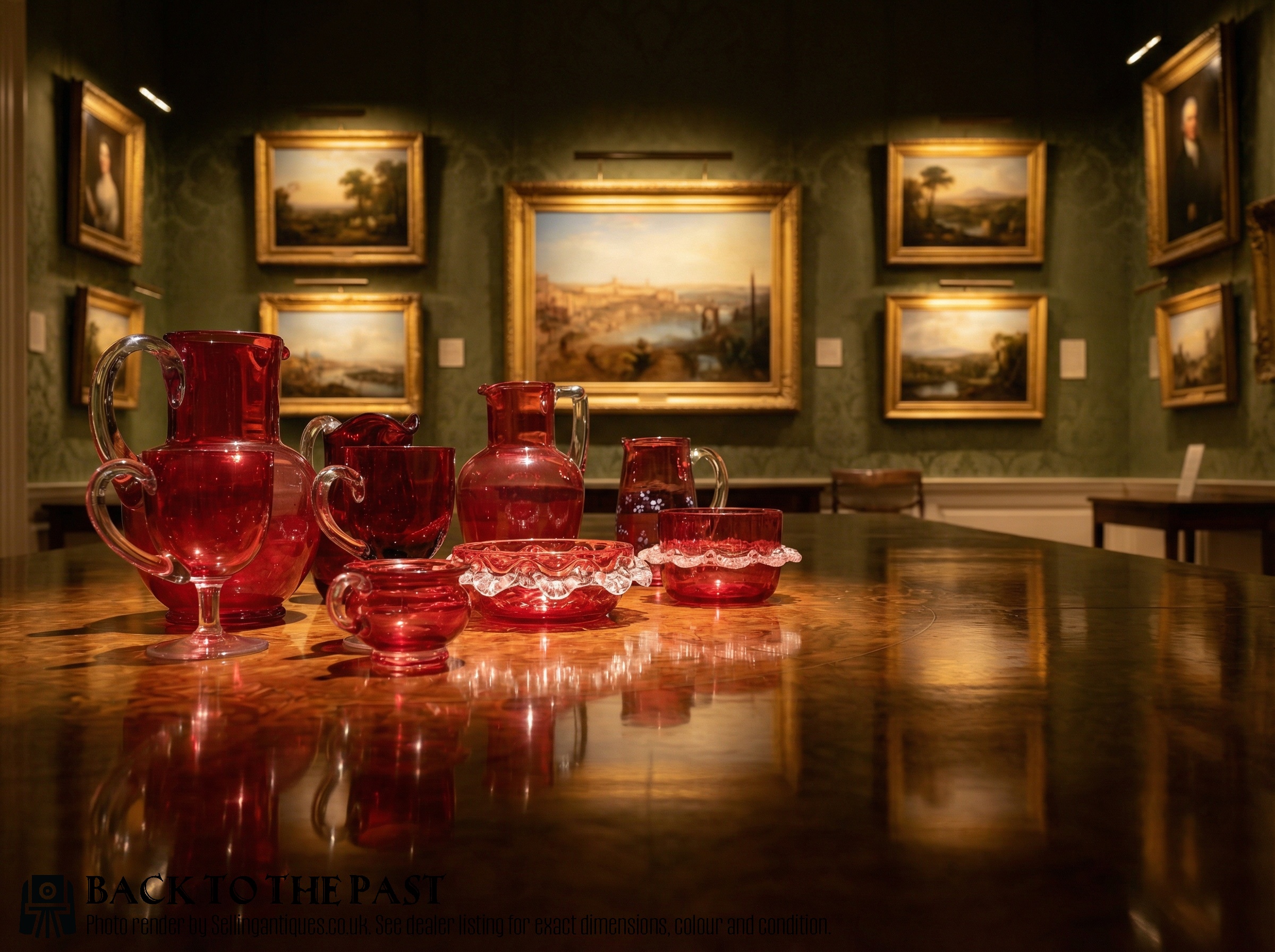
A ruby red glass bowl brings warmth and rich tone to a room, ranging from deep Victorian cranberry to bright twentieth-century cased crystal.
Ruby Red Glass Bowl
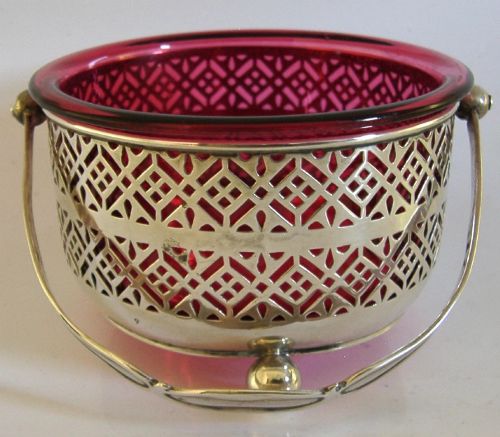
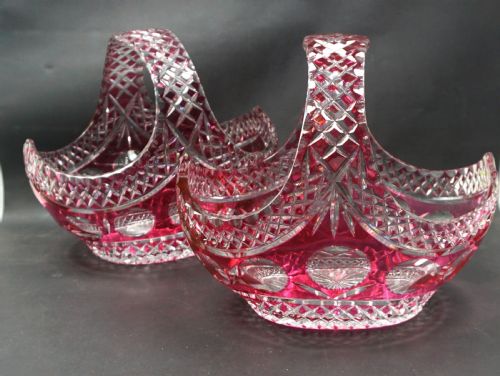
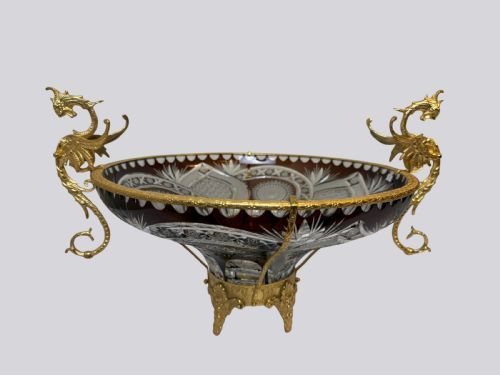
A ruby red glass bowl encompasses tablewares, sugar baskets, preserve dishes, and decorative centrepieces spanning the nineteenth century through the art deco period. Buyers hunting for a ruby red glass bowl will encounter Edwardian silver-plated frames holding liners, heavy Victorian gilded tazzas, and bohemian chandelier components.
The selection here draws heavily on Victorian and Edwardian examples, alongside Belgian and English production from the eighteen-sixties to nineteen-thirty. Forms vary from simple bon bon dishes to swing-handled baskets paired with sterling silver or silver gilt mounts.
How they were made
Maker techniques rely on hand-blown glass, lead crystal, and cased methods where a layer of red glass fuses over clear crystal before cutting or engraving. Gilding, frosting, and silver plating add surface detail to many vessels.
Mounts incorporate sterling silver, silver gilt, and pierced silver-plated frames, occasionally fitted with swing handles or matching spoons.
Some Edwardian preserve bowls arrive with their original matching pierced spoons, ready for afternoon tea service.
What varies in quality
Quality separates simple pressed or blown vessels from deeply engraved red-over-crystal pieces and those enhanced by fine gilding. The presence of hallmarked sterling silver or substantial silver-plated frames elevates the standing of a piece.
Depth of colour and crispness in cut or engraved fruiting vines distinguish superior work from standard production.
Val St Lambert·George Fox
The Ruby Red Glass Bowl Glossary
- Cranberry Glass
- A transparent pinkish-red glass coloured with gold chloride. It appears frequently in Victorian tableware and baskets.
- Tazza
- A shallow ornamental bowl raised on a stem and foot. Often used for serving fruit or sweets in the nineteenth century.
- Cased Glass
- Glass made from multiple layers of different colours fused together, allowing artisans to cut through the outer red layer to reveal clear crystal beneath.
- Silver Gilt
- Silver covered with a thin layer of gold on its surface. Found on select baskets and frames from the Edwardian period.
- Lead Crystal
- Glass containing lead oxide to increase weight, clarity, and brilliance. It provides a sharp edge for cut decorations.
Ruby Red Glass Bowl: Frequently Asked Questions
How do I clean cranberry glass?
Wash gently in lukewarm water using mild dish soap and a soft cloth. Avoid abrasive sponges or harsh chemicals that might harm surface gilding.
Dry thoroughly with a lint-free towel to prevent water spots on the glass or silver components.
How can I tell Victorian from Edwardian pieces?
Victorian pieces often feature rich cranberry hues with heavy gilding, ruffled rims, or intricate hand-blown forms popular in the late nineteenth century. Edwardian items frequently pair lighter red glass with refined silver-plated or sterling silver pierced baskets.
Examining the hallmarks on the metal mounts helps confirm the exact decade of manufacture.
What was a sugar basket used for?
Sugar baskets held loaf sugar lumps on the dining table during the nineteenth and early twentieth centuries. Guests used small tongs to serve sugar into tea or coffee.
Today these handled bowls function well for display or holding small items.