




Cobalt Blue Glass Basket
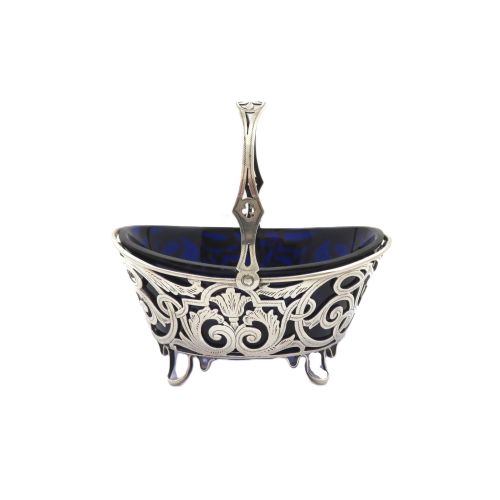
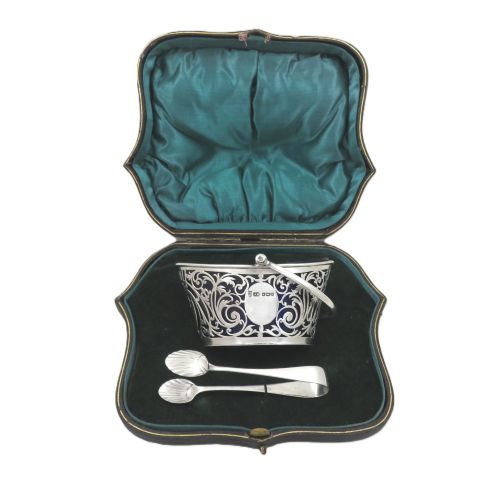
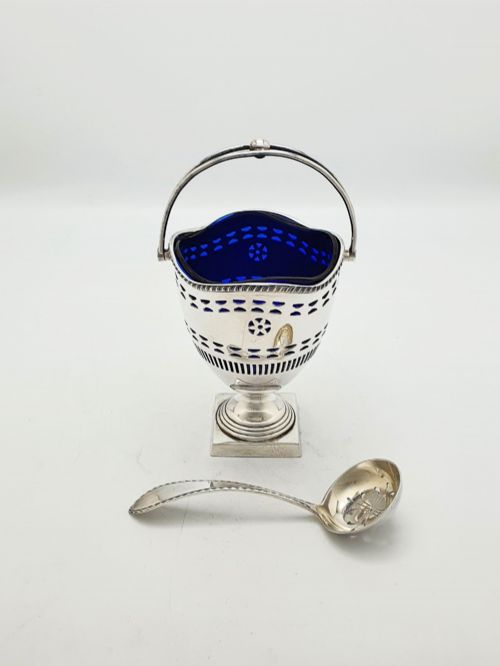
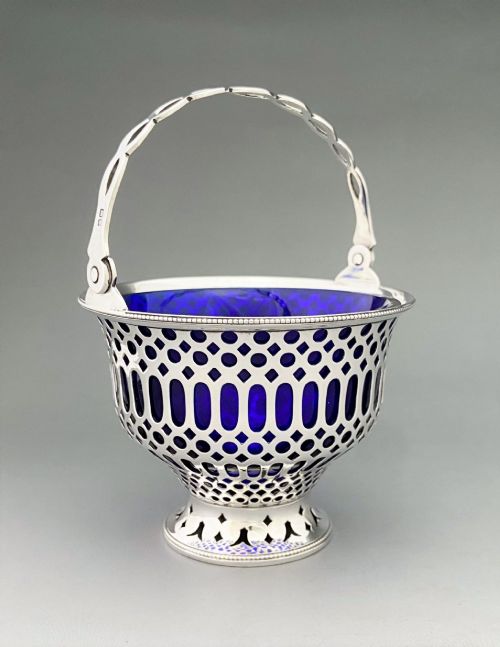
These cobalt blue glass baskets combine rich coloured bowls with pierced silver, lead crystal or wirework mounts.
Cobalt Blue Glass Basket
A cobalt blue glass basket brings together deep blue vessels and mounts spanning the Georgian, Victorian and Edwardian eras. When searching for a cobalt blue glass basket, a buyer encounters sugar baskets, cream pails and tableware featuring rich blue liners set within pierced silver, silver plate or wirework.
The selections on this page draw from periods including the eighteenth century, the Victorian age and the Edwardian decade. Alongside sugar baskets and bowls, the inventory includes decorative glassware and table pieces from the early twentieth century.
Most examples pair a vibrant blue glass insert with a structural metal frame or handle, whether shaped as a swinging handle on a silver basket or an over-crystal Belgian design. These pieces served functional roles on formal tables before becoming decorative cabinet items.
How they were made
Makers shaped the vessels using lead crystal, blue glass and cobalt glass, often blowing or moulding the material into distinct basket and bowl forms. Some designs layer blue over crystal to create depth and contrast within the body of the piece.
The metal mounts rely on sterling silver or silver plate, shaped through piercing, wirework and casting techniques. Silversmiths constructed intricate frames with swing handles and cast floral details to support and display the glass liners securely.
Listings span the eighteenth century to the twentieth century, combining sterling silver, silver plate, lead crystal and cobalt glass.
What varies in quality
Quality rests in the crispness of the metalwork and the depth of the glass colour. Pierced silver mounts and wirework frames show superior craftsmanship when the piercing remains sharp and symmetrical, holding the glass liner snugly without excess movement.
The glass itself reveals its standard through uniform saturation and clarity in the cobalt or blue material. Pieces that integrate specialised work, such as layered crystal or cast floral handles, demonstrate a higher degree of execution by the maker.
Aldridge and Green·Joseph Simon for VSL
The Cobalt Blue Glass Basket Glossary
- Cobalt glass
- Deep blue glass coloured with cobalt oxide during manufacture. It provides the vivid hue seen in the liners and baskets on this page.
- Pierced silver
- Metalwork decorated by cutting or piercing patterns through the silver sheet. This technique lightens the frame while revealing the blue glass insert beneath.
- Wirework
- Metal construction formed from fine silver or plated wires soldered together into open geometric or scroll patterns. Georgian makers utilised this method for lightweight cream pails.
- Lead crystal
- High-clarity glass containing lead oxide for added weight and brilliance. It forms the base for several blue over crystal pieces.
Cobalt Blue Glass Basket: Frequently Asked Questions
What were cobalt blue glass baskets used for?
These vessels primarily functioned as sugar baskets and cream pails on formal dining tables during the Georgian and Victorian periods. The vibrant blue glass liner sat inside an open silver or plated frame to hold sugar lumps or cream.
Over time, many lost their original functional context and transitioned into decorative tableware and cabinet display items.
How do I identify a Georgian basket?
Georgian examples often feature delicate wirework or precise hand-piercing in the silver frame, accompanied by early forms of cobalt glass liners. Makers from this era typically employed neoclassical or Adam style motifs.
Examining the weight of the silver and the construction of the swing handle helps distinguish these eighteenth-century pieces from later Victorian and Edwardian reproductions.
Are the glass liners removable?
Most silver and plated baskets feature lift-out glass liners designed to separate from the metal frame for cleaning. The outer pierced or wirework mount supports the glass container while allowing the blue colour to show through the openings.
Care must be taken when removing the liner to avoid chipping the rim against the metal handle or mounts.
What is the difference between silver and silver plate?
Sterling silver consists of solid precious metal marked with official hallmarks indicating its standard of purity. Silver plate involves a thin layer of silver bonded to a base metal substrate.
Both materials appear in the frames of these baskets across the Victorian and Edwardian periods, influencing the weight and wear patterns of the piece.