

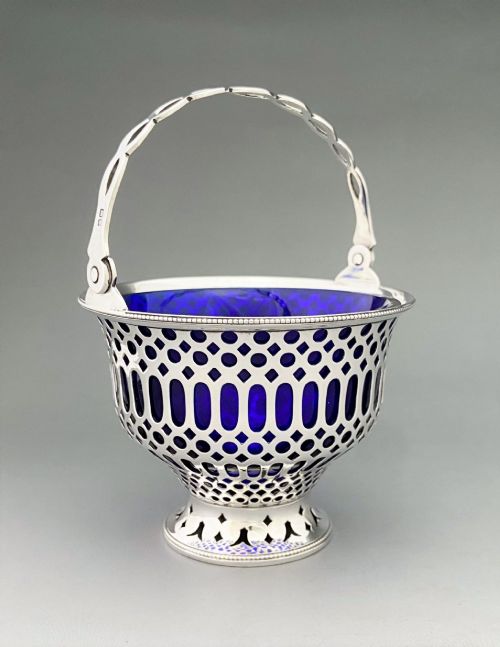


Blue Glass Silver Basket
A blue glass silver basket combines rich cobalt vessels with pierced or wirework metal mounts for a striking table centrepiece.
Blue Glass Silver Basket
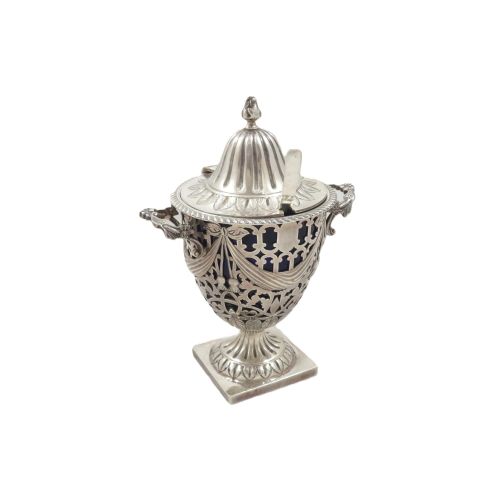
When searching for a blue glass silver basket, buyers encounter sugar baskets, bowls, and cream pails designed for formal dining tables. These tablewares primarily date from the Georgian, Victorian, and Edwardian periods, alongside Edwardian and Georgian Neoclassical stylistic revivals.
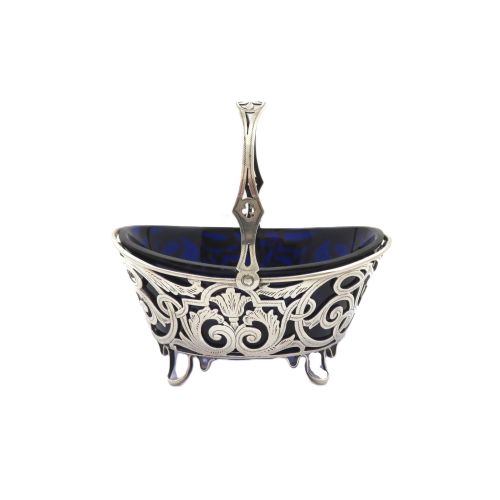
The most common format on this page pairs a pierced, wirework, or solid silver frame with a fitted blue glass liner. Many examples incorporate swing handles, cast floral details, and matching srifters or lids.
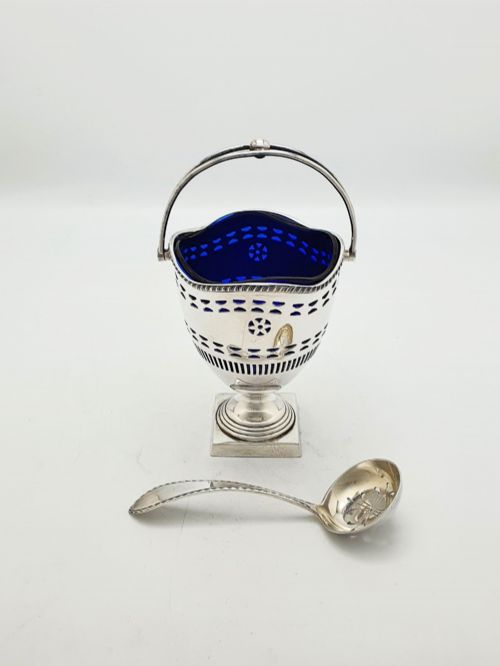
Earlier 18th-century pieces often take the form of cream pails or wirework frames, while later Victorian and Edwardian iterations frequently utilise silver plate alongside cobalt or Bristol blue glass inserts.
Materials and construction
Silversmiths utilised sterling silver and silver plate to construct pierced frames, cast floral handles, and supportive feet. Piercing and wirework techniques created openwork patterns that reveal the coloured glass vessel placed within.
Glassmakers blew and shaped cobalt glass, crystal, and blue opaline to form the protective liners that sit inside the metal framework. These glass inserts vary in transparency and depth of colour, frequently contrasting with the polished metal surrounding them.
Blue Glass Silver Basket Retail Price Guide 2026
Typical asking prices for blue glass silver basket among the pieces listed under this phrase on Sellingantiques today, from the lower quarter to the upper quarter. They describe what is for sale here now, not the wider market.
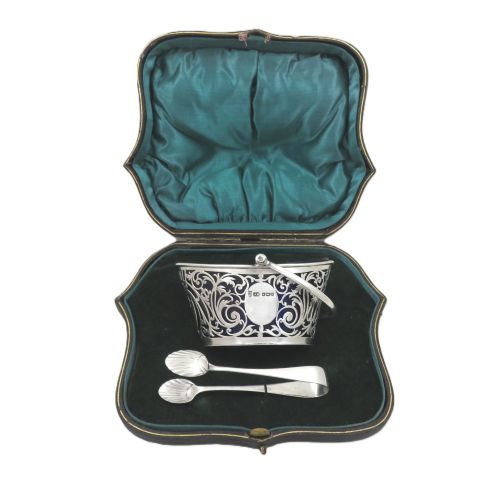
Some sugar baskets arrived with matching sifter spoons designed to scatter sugar over fruit while guests admired the cobalt glow.
Judging the range
The distinction between standard pieces and finer examples rests on the crispness of the silversmith's piercing and the weight of the metal frame. Heavier sterling silver mounts with cast handles demonstrate greater substance than lighter silver-plated alternatives.
The quality of the internal glass liner also shapes the piece, with deep Bristol blue and Bristol opaline hues showing superior depth. Retaining an original blue glass liner alongside a fitted case elevates the integrity of the object.
Aldridge & Green·Elkington & Co·Adie Bros
The Blue Glass Silver Basket Glossary
- Cream pail
- A small bucket-shaped vessel used for holding cream at the tea table, often featuring matching pierced silver work to larger sugar baskets.
- Bristol blue
- A deep, vibrant cobalt glass traditionally associated with West Country glasshouses and frequently utilised for sugar container liners.
- Pierced silver
- Metalwork decorated by cutting decorative patterns through the silver sheet to display the coloured glass liner beneath.
- Swing handle
- A movable arched metal handle attached to the rim of the basket by pins or hinges, allowing the vessel to be lifted easily.
- Wirework
- An open framework constructed from drawn silver wires soldered together into geometric or scroll patterns.
Blue Glass Silver Basket: Frequently Asked Questions
What was a blue glass silver basket used for?
These baskets primarily served as sugar bowls or sugar baskets on formal dining tables during the Georgian and Victorian eras. The bright blue glass liner protected the silver metal from the moisture and acidity of the sugar.
They stood centrally among tea service wares, holding loose sugar lumps or grains for guests. Pierced sides allowed the rich blue colour of the glass to show through while guests helped themselves.
How do I care for a silver basket with a glass liner?
Lift the blue glass liner carefully out of the silver frame before cleaning either component. Wash the glass gently in warm soapy water, avoiding harsh abrasives that might dull the cobalt surface.
Polish the sterling silver or silver plate frame with a soft cloth and appropriate metal cleaner, taking care not to let polish residue lodge in pierced cavities.
How can I tell a Georgian basket from a Victorian one?
Georgian pieces, particularly those from the eighteenth century, often feature delicate wirework or intricate neoclassical piercing patterns. They tend to have lighter frames and frequently take the shape of cream pails or oval sugar baskets.
Victorian and Edwardian examples frequently employ heavier cast floral handles, broader pierced galleries, and sometimes silver plate rather than sterling. Assay office marks and date letters stamped on the metal provide definitive chronological markers.
Are original glass liners important?
Original blue glass liners significantly enhance the authenticity and completeness of the piece. Finding an antique basket that retains its fitted Bristol blue or cobalt insert is much preferred by collectors.
Replacement liners do exist, but an original liner fits the internal dimensions precisely and matches the manufacturing period of the silver mount.