




Georgian Sugar Basket
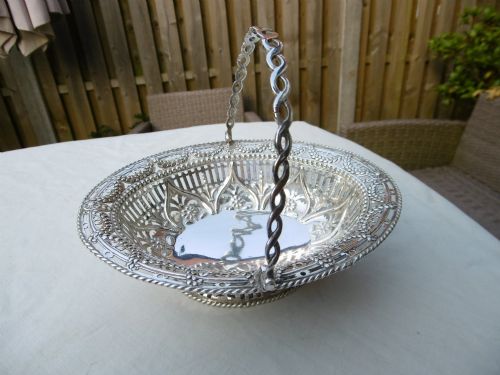
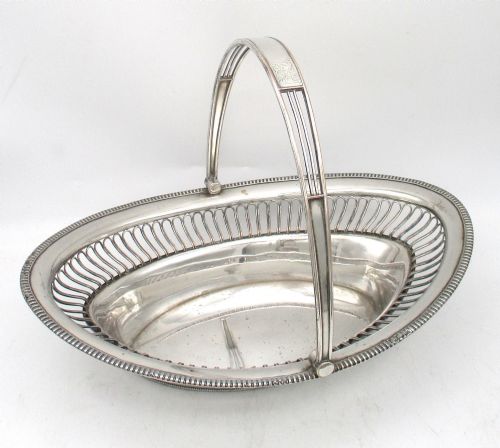
A georgian sugar basket brings the quiet elegance of late eighteenth-century dining tables into a modern room with its swing handle and pierced body.
Georgian Sugar Basket
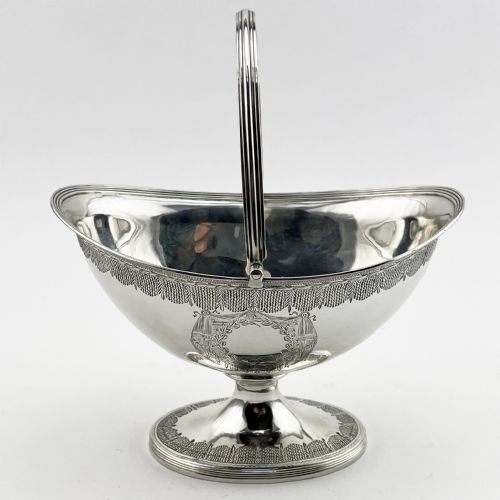
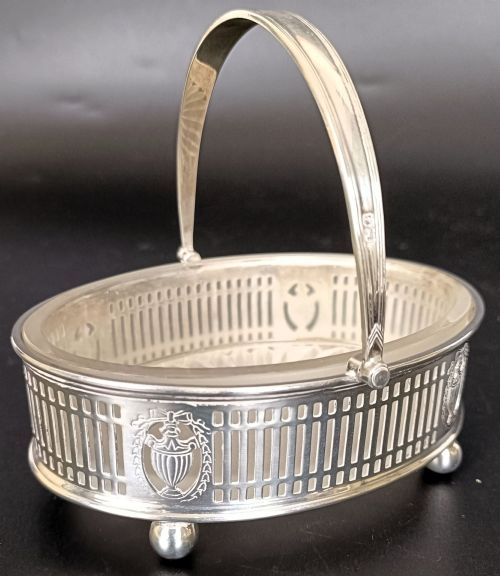
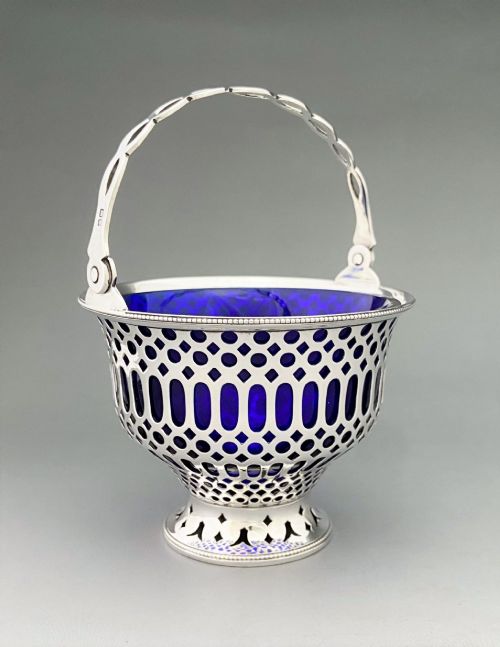
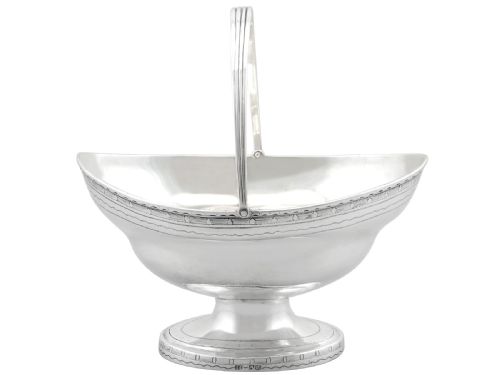
A georgian sugar basket sits on the dining table to hold lump or loose sugar, often paired with a removable blue or ruby glass liner that protects the metal from moisture. These tablewares take forms such as oval, navette, round, and cylindrical cream pails, usually suspended from a central swing handle.
The versions most common on this page date from the mid-eighteenth century onward, spanning George III pieces through to later revivals and associated wirework designs. Makers from London, Dublin, and Scotland shaped these vessels to catch the light during dessert courses.
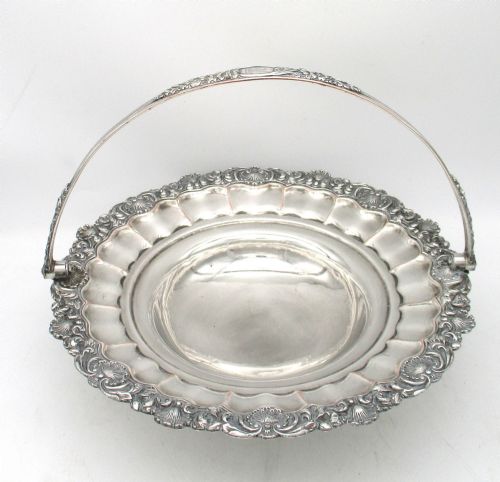
Beyond formal dining, these baskets served as sweetmeat dishes or bonbon containers, reflecting the elaborate hospitality customs of the period. Their forms range from solid silver bowls with pierced lattices to delicate wirework constructions.
How they were made
Silversmiths constructed sterling silver sugar baskets using techniques like piercing, chasing, and wirework, creating intricate geometric patterns and openwork galleries. Many examples combine hammered sheet silver with cast swing handles and applied wire rims.
Old Sheffield plate pieces rely on a layer of silver fused to a copper core, a method that produced durable tableware before electroplating became common. Glass liners, when present, were blown and fitted specifically to the contours of the wire or pierced frame.
Listings feature sterling silver, Old Sheffield plate, and copper alongside cobalt and ruby glass liners.
What varies in quality
The finesse of the piercing and the crispness of the chased neoclassical decoration set standard pieces apart from more utilitarian examples. Superior weight in the silver and balanced proportions in the swing handle indicate careful workshop production.
The survival of an original cobalt or ruby glass liner adds significantly to the completeness of the piece. Crisp maker marks and clear assay office stamps provide historical certainty that influences the standing of the object.
Aldridge & Green·Henry Chawner·Samuel Herbert·William Bond·George Fox·William Plummer·Solomon Houghman·Thomas Pitt
The Georgian Sugar Basket Glossary
- Wirework
- A technique of soldering thin strands of metal together into open geometric lattices. This method created lightweight, airy baskets popular in the late eighteenth century.
- Navette
- A boat-shaped vessel form with tapered ends. This profile is frequently seen in George III silver sugar baskets.
- Swing handle
- A movable arch attached to opposite sides of the basket rim on pivots. It allows the vessel to be lifted easily during service.
- Old Sheffield plate
- A material made by fusing a thin sheet of silver to a thicker copper base under heat. It reveals thin lines of copper wear along high edges on older items.
- Cream pail
- A small cylindrical or bucket-shaped vessel with a swing handle. These pieces often match the design of larger sugar baskets on the table.
Georgian Sugar Basket: Frequently Asked Questions
What were georgian sugar baskets used for?
These vessels held refined sugar for tea and dessert service in wealthy households during the eighteenth and nineteenth centuries. Guests used tongs to take sugar lumps directly from the openwork bowl.
They also functioned as sweetmeat or bonbon dishes for serving small confections. The inclusion of a glass liner allowed them to hold moist items safely.
How do I clean sterling silver sugar baskets?
Gentle washing in warm water with mild soap removes everyday dust and oils. Soft cloths prevent scratching the polished surface or delicate wirework.
Harsh chemical dips should be avoided, particularly on pieces with Old Sheffield plate where the silver layer is thin. Careful drying preserves the finish of both metal and glass.
Did all sugar baskets have glass liners?
Many pierced and wirework baskets required coloured glass inserts, typically in deep blue or ruby shades, to contain loose sugar crystals. Without a liner, small granules would fall straight through the open lattice.
Solid-walled bowls and buckets often dispensed with liners entirely. Surviving original glass adds to the completeness of wirework examples.
How can I tell a genuine piece from a revival?
Examining the assay marks, maker stamps, and construction techniques reveals the era of manufacture. Eighteenth-century pieces display specific punch formats and hand-finished details distinct from later nineteenth-century or Interwar revivals.
Weight distribution and the wear patterns on the base also indicate age. Old Sheffield plate items show characteristic copper telegraphing along high friction points.