


Silver Pierced Baskets
These silver pierced baskets combine intricate fretwork and fine metalwork, offering both practical elegance and historical charm for any display.
Silver Pierced Baskets
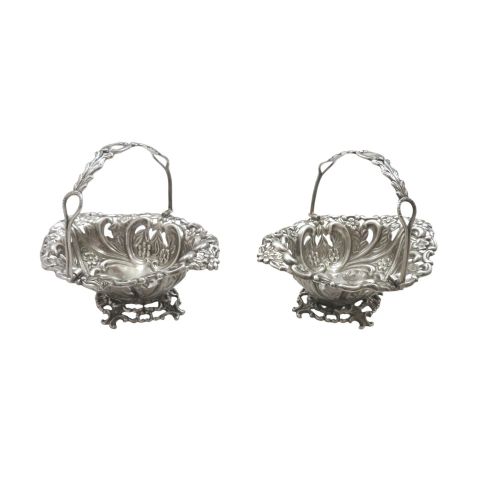
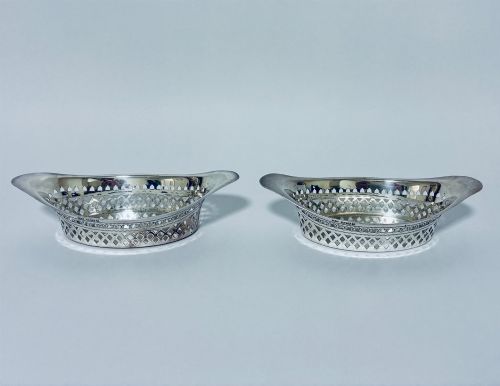
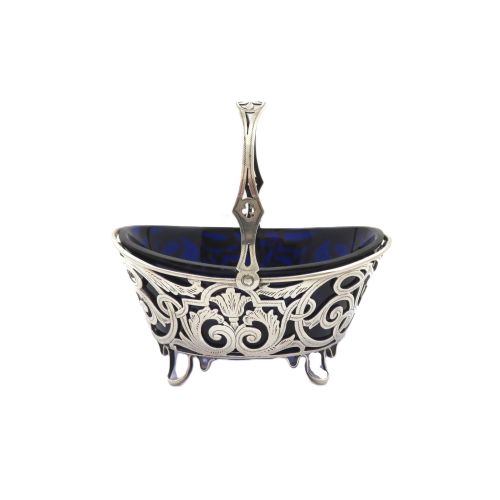
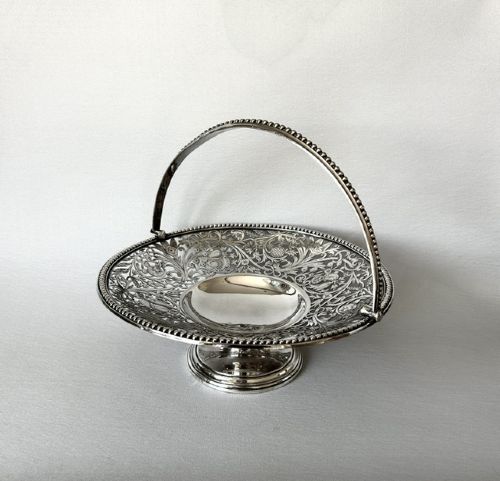
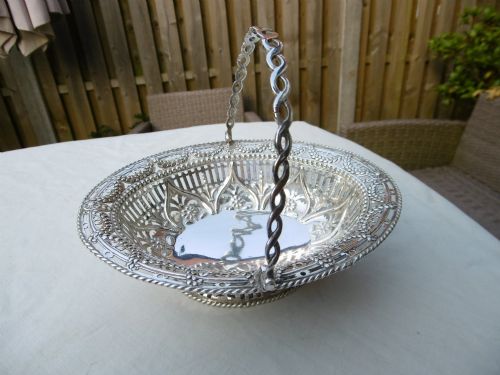
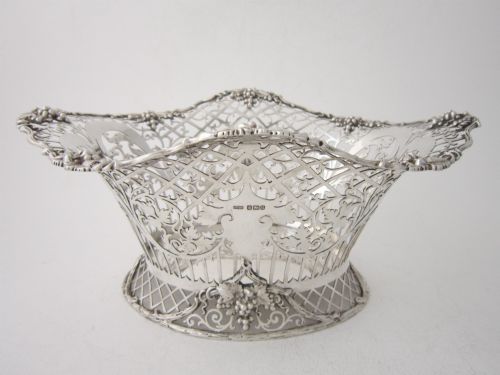
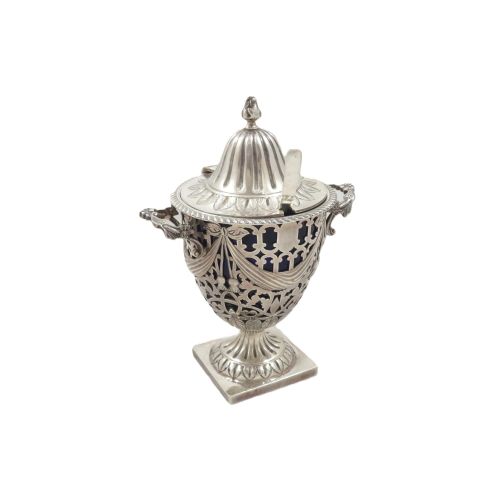
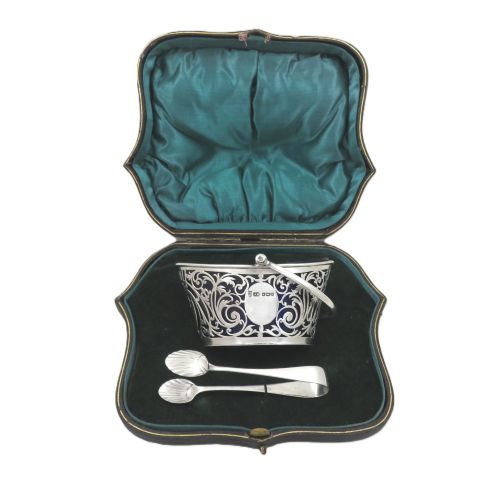
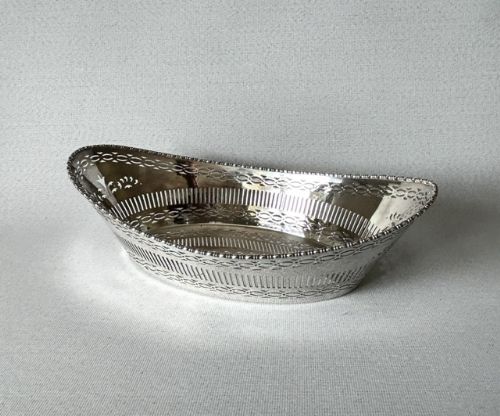
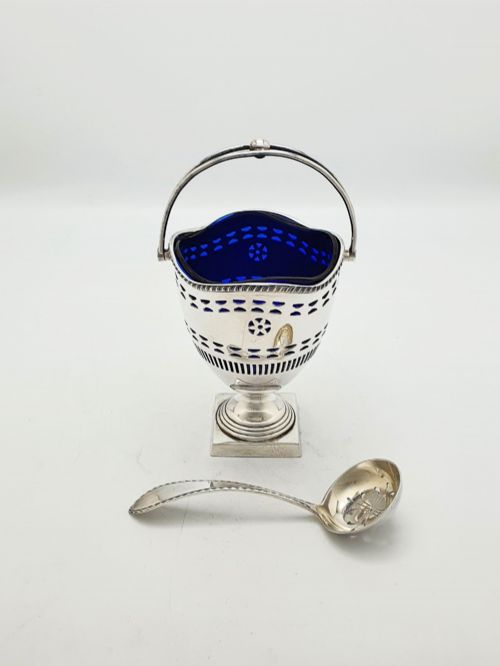
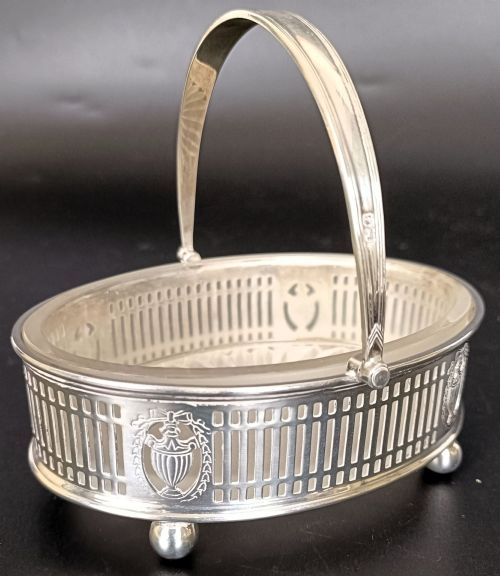
Silver pierced baskets encompass a variety of holloware items, including sugar baskets, bonbon dishes, cream pails, and larger fruit or bread containers designed for formal tables. You will frequently encounter Edwardian and Victorian examples on this page, alongside pieces stretching back to the eighteenth century.
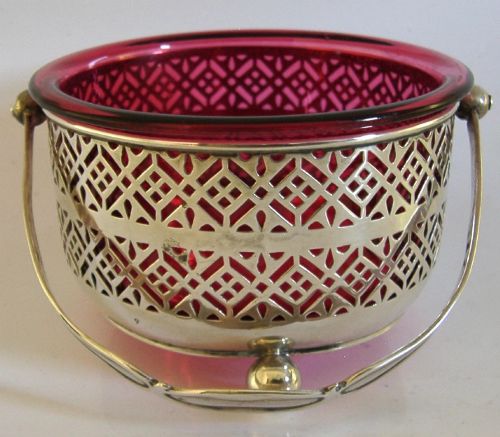
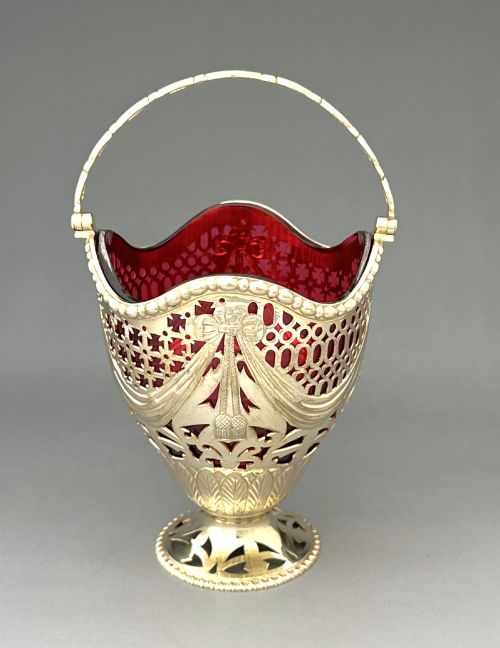
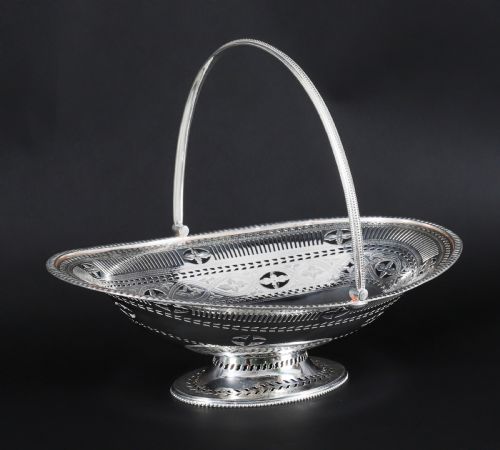
The forms range from small handled dishes and swing-handled baskets to substantial centrepiece bowls and lidded urns. Many incorporate contrasting elements such as cobalt, cranberry, ruby, or clear glass liners that sit within the pierced metal framework.
How they were made
Silversmiths utilised sterling silver, solid silver, and silver plate over base metals, often shaping the metal through piercing, fretwork, and lattice techniques to create openwork patterns. Handles were frequently cast with floral or reeded details, while swing handles allowed the vessels to move flexibly.
Makers integrated colourful glass liners, including cobalt and cranberry glass, blown to fit snugly inside the openwork silver bodies. Guilders added silver gilt layers for decorative effect, and hallmarking stamps were struck directly into the metal to record the town, year, and maker.
Listings span multiple eras, encompassing Georgian, Victorian, Edwardian, and Art Deco periods, alongside materials ranging from sterling silver to cranberry glass.
What varies in quality
The refinement of the piercing work distinguishes finer baskets from simpler designs, with intricate fretwork and balanced symmetry marking superior craftsmanship. The weight of the metal and the presence of original cast handles or matching coloured glass liners also elevate a piece.
Maker attribution plays a role in distinction, as pieces bearing marks from established silversmiths demonstrate higher standards of execution. The preservation of the original plating or the crispness of the sterling silver hallmarks indicates how well the vessel has survived over time.
Aldridge and Green·Mappin and Webb·Elkington·Thomas Bradbury·John Hunt·Fenton Brothers·Joseph Rodgers·William Comyns·Hammond Creake and Co·William Hutton and Sons·Samuel Herbert
The Silver Pierced Baskets Glossary
- Piercing
- A technique where metal is cut through to form decorative openwork patterns. This process creates the lattice and fretwork characteristic of these baskets.
- Swing handle
- A movable handle attached to the rim of a basket by hinges. It drops to the side when the vessel rests on a table.
- Silver plate
- A layer of silver fused to a base metal core. This method offered the visual appeal of solid silver at a different cost.
- Silver gilt
- Silver covered with a thin layer of gold on the surface. This treatment added a warm, dual-toned metallic finish to the interior or exterior.
- Bonbon dish
- A small open vessel intended for holding sweets or confections. These often feature delicate pierced walls and small proportions.
Silver Pierced Baskets: Frequently Asked Questions
What were silver pierced baskets used for?
These vessels served functional roles on formal dining tables, holding items like sugar, fruit, bread, biscuits, or small confections. Some functioned as cream pails or potpourri holders.
Over time, their uses shifted as dining customs changed, turning them into decorative centrepieces or display items for sideboards.
How do I identify the date of a silver basket?
English pieces typically feature hallmarks stamped into the metal, which include date letters, assay office marks, and maker symbols. These stampings allow collectors to trace the exact year and city of manufacture.
Stylistic cues, such as neoclassical swags or Art Nouveau curves, also provide strong indications of the manufacturing period.
Are the glass liners usually original?
Finding a basket with its original coloured glass liner enhances the completeness of the piece. Cobalt, cranberry, and ruby glass liners were commonly blown to fit the exact dimensions of the pierced frame.
Because glass is fragile, many surviving pieces have replacement liners or lack them entirely, making intact sets particularly notable.
How should I care for silver pierced baskets?
Regular, gentle cleaning with a soft cloth helps maintain the shine of sterling silver or silver plate without wearing down the delicate fretwork. Avoid harsh abrasive dips that can damage soldered joints or remove desirable patina.
Glass liners should be washed separately in warm soapy water and dried thoroughly before being placed back into the metal frame.