



Pierced Silver Sugar Bowl
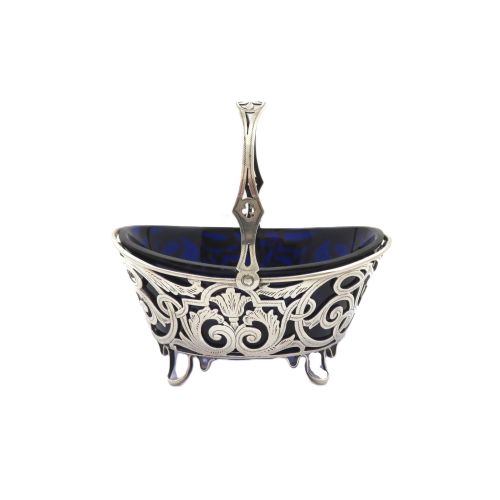
A pierced silver sugar bowl brings openwork craftsmanship and coloured glass to the table.
Pierced Silver Sugar Bowl
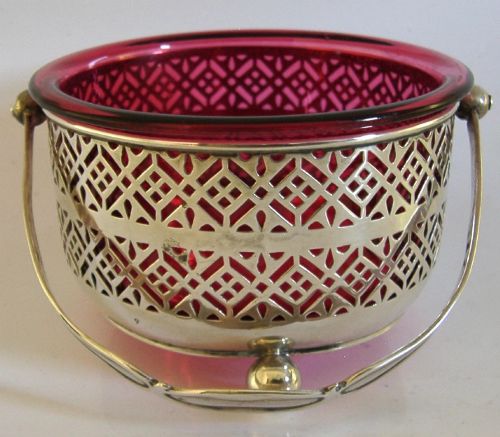
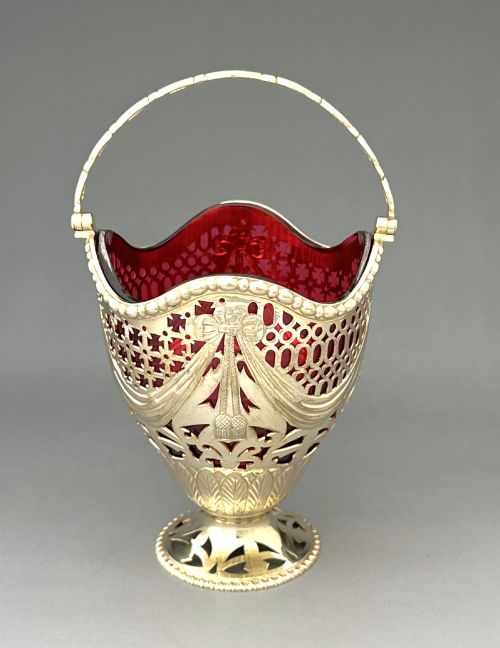
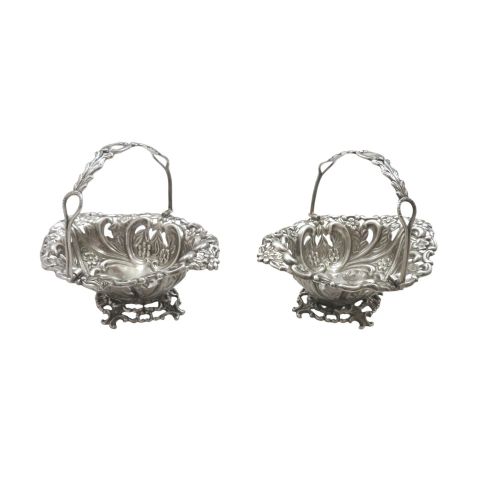
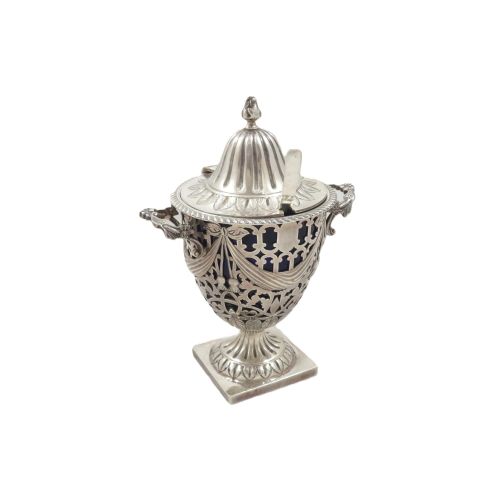
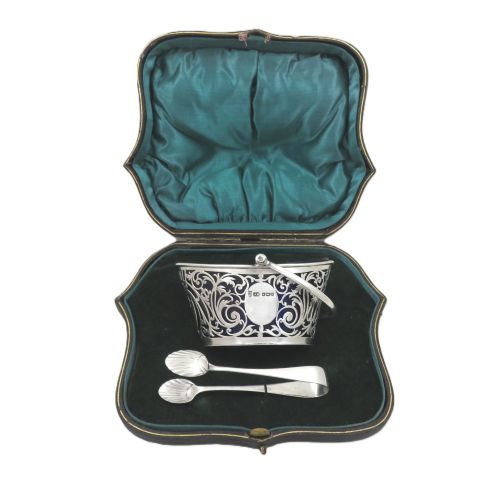
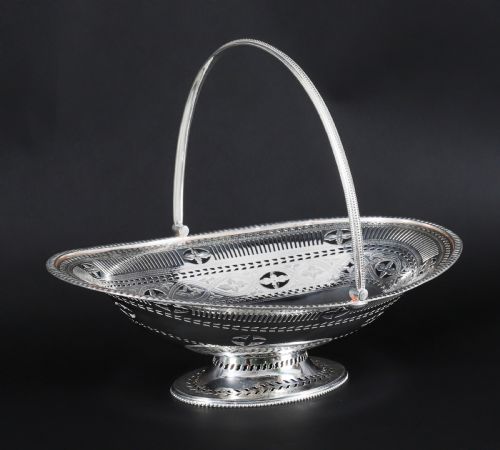
A pierced silver sugar bowl comprises openwork metal vessels designed to hold loose sugar or lumps at the table, frequently appearing as swing-handled baskets, urns with lids, or footed lattice bowls. When searching for a pierced silver sugar bowl, buyers encounter pieces from the Georgian, Victorian, and Edwardian eras alongside silver plate alternatives.
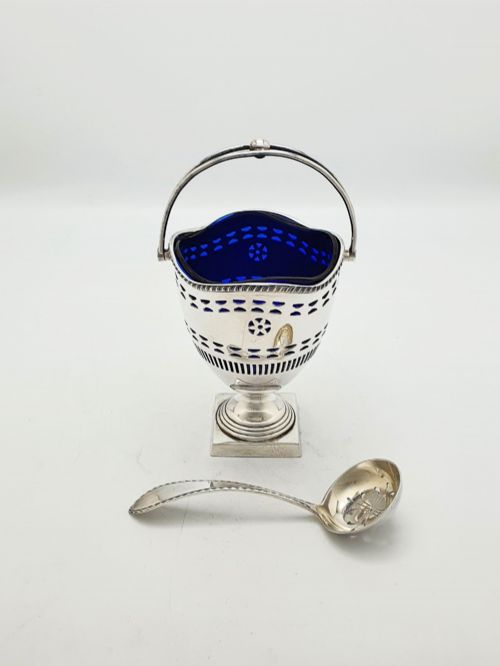
The form often includes a removable glass liner in cobalt blue, cranberry red, or ruby hues, allowing the decorative fretwork and openwork patterns to stand out against a coloured interior. Many examples date from the early twentieth and late nineteenth centuries, showcasing intricate wirework, wickerwork, and neoclassical pierced designs.
Makers produced these items for domestic dining alongside matching sifter spoons and cream pails, creating complete tea service accessories. Surviving specimens range from substantial 18th-century Georgian baskets to cased Edwardian presentation sets intended for formal hospitality.
How they were made
Silversmiths constructed these vessels using sterling silver or silver plate, employing piercing, fretwork, and casting techniques to create intricate openwork patterns in the metal walls. Artisans pierced the sheet silver by hand or with mechanical saws, tracing geometric, floral, or neoclassical motifs before assembling the body.
Blowers manufactured fitted glass liners in rich cobalt, cranberry, and ruby colours to sit inside the pierced framework, providing a contrasting backdrop for the metalwork. Master craftsmen also applied internal silver-gilt washes to select sterling baskets, giving the interior a rich golden sheen that resisted tarnishing from moist sugar.
Some Victorian sugar baskets feature handles cast as climbing floral stems, proving that even sugar containers needed a botanical workout.
What varies in quality
Quality depends heavily on the crispness of the piercing work and the weight of the metal used in the body, where finer saw-work demonstrates greater skill by the silversmith. Thicker gauge sterling silver maintains its structural integrity better over time than thin metal or silver plate that has worn down through decades of polishing.
Aldridge & Green·Elkington·Fenton·Hammond, Creake & Co·William Bond·Edward H Stockwell·George Fox
The Pierced Silver Sugar Bowl Glossary
- Pierced
- Metalwork punctured with decorative patterns or open fretwork. This technique lightens the visual weight of the silver while revealing the coloured glass liner within.
- Sterling silver
- An alloy consisting of pure silver and other metals, typically copper, standardised for durability. Items made to this standard carry official hallmarks denoting purity and origin.
- Silver plate
- A base metal substrate coated with a thin layer of silver. This method offered an accessible alternative to solid sterling for household tableware.
- Silver-gilt
- Sterling silver that has been coated with a thin layer of gold on the surface. This treatment provides a warm golden interior finish inside bowls and baskets.
- Cranberry glass
- A rich pinkish-red glass produced by adding gold chloride to the molten batch. It frequently appears as removable liners in Edwardian and Victorian baskets.
Pierced Silver Sugar Bowl: Frequently Asked Questions
What were pierced silver sugar bowls used for?
These vessels held sugar lumps or loose crystal sugar on the formal dining table or during afternoon tea service. The openwork metal design allowed the coloured glass liner inside to be seen clearly by guests.
They frequently accompanied matching cream pails and sifter spoons to complete the tea table ensemble. Today, many owners utilise them as decorative sweetmeat dishes or bonbon bowls.
How do I care for a pierced silver sugar bowl?
Gentle washing with warm water and mild soap protects the delicate metalwork and any glass liner present. Avoid harsh abrasive dips that can strip away fine detail or damage vintage silver plate.
Store the piece in a dry environment to minimise tarnishing on the openwork surfaces. Handle swing handles with care to prevent undue stress on the hinge pins.
How can I tell a Georgian bowl from a Victorian one?
Georgian pieces, often dating from the eighteenth century, display hand-pierced neoclassical motifs and substantial cast elements created by master silversmiths. They tend to exhibit distinct regional hallmarking practices and heavier gauge construction.
Victorian and Edwardian examples frequently incorporate mechanical fretwork, swing handles, and brightly coloured glass liners such as cranberry or cobalt. Hallmarks on these later items provide precise date letters for the year of assay.
Are coloured glass liners original?
Original glass liners fit snugly into the contours of the pierced metal basket without excessive movement. Matching the exact shape and tint of period glass to the metal framework indicates a cohesive period assembly.
Replacement liners often appear slightly loose or feature modern glass production characteristics. Examining the base of the glass can reveal age-related wear consistent with the metal basket.