



Sterling Silver Sugar Basin
These sterling silver sugar basin pieces are traditional tabletop vessels designed for holding sugar, spanning periods from the eighteenth century through the twentieth century.
Sterling Silver Sugar Basin
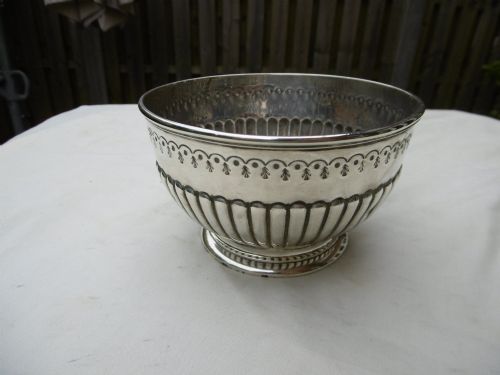
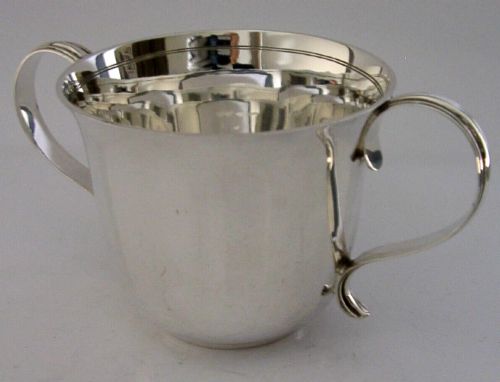
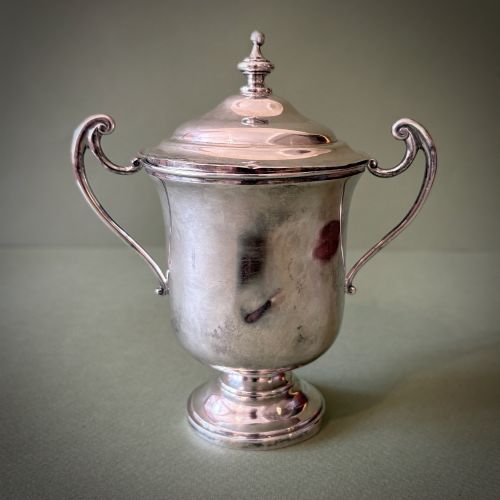
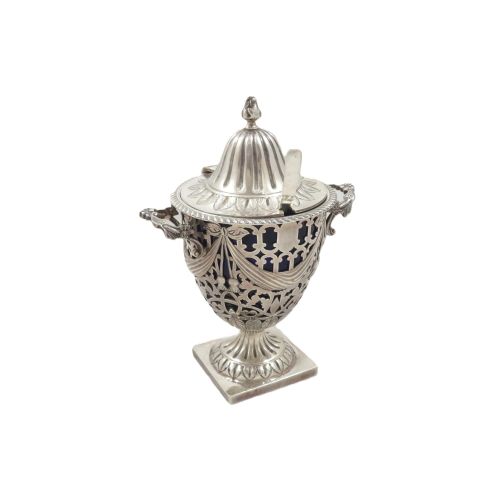
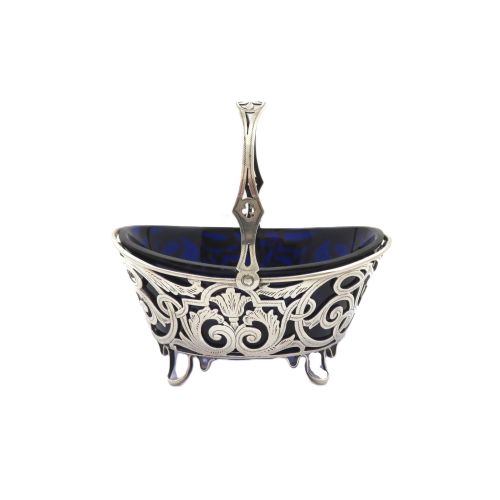
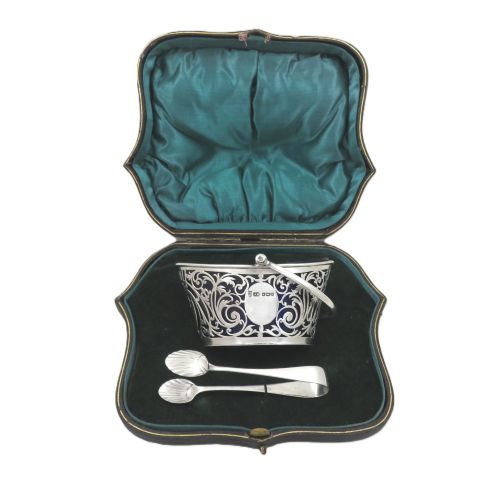
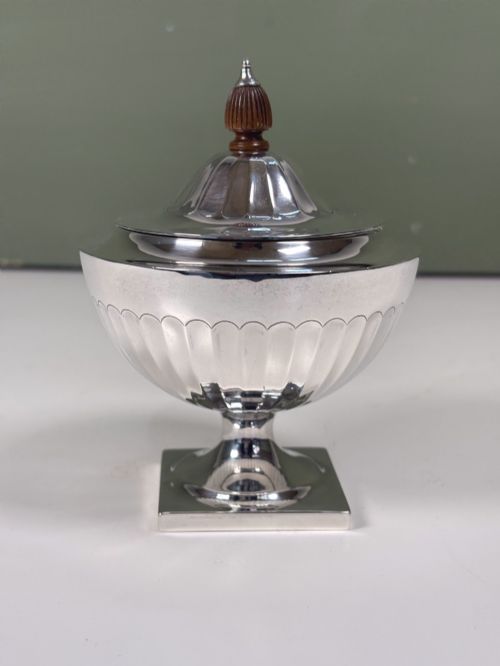
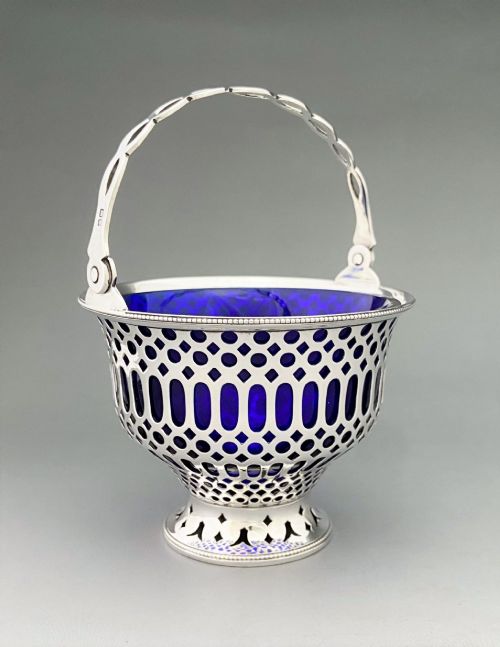
A sterling silver sugar basin represents a domestic dining vessel created across several distinct eras, most commonly encountered in Victorian, Edwardian, and Georgian incarnations on this page. Buyers examining these pieces find a variety of forms including open bowls, handled baskets with swing handles, pedestal footed vessels, and covered urns sometimes accompanied by glass liners or sifter spoons. The materials span standard sterling silver alongside silver gilt, frequently paired with blue glass inserts or silk and velvet within fitted presentation cases.
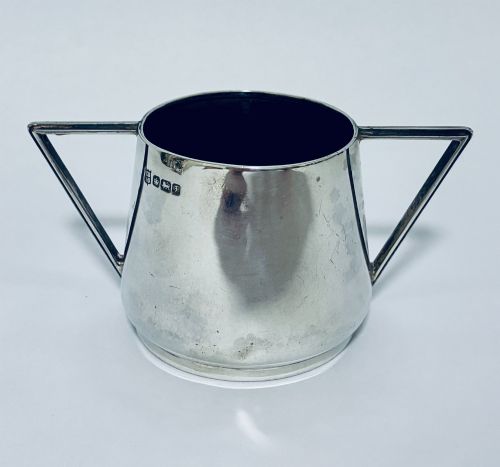
The historical spread reaches from eighteenth-century examples originating in England, Ireland, and Scotland up to Art Deco and Arts and Crafts creations of the early twentieth century. Early American and George III pieces sit alongside later Victorian repousse tea caddies and Edwardian sugar baskets. Each form reflects the changing dining habits of its period, shifting from simple Georgian open bowls to ornate Victorian swing handled baskets and heavy twentieth-century gauges.
Materials and Technique
Makers shaped these vessels using traditional silversmithing techniques, working solid sterling silver into heavy gauges as well as pierced or openwork designs. Pieces frequently incorporate cast elements such as floral handles, pedestal feet, and swing mechanisms attached to baskets.
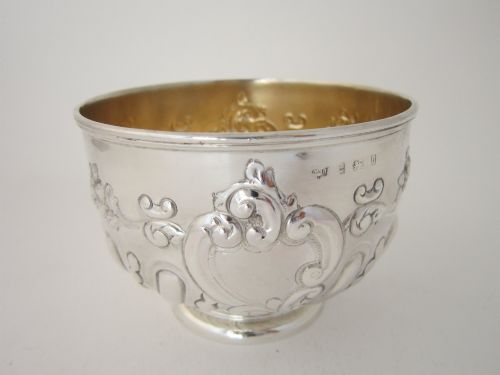
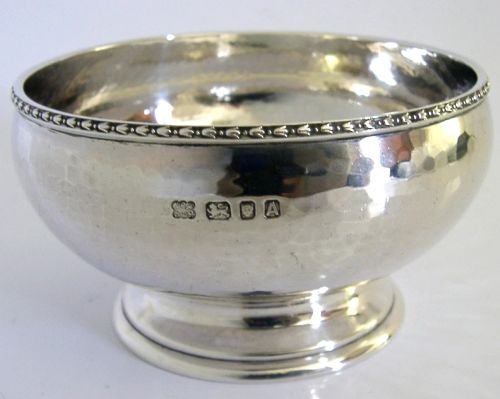
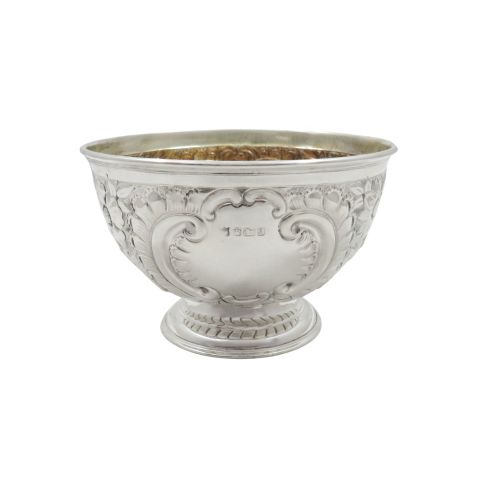
Surface decoration relies on hand craftsmanship like planished hammering characteristic of Arts and Crafts pieces, alongside detailed repousse work and embossing. Interior surfaces sometimes feature a gold wash known as silver gilt, while certain open baskets utilise contrasting cobalt glass liners to hold the sugar.
Listings feature silver sugar basins spanning the Georgian, Victorian, and Edwardian eras, incorporating materials like silk, velvet, cobalt glass, and silver gilt.
Craftsmanship and Weight
Quality in a sterling silver sugar basin rests upon the weight of the metal and the crispness of the hand-worked detail. Heavier gauge silver provides a substantial feel in the hand, separating standard domestic items from superior vessels.
The finesse of the smithing work dictates the upper tier of the range, visible in cleanly pierced baskets, sharply cast floral handles, and even planished hammer marks. Complete sets retaining original sifter spoons or fitted leather cases also elevate the piece.
Peter and William Bateman·John Kincard·Mappin and Webb·John Barrett·George Fox·Walter Brind·Robert Hennell·Lee and Wigfull
The Sterling Silver Sugar Basin Glossary
- Sterling silver
- A silver alloy containing 92.5 percent pure silver by mass and 7.5 percent other metals, usually copper. This standard composition guarantees the durability required for domestic tableware.
- Repousse
- A metalworking technique where the smith pushes or hammers the design from the reverse side to create a raised pattern on the front. This decorative method is common on Victorian tea caddies and sugar bowls.
- Silver gilt
- Silver that has been coated with a thin layer of gold on its interior surface. This treatment protected the metal from the corrosive properties of moist sugar.
- Swing handle
- A movable arched handle attached to the sides of a basket via pivots. It allows the handle to lie flat against the rim when the vessel rests on a table.
- Planished
- A surface texture created by systematic light hammering with a polished round-faced hammer. Arts and Crafts silversmiths utilised this technique to leave subtle facets across the metal.
- Sifter spoon
- A perforated spoon designed for dusting sugar over fruit or pastry. These spoons frequently accompany Victorian sugar basins in fitted presentation sets.
Sterling Silver Sugar Basin: Frequently Asked Questions
What is a sterling silver sugar basin used for?
These vessels were originally manufactured to hold loose sugar on the dining or tea table during the eighteenth, nineteenth, and twentieth centuries. They served both a functional role in tea service and a decorative one as part of a formal tablescape.
Today, buyers frequently utilise them as decorative bowls or for serving small items during modern dining, appreciating their historical craftsmanship within a contemporary home.
Are glass liners original to sugar baskets?
Many openwork or pierced silver sugar baskets from the Victorian and Edwardian periods were manufactured with removable glass liners, frequently in deep cobalt blue. These liners protected the delicate pierced silver framework from moisture and direct contact with loose sugar.
When a basket retains its matching original glass insert, it adds significantly to the completeness and historical integrity of the piece.
How should I clean antique silver?
Antique sterling silver requires gentle cleaning with a specialised non-abrasive silver polish and a soft cloth to remove tarnish without wearing away the underlying metal. Vigorous scrubbing can damage fine repousse details, hand-hammered facets, or delicate pierced work.
Storing the vessel in a dry environment away from direct sunlight helps minimise future tarnish accumulation on the polished surface.