


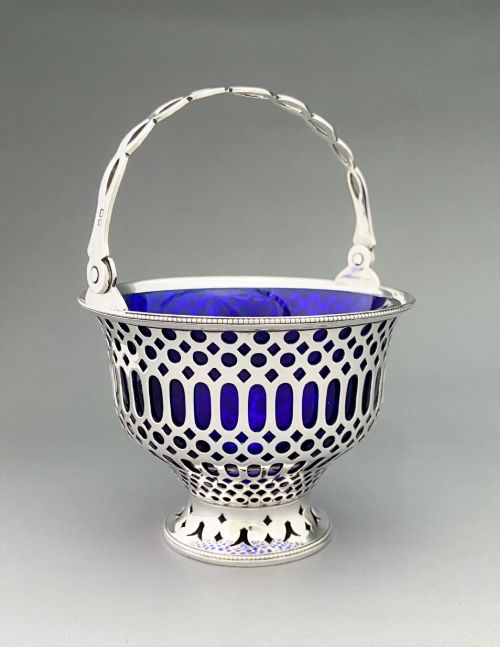


Cobalt Glass Silver Basket
These cobalt glass silver basket pieces combine deep blue liners with pierced metalwork, offering a striking centrepiece for any traditional table setting.
Cobalt Glass Silver Basket
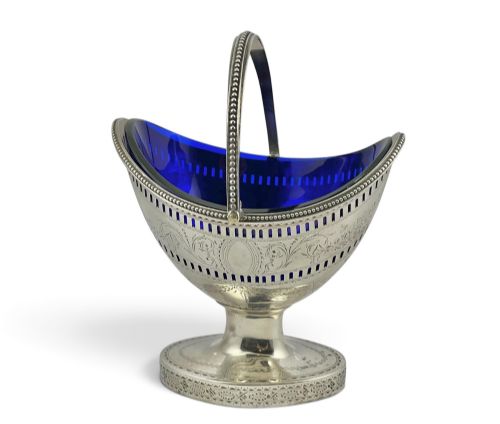
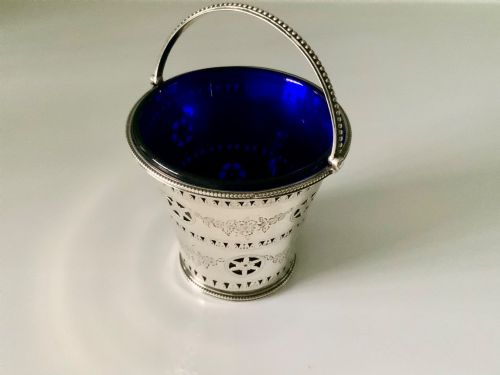
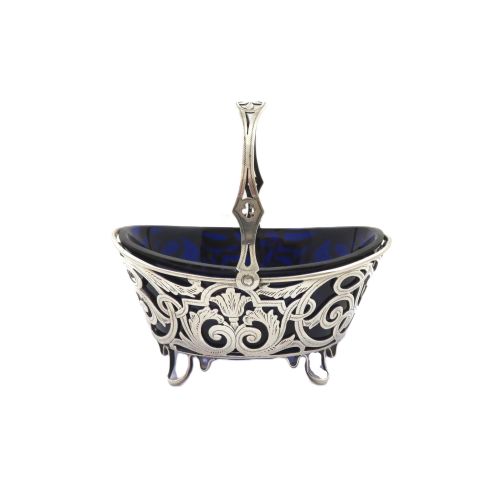
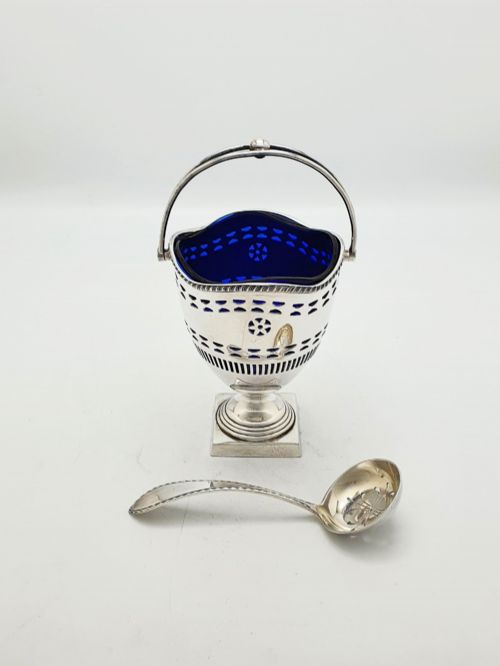
When you search for a cobalt glass silver basket, you are looking at tableware designed to hold sugar or cream on a formal table. These objects typically combine a precious metal frame with a vibrant blue glass liner that shows through pierced metalwork.
The versions you are most likely to meet on this page date from the Georgian period through to the Edwardian era. Sugar baskets, cream pails, and sugar basins dominate the forms, ranging from eighteenth-century George III examples to later nineteenth-century pieces.
How they were made
Makers constructed these pieces using sterling silver or silver plate for the metal frame and handle, often piercing the metal in decorative geometric or floral patterns. Inside these delicate frames sits a blown cobalt glass liner, custom-fitted to hold the vessel's contents.
Workshops employed casting techniques for handles and bases, as seen in pieces featuring cast floral motifs. Silversmiths then assembled the pierced sheet metal, attaching swing handles to complete the basket form.
Cobalt Glass Silver Basket Retail Price Guide 2026
Typical asking prices for cobalt glass silver basket among the pieces listed under this phrase on Sellingantiques today, from the lower quarter to the upper quarter. They describe what is for sale here now, not the wider market.
Listings span the eighteenth century through the Edwardian era, featuring materials such as sterling silver, silver plate, and blue glass.
What varies in quality
Quality in these baskets rests primarily on the crispness of the pierced metalwork and the weight of the silver or silver plate used in the frame. Finer examples display meticulous hand-piercing and substantial cast elements like floral handles rather than thin pressed metal.
The integrity and original fit of the cobalt glass liner also influence the overall standard of the piece. Matching an intact, period-correct blue glass insert to an ornate Georgian or Victorian frame distinguishes the superior specimens.
Aldridge & Green
The Cobalt Glass Silver Basket Glossary
- Pierced silver
- Metalwork cut through in decorative patterns to reveal the coloured glass liner beneath. This technique defines many eighteenth-century sugar baskets.
- Cream pail
- A small bucket-shaped vessel with a swing handle, used for serving cream at the table. These often mirror the design of larger sugar baskets.
- Swing handle
- An articulated handle attached to pivots on the rim of the basket, allowing it to move freely. This feature is common on Georgian and Edwardian table baskets.
- Silver plate
- A base metal coated with a layer of silver, utilised in later nineteenth and early twentieth-century pieces as an alternative to solid sterling silver.
Cobalt Glass Silver Basket: Frequently Asked Questions
What is a cobalt glass silver basket?
A cobalt glass silver basket is a piece of antique tableware consisting of a metal frame, often pierced, fitted with a deep blue glass insert.
These items were primarily used for serving sugar or cream during formal dining occasions from the Georgian era onwards.
How were these baskets used?
They served as decorative table vessels to hold loose sugar lumps or cream during tea service and formal meals.
The brightly coloured glass insert protected the metal frame while displaying the contents clearly through the pierced silver sides.
How do I date a silver sugar basket?
Dating relies on identifying hallmarks stamped on the silver, stylistic cues like George III Neoclassical designs, or manufacturing periods.
Pieces range from eighteenth-century examples to Victorian and Edwardian iterations, each exhibiting distinct handle styles and piercing patterns.
Are the glass liners usually original?
Finding a piece with its original cobalt glass liner is standard for many well-preserved antiques, though replacements do exist.
The fit and colour consistency between the glass insert and the metal basket help determine whether they belong together.