



Blue Glass Sugar Bowl
These blue glass sugar bowl examples bring colour and tactile weight to a tea service, offering brilliant contrast within silver frames.
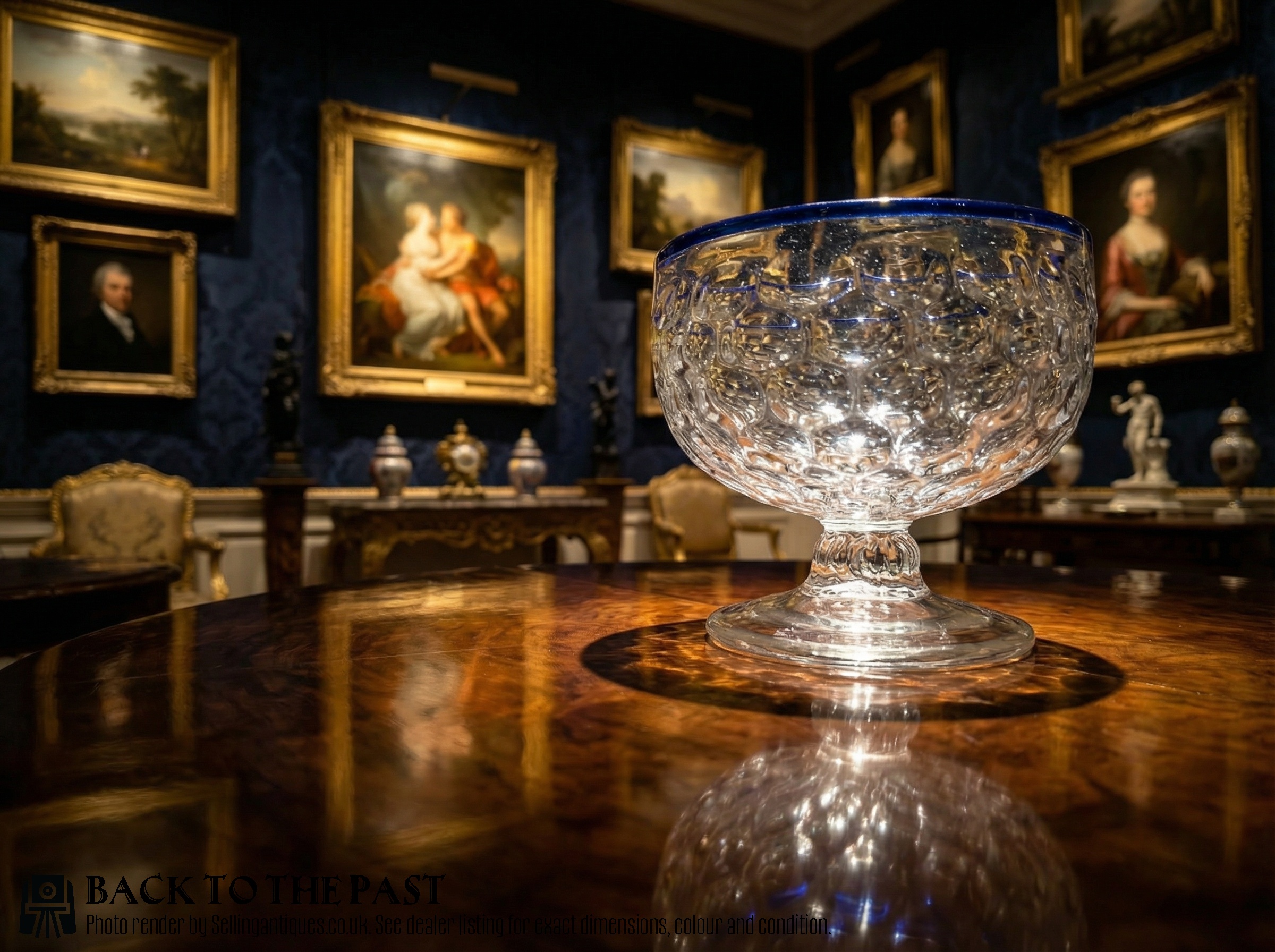
Blue Glass Sugar Bowl
A blue glass sugar bowl serves as a table centrepiece designed to hold loose sugar, often paired with silver baskets, frames or cream jugs. When exploring this phrase, buyers encounter small tableware vessels produced across the eighteenth and nineteenth centuries.
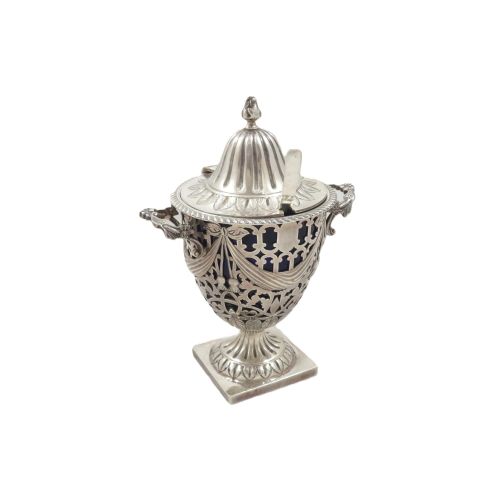
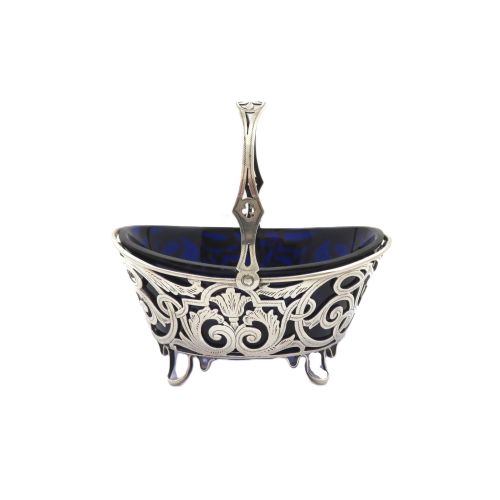
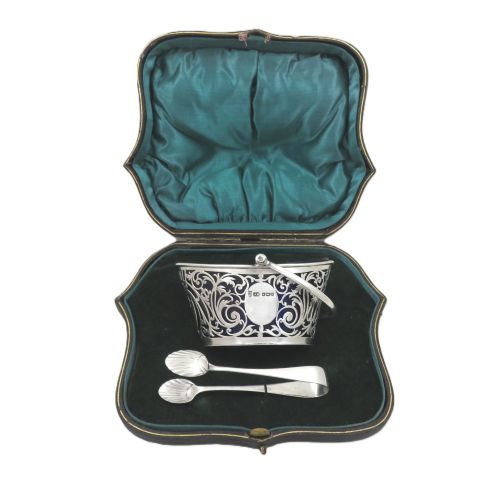
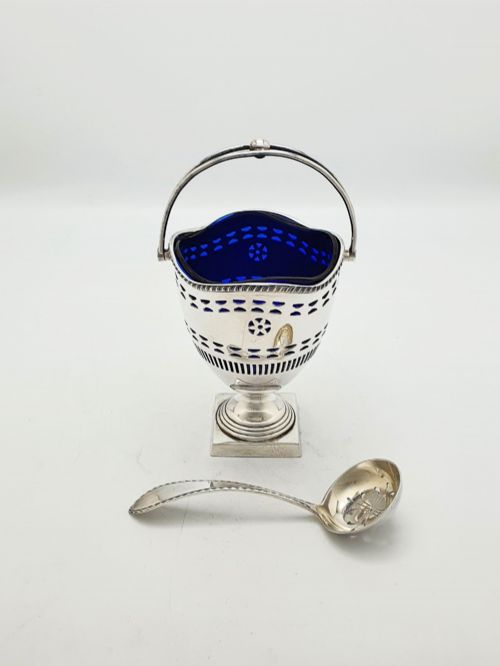
The pieces on this page appear in various forms, including handled baskets with pierced frames, covered jars and simple bowls with wrythened or hand-painted decoration. Origins span English, French and wider European workshops, crossing Georgian, Victorian and Edwardian periods.
Many examples incorporate a vibrant cobalt or Bristol blue insert held within a sterling silver or silver-plate framework. Others consist entirely of glass, such as latticinio vessels with blue cane rims or white and blue patterns.
How they were made
Makers shaped the glass elements through free-blowing or mould-blowing techniques, sometimes incorporating wrythen twists or white latticinio canes into the molten material. Painters added enamel surface decoration by hand before firing the glass.
Metal components involved silversmithing techniques such as casting floral handles, piercing sheet silver to create openwork lattice patterns, and soldering components together. Liners fit snugly inside pierced silver baskets or urn frames.
Blue Glass Sugar Bowl Retail Price Guide 2026
Typical asking prices for blue glass sugar bowl among the pieces listed under this phrase on Sellingantiques today, from the lower quarter to the upper quarter. They describe what is for sale here now, not the wider market.
Some sugar bowls hide inside Burr Yew-wood tea caddies, travelling securely alongside their own tiny tea canisters.
What varies in quality
Quality depends upon the depth and saturation of the blue glass colour, alongside the crispness of any hand-painted enamel work or latticinio cane placement. Superior vessels display even thickness and minimal internal bubbles in the glass.
The craftsmanship of the accompanying metalwork differentiates the standard of pieces, particularly the precision of pierced silver patterns and the casting detail on floral handles. Maker marks and hallmarks provide clear indicators of origin and date.
Aldridge & Green·Baccarat
The Blue Glass Sugar Bowl Glossary
- Cobalt glass
- A deep blue glass coloured with cobalt oxide during production. It provides the striking hue seen in many nineteenth-century tableware liners.
- Latticinio glass
- A decorative technique featuring fine white or coloured glass threads embedded within clear or tinted glass. Baccarat and other French makers utilised this method.
- Wrythen
- A spiral or twisted pattern formed in the glass while hot. This technique creates a sense of movement across the body of the bowl.
- Cream pail
- A cylindrical or bucket-formed vessel used alongside sugar baskets on tea tables. These often feature swing handles and pierced silver frames.
- Silver plate
- A base metal coated with a thin layer of silver. This material offered a durable alternative to solid sterling silver for tableware.
Blue Glass Sugar Bowl: Frequently Asked Questions
What are blue glass sugar bowls?
These vessels are tableware items designed to hold sugar for tea service, frequently constructed as glass liners inside pierced silver baskets or frames. They appear in forms ranging from simple open bowls to lidded urns.
Production spans the eighteenth, nineteenth and early twentieth centuries, encompassing Georgian, Victorian and Edwardian stylistic periods across English and French workshops.
How were these bowls used?
Owners placed them on tea tables alongside cream jugs and teapots to serve loose sugar during formal gatherings. The contrasting blue glass and silver sparkle added visual interest to the table.
Many designs included swing handles or matching stands, allowing servants to pass them easily among guests in a drawing room.
How do I live with a blue glass sugar bowl?
Display these pieces on sideboards or inside cabinets where light can pass through the cobalt or Bristol blue glass. They suit placement near natural light sources to highlight the colour.
Handle the vessels with care, lifting them by their glass bodies or supporting metal frames rather than relying solely on delicate swing handles.
How do I tell periods apart?
Georgian examples often feature hand-painted details or wrythen twists, while Victorian pieces frequently showcase cast floral handles and heavy sterling silver frames. Edwardian items tend to present refined neoclassical urn shapes.
Hallmarks on the silver components provide precise dates, while distinct glass hues and manufacturing techniques help place unmarked items within their correct century.