


Antique Glass Sugar Basin
An antique glass sugar basin brings the refined domestic rituals of past centuries straight to the modern table, offering a tactile connection to historical tableware.
Antique Glass Sugar Basin
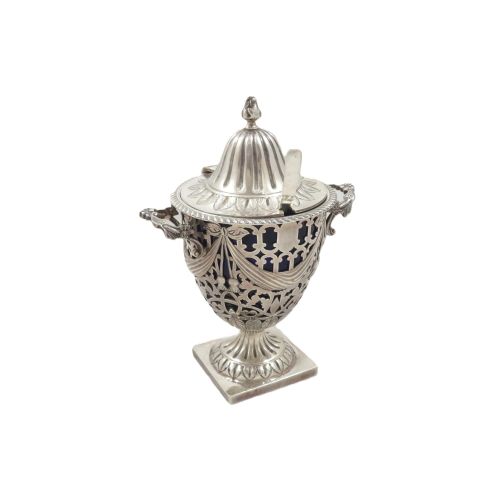
When you search for an antique glass sugar basin, you are looking at domestic tableware designed for serving sugar during tea and dining services. These pieces encompass sugar bowls, baskets, urns, preserve dishes, and jars produced across various historical eras.
The versions you are most likely to meet on this page span the Victorian and Edwardian periods, frequently paired with sterling silver or silver plate mountings, alongside earlier Georgian and 18th Century examples.
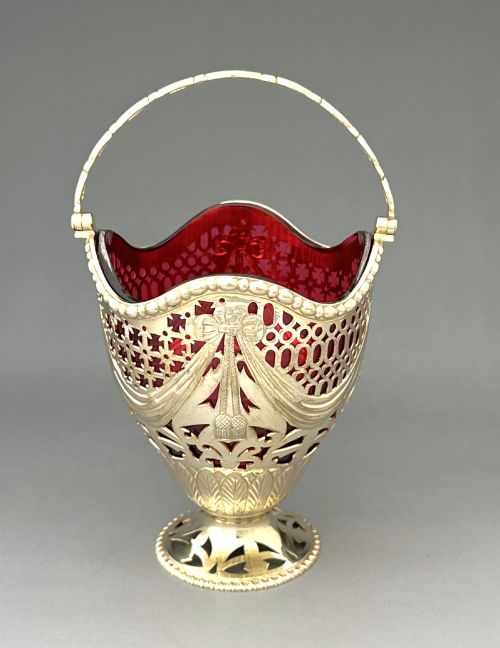
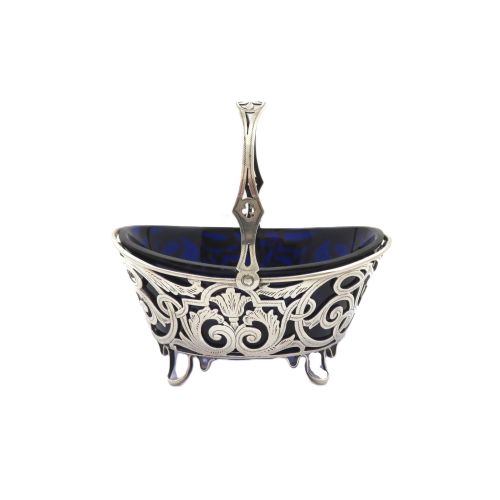
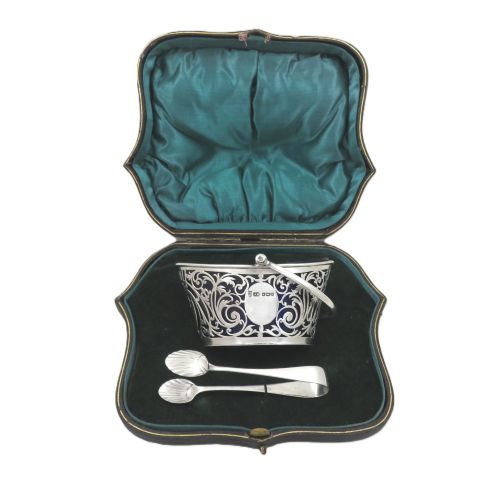
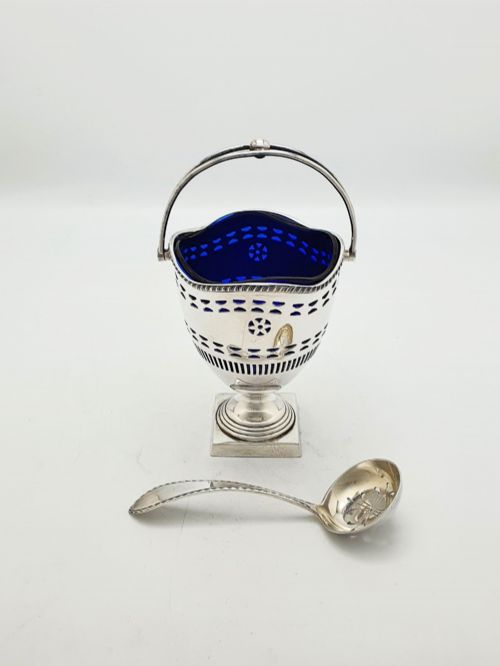
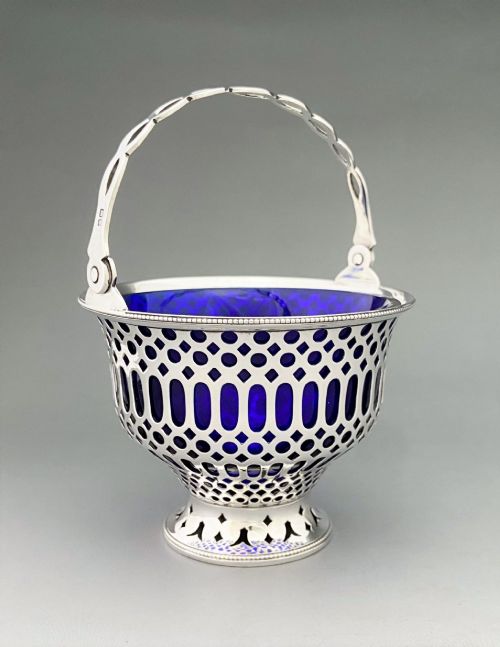
Many of these vessels incorporate coloured glass inserts, such as cobalt blue or cranberry, housed within pierced metalwork frameworks or handled baskets.
Materials and construction
The material palette combines clear or coloured glass with sterling silver, silver plate, and occasionally silver gilt. Glass bodies utilise cut glass, lead crystal, and specialist techniques like latticinio canes or wrythen moulding.
Metal mounts feature detailed pierced work, cast floral handles, and fitted lids, securing glass liners or standing independently as decorative urns and baskets.
Listings feature pieces spanning the 18th Century, Georgian, Victorian, and Edwardian periods, utilising cranberry glass, cobalt glass, sterling silver, and silver plate.
Assessing quality and craftsmanship
Quality reveals itself in the crispness of the glass cutting, the depth of colour in cranberry or cobalt liners, and the weight and precision of the silver or silver-plated mountings.
Superior examples display harmonious proportions between the glass body and any metal framework, alongside crisp chasing on handles and pierced galleries.
Asprey & Co.·George Fox·Baccarat
The Antique Glass Sugar Basin Glossary
- Cranberry Glass
- A rich red transparent glass coloured with gold chloride. It became particularly popular during the Victorian era for tableware and decorative items.
- Cobalt Glass
- A deep blue glass produced by adding cobalt oxide to the molten batch. It provides a striking contrast when used for liners in pierced silver baskets.
- Lead Crystal
- Glass containing a high proportion of lead oxide, increasing weight, brilliance, and clarity. It allows for deep, sharp facet cutting.
- Latticinio
- A decorative glass technique incorporating opaque white or coloured glass threads twisted within clear glass. It often appears in Venetian and French 19th Century pieces.
- Wrythen
- A decorative spiral pattern formed in the glass while hot. This technique creates a twisted optic effect across the body of bowls and jugs.
Antique Glass Sugar Basin: Frequently Asked Questions
How were sugar basins used?
These basins served granulated or lump sugar during formal tea and dining services, often sitting alongside matching cream jugs on the table.
Many designs included liners to protect silver frames from moisture or featured swing handles for easy passing among guests.
How do I clean my basin?
Wash glass components gently by hand using warm water and mild soap, avoiding harsh abrasives that might scratch the surface.
Keep silver mountings polished with a suitable cloth, taking care not to expose older cement or glued elements to excessive moisture.
Can I use it daily?
These vessels accommodate everyday domestic use provided you handle them with care, particularly pieces featuring delicate glass liners or thin silver work.
Hand washing remains essential to preserve the integrity of both the glass and any metal mountings.
How do I date a basin?
Dating relies on stylistic markers such as Victorian or Edwardian silver hallmarks, cutting patterns, and the specific shade of the glass.
Comparing the form against documented Georgian, Victorian, and Edwardian examples helps narrow down the period of manufacture.