


Antique Glass Cookie Jar
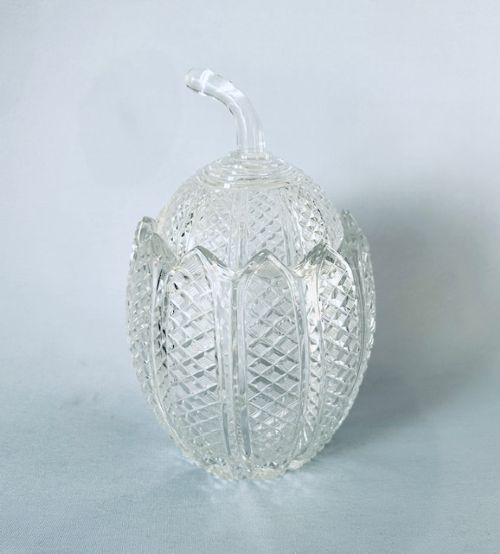
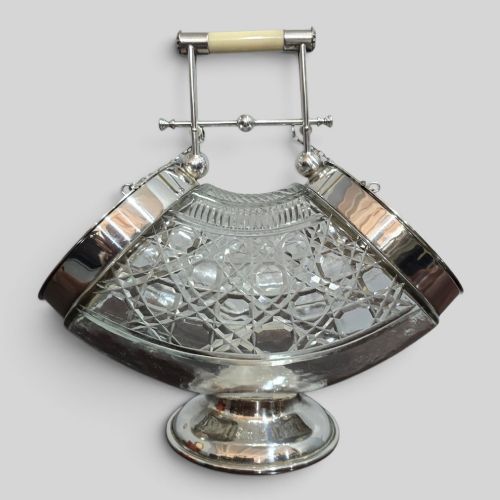
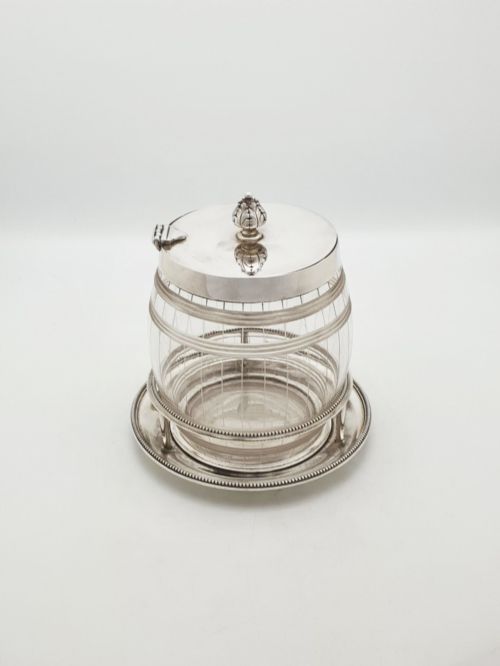
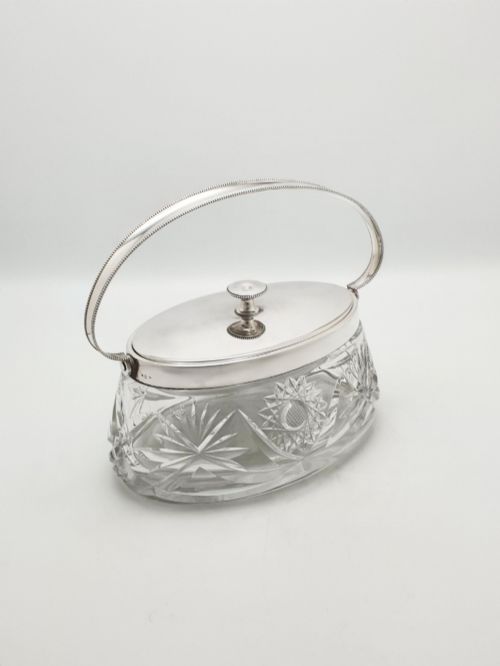
An antique glass cookie jar brings a wonderful sparkle to the table, combining heavy cut glass with gleaming silver plate.
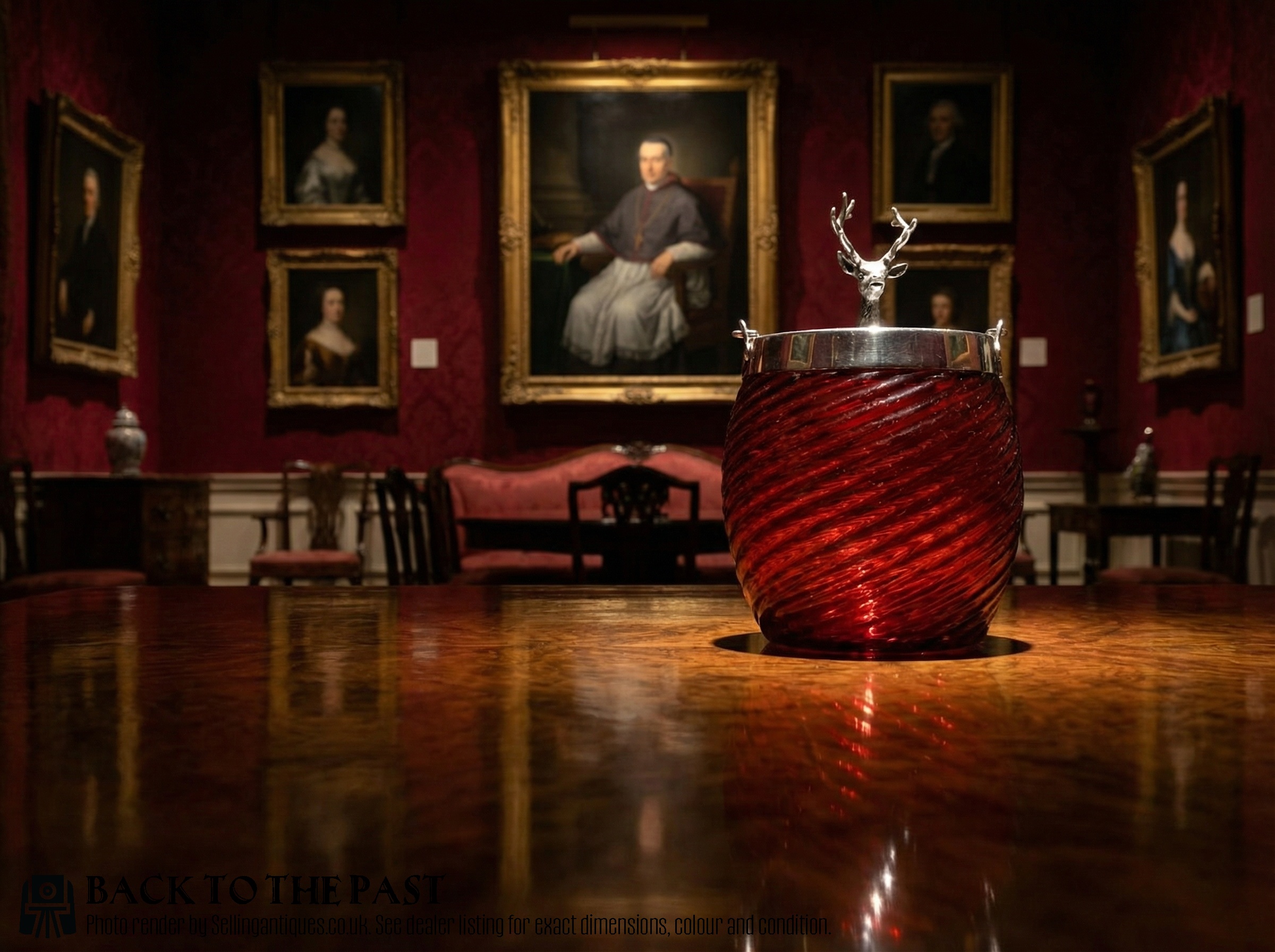
Antique Glass Cookie Jar
When you search for an antique glass cookie jar, you encounter pieces primarily from the Victorian and Edwardian eras, alongside Georgian and later 20th-century examples. These containers served for storing biscuits and dry goods, often taking pride of place on the dining table or sideboard.
The form is most frequently met as a barrel or cylindrical jar fitted with a hinged or lift-off metal lid and a swing handle. You will find examples ranging from clear cut glass to rich cranberry glass, often paired with silver-plated mounts and stands.
Judging quality and craftsmanship
Quality rests in the depth and crispness of the glass cutting, where sharper facets and heavy lead crystal create a brighter refraction of light. The weight of the vessel and the clarity of the glass distinguish finer pieces from simpler everyday containers.
The metal mountings reveal the standard of manufacture, with substantial silver plating, crisp heraldic or floral casting on the finials, and smooth action on the hinged lids marking out superior work by notable makers.
Antique Glass Cookie Jar Retail Price Guide 2026
Typical asking prices for glass cookie jar among the pieces listed under this phrase on Sellingantiques today, from the lower quarter to the upper quarter. They describe what is for sale here now, not the wider market.
A heraldic dragon grips the lid of one Victorian jar, standing guard over the biscuits within.
Elkington·WMF·Walker and Hall·James Dixon and Sons
The Antique Glass Cookie Jar Glossary
- Biscuit barrel
- A lidded container used originally for holding dry biscuits at the dining table. It is the term most frequently used interchangeably with cookie jar.
- Cranberry glass
- A rich red-pink glass created by adding gold chloride to the molten batch. It became extremely popular during the Victorian period for decorative tableware.
- Hobnail cut
- A raised, faceted pattern cut into the surface of glassware resembling the head of a hobnail boot. This technique maximises the sparkle of the crystal.
- Silver plate
- A layer of silver fused to a base metal such as copper or Britannia metal. It provided the opulent look of solid silver for mounts and handles at a lower cost.
- Finial
- The decorative knob or ornament attached to the top of a lid. On these jars, they often take sculptural forms such as heraldic dragons.
Antique Glass Cookie Jar: Frequently Asked Questions
What is an antique glass cookie jar?
These vessels are covered containers designed for storing biscuits and dry treats on the dining table. They combine heavy glass bodies with metal lids and handles.
Most date from the Victorian and Edwardian periods, reflecting the era's taste for elaborate dining accessories.
How do I clean my biscuit barrel?
Wash the glass body gently in warm soapy water using a soft cloth, avoiding harsh abrasives that might scratch the surface. Polish the silver-plated mounts separately with an appropriate metal cleaner.
Take care to keep moisture away from any internal cork or paper liners that may be present inside the metal collars.
Can I use it for biscuits today?
You can certainly use your jar for biscuits, provided the interior glass is clean and free from old residue. Many people continue to use them for dry goods on display.
Ensure that any metal components remain dry after washing to prevent tarnishing or corrosion over time.
How do I date an Edwardian piece?
Edwardian pieces typically date from the early 20th century and often feature lighter, more refined cutting styles compared to heavy Victorian designs. Silver hallmarks and registry numbers stamped on the metal mounts can provide specific years of production.
Stylistic cues such as Jugendstil or early Art Deco influences also help narrow down the manufacturing decade.