


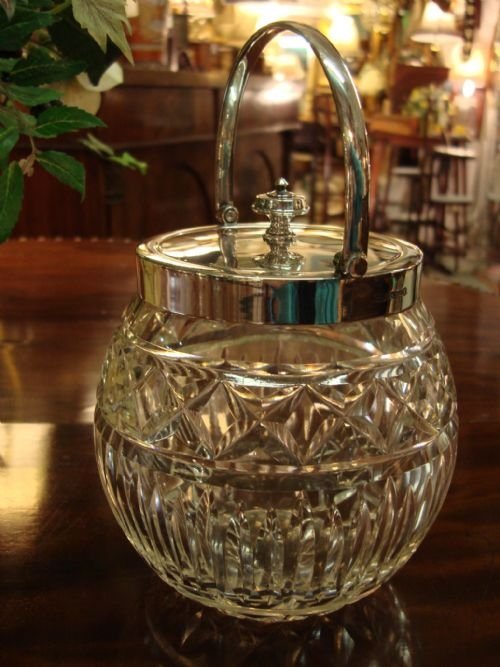
Clear Glass Biscuit Barrel
A clear glass biscuit barrel brings everyday elegance to the table, combining sparkling crystal or glass with gleaming silver plate or mounts.
Clear Glass Biscuit Barrel
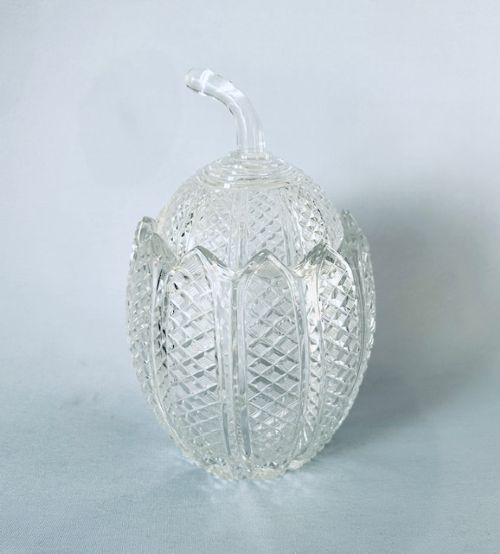
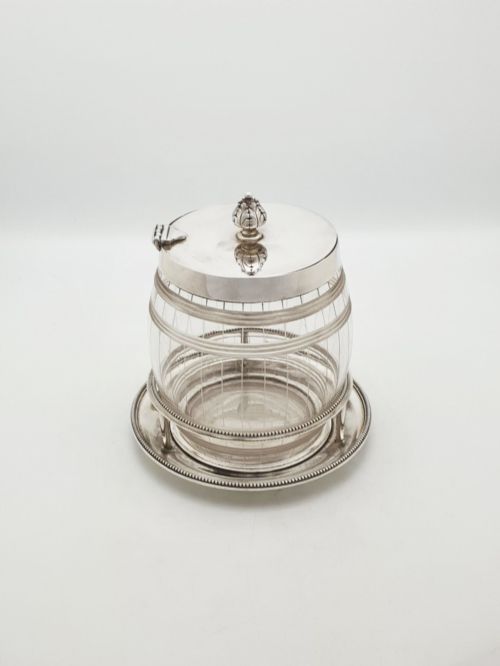
A clear glass biscuit barrel is a covered container designed to hold dry biscuits and confections, appearing in forms ranging from simple cylindrical jars to novelty melon shapes. You will most frequently encounter Edwardian and early twentieth century examples on this page, alongside earlier Victorian and Georgian pieces.
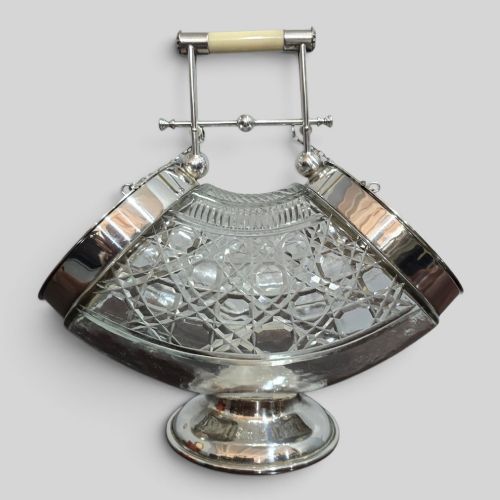
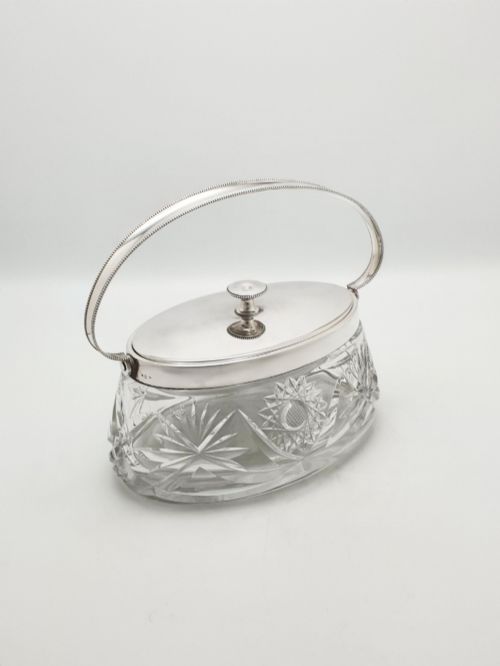
These vessels serve primarily as functional tableware that doubles as a decorative centrepiece for the dining room or drawing room. Makers produced them using various combinations of glass and metal mounts, often pairing cut glass bodies with silver plated swing handles and rims.
The assortment on offer spans several distinct decorative styles, including Victorian hobnail cutting, Jugendstil motifs, and clean Art Deco geometric lines. Collectors find that these barrels reflect the changing domestic tastes across the nineteenth and twentieth centuries.
Materials and construction methods
Makers shaped the bodies using clear glass, lead crystal, or faceted glass, frequently applying deep cut glass patterns or enamel decoration directly to the surface. The technique of hobnail cutting created distinct faceted points that caught the light, while other pieces utilised a smooth twisted three-handled form.
Metalwork played a crucial structural role, with workshops employing silver plate, hallmarked sterling silver, and gold leaf to create secure rims, hinged lids, and swinging handles. Elkington and James Dixon and Sons applied sophisticated plating and smithing techniques to mount the glass securely within metal stands and frames.
Clear Glass Biscuit Barrel Retail Price Guide 2026
Typical asking prices for clear glass biscuit barrel among the pieces listed under this phrase on Sellingantiques today, from the lower quarter to the upper quarter. They describe what is for sale here now, not the wider market.
Listings feature cut glass and silver plate alongside enameled surfaces across Victorian, Edwardian, and Art Deco periods.
Assessing quality and craftsmanship
Quality rests upon the depth and precision of the glass cutting, where sharper facets and heavier lead crystal indicate superior craftsmanship by the glassblower. Finer pieces demonstrate crisp detail in the hobnail or geometric patterns without surface ripples or optical distortions.
The standard of the metal mounts distinguishes standard production from exceptional pieces, particularly in the weight of the silver plate and the snugness of the lid fit. Hallmarked sterling silver mounts from notable makers reflect a higher grade of manufacture than basic silver plate.
Elkington·WMF·James Dixon and Sons
The Clear Glass Biscuit Barrel Glossary
- Hobnail cut
- A decorative glass-cutting pattern consisting of rows of raised, pointed facets resembling the hobnails on sturdy boots. This technique was popular during the Victorian and Edwardian periods to maximise light refraction.
- Silver plate
- A layer of silver fused or electroplated onto a base metal such as copper or Britannia metal. Many biscuit barrel lids and swing handles utilised this method to achieve the look of solid silver at a lower cost.
- Jugendstil
- The continental European manifestation of Art Nouveau, prominent around nineteen hundred. Pieces in this style feature organic, flowing lines and stylised natural motifs.
- Lead crystal
- A type of glass containing metallic lead oxide, which increases the weight, clarity, and refractive index of the material. It allows for deeper, sharper cuts than standard soda-lime glass.
- Novelty biscuit barrel
- A container shaped to resemble a natural or man-made object, such as a melon or basket. These pieces combine whimsy with practical function.
Clear Glass Biscuit Barrel: Frequently Asked Questions
How were biscuit barrels used?
These vessels sat on dining tables or sideboards to keep dry biscuits and dry goods fresh during tea service and formal meals. The fitted lid helped protect the contents from moisture in the air.
Servants or hosts would remove the lid to offer biscuits to guests in the drawing room. Their decorative nature meant they remained on display even when empty.
How do I date a piece?
Examine the style of the glass cutting, the shape of the handle, and any hallmarks stamped onto the metal mounts. Edwardian and Victorian pieces often feature heavy hobnail cutting, while nineteen-twenties items lean towards simpler faceted designs.
Makers' marks on the metal components provide the most reliable guide to a specific decade of manufacture. Comparing the mounting style with registered design patterns also helps narrow down the period.
Can I use it for food?
Most antique clear glass barrels remain entirely suitable for holding dry foods such as biscuits, sweets, or sugar lumps. The inert nature of glass ensures it does not impart flavours to the contents.
Check that any silver plating remains intact on the interior rim where food might make direct contact. Avoid storing moist or acidic foods that could react with older metal alloys.