




Hand Painted Glass Jar
A hand painted glass jar brings together rich enamel colour and translucent glass, offering both decorative charm and practical storage for the dressing table.
Hand Painted Glass Jar
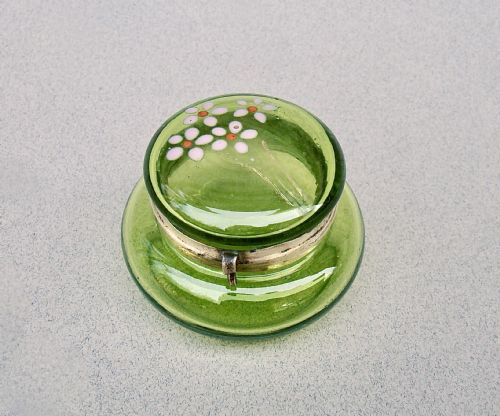
When you search for a hand painted glass jar, you encounter a variety of forms including trinket boxes, biscuit barrels, dressing table jars, and apothecary containers. These pieces primarily date from the nineteenth and early twentieth centuries, spanning Victorian, Edwardian, and Art Nouveau periods.
The most common examples on this page are nineteenth-century trinket boxes and biscuit barrels featuring enamel painted decoration on coloured or clear glass. French and English origins predominate, often showcasing floral motifs and gilt detailing across various utilitarian and display vessels.
How they were made
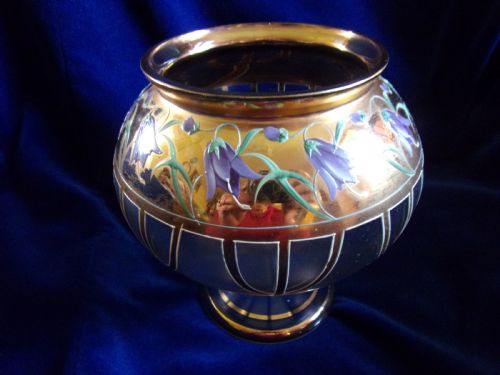
The makers utilised blown or moulded glass in shades such as Bristol blue, green, cranberry, opaline, and clear finishes as the base for their work. Artisans then applied opaque and translucent enamels by hand, frequently combining this pigment work with gold leaf highlights.
Metal mounts in brass and pewter appear on hinged trinket boxes and biscuit barrels, secured to the glass body to provide functional lids and rims. The enamel work was fired onto the glass surface to ensure lasting adhesion of the decorative motifs.
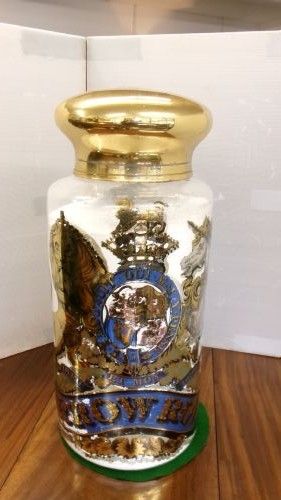
Arrowroot biscuits once filled display apothecary jars that now sit quietly on modern shelves.
What varies in quality
The distinction between standard containers and finer display pieces rests on the precision and complexity of the enamel painting. Delicately rendered floral scenes and clean gilding demonstrate a higher level of artisan skill than simpler, repetitive dot work.
The quality of the underlying glass and the weight of any accompanying metal mounts also define the grade of the object. Substantial glass bodies paired with well-fitted brass or pewter hardware indicate superior manufacture.
George Tye
The Hand Painted Glass Jar Glossary
- Enamel
- A powdered glass substance fused to the surface of the glass vessel through heat. It provides the opaque, colourful decoration characteristic of these jars.
- Biscuit Barrel
- A covered container designed to hold dry biscuits or cakes for the parlour. They frequently feature ceramic or metal lids alongside decorated glass bodies.
- Opaline Glass
- An opaque, pale glass that imitates porcelain while retaining a soft translucency. It serves as an ideal background for contrasting enamel painting.
- Gilding
- The application of gold leaf or gold paint to accentuate surface details. It highlights rims, panels, and floral edges on Victorian and Art Nouveau pieces.
Hand Painted Glass Jar: Frequently Asked Questions
What were glass biscuit barrels used for?
These lidded containers sat on Victorian and Edwardian dining tables to serve dry biscuits during afternoon tea. Their decorative enamel exteriors allowed them to remain on display when not in active use.
Over time, households repurposed them for storing sweets or general pantry items. Today, they function primarily as decorative vessels or desktop storage.
How do I clean an antique painted jar?
Enamelled glass requires gentle maintenance to protect the painted decoration and any applied gold leaf. Wipe the surfaces with a soft, dry cloth and avoid submerging metal-mounted pieces in water.
Chemical cleaners and abrasive pads will damage the fragile enamel pigments. Keep the pieces away from direct sunlight to prevent fading of the coloured glass.
How do I identify a Victorian piece?
Nineteenth-century glass jars often display characteristic colour palettes such as Bristol blue, cranberry, and deep greens paired with heavy floral enamel work. Metal mounts made of brass or pewter with secure hinges are also typical of this era.
Stylistic cues include the naturalistic floral motifs popular during the mid-Victorian period and the later geometric curves of the Art Nouveau transition.
Where were dressing table jars placed?
Victorian and Edwardian dressing table jars held small cosmetics, hairpins, and trinkets within the bedroom. They formed part of matching dresser sets alongside trays and perfume bottles.
Their decorative painted lids provided a pleasing display on vanity surfaces while keeping small personal items concealed.