


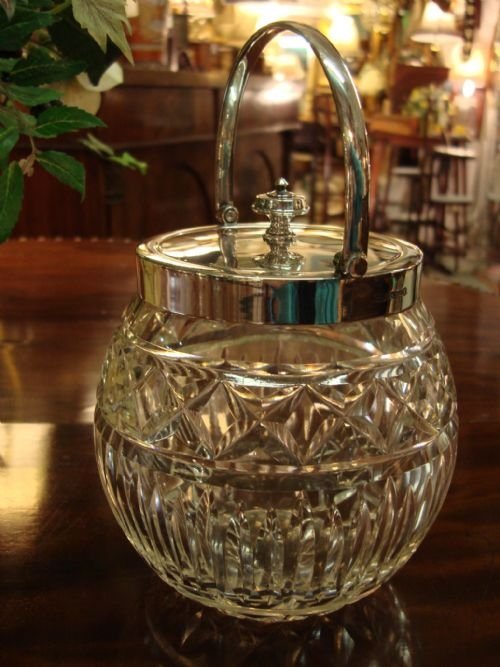
Clear Glass Cookie Jar
These clear glass cookie jars span the Georgian era through to the 1930s, offering functional elegance for storage.
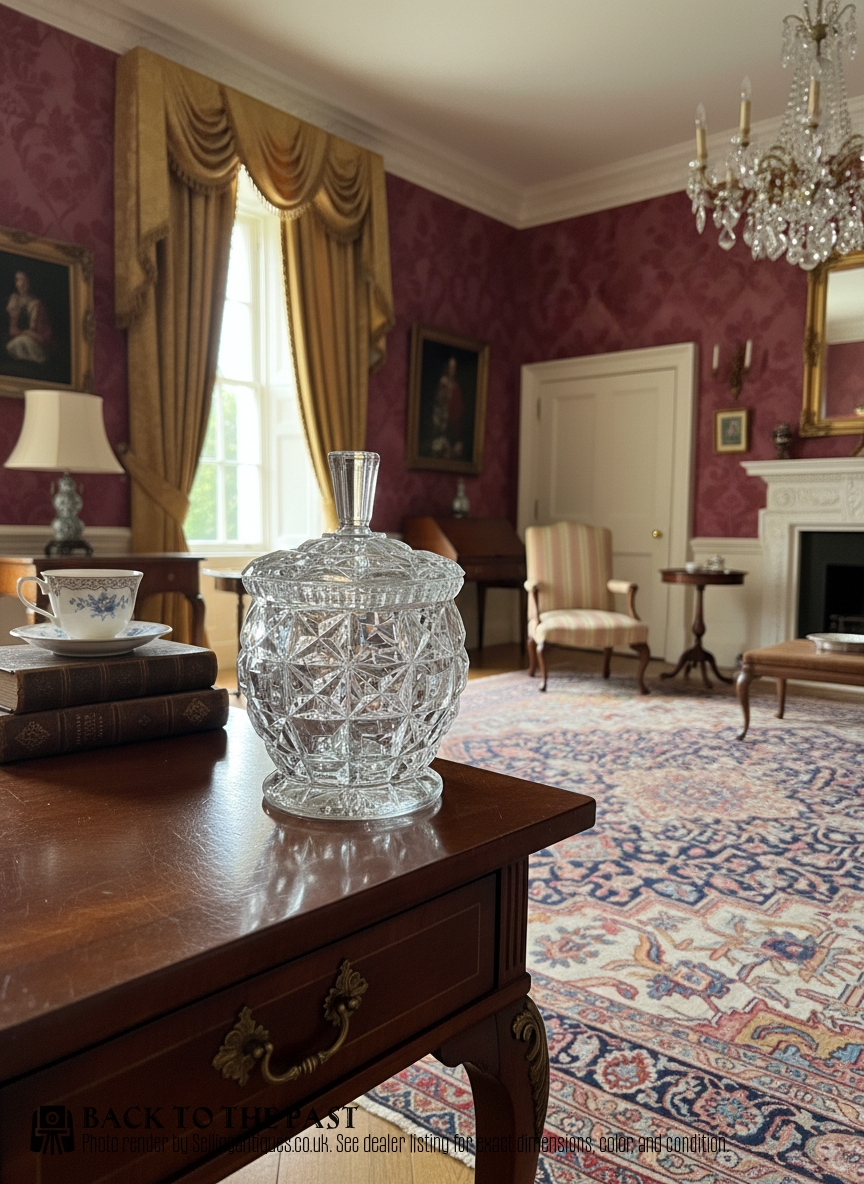
Clear Glass Cookie Jar
When you search for a clear glass cookie jar, you encounter vessels primarily designed for biscuits and small baked goods, often historically referred to as biscuit barrels or jars. The pieces gathered here traverse multiple periods, including the Georgian, Victorian, Edwardian, and Art Deco eras.
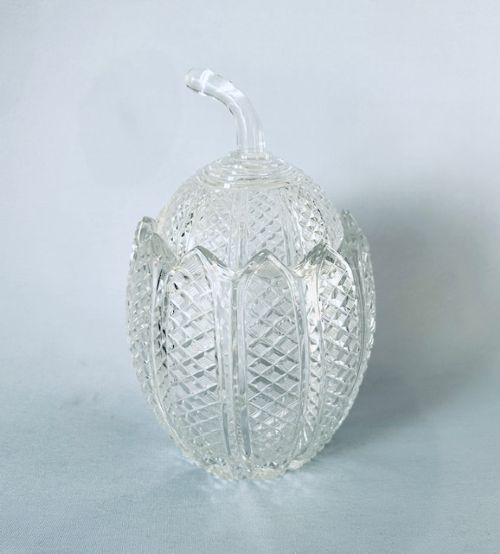
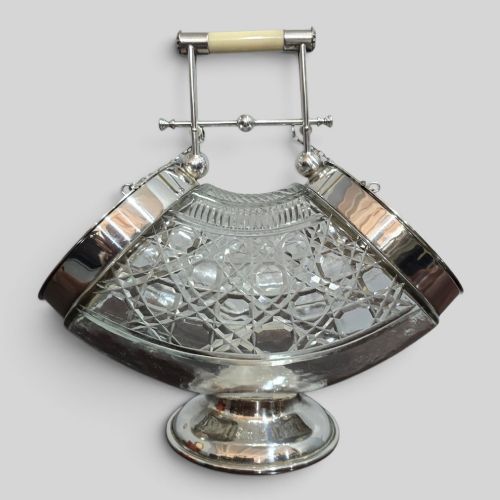
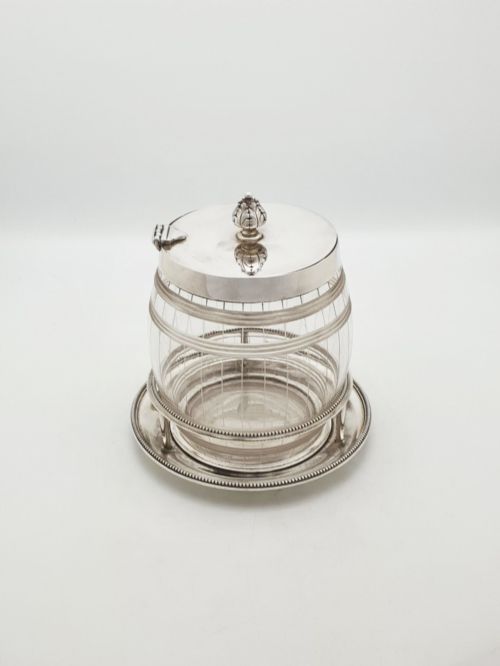
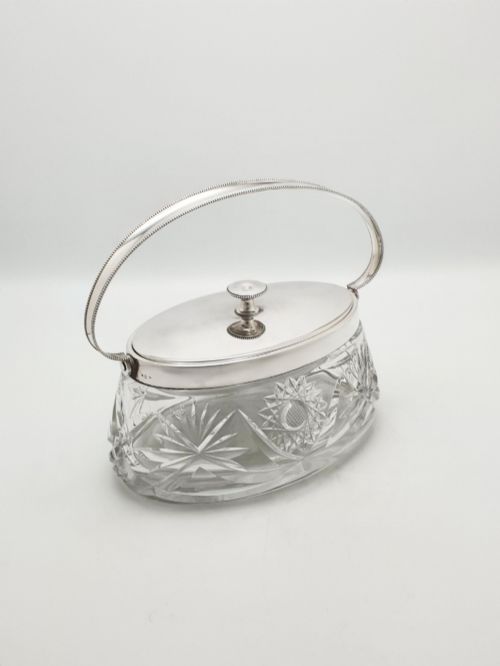
The dominant forms on this page include cut glass bodies paired with silver plated mounts, swing handles, and occasionally stands. Novelty shapes, such as the melon design, appear alongside faceted and twisted cylindrical bodies.
Origins represented in this selection stretch from standard domestic British production to continental output associated with studios like WMF and makers such as James Dixon and Sons. Edwardian examples dominate the selection, frequently featuring hobnail cutting and enamel decoration.
How they were made
The vessels rely on heavy clear glass or lead crystal, shaped through pressing, blowing, or facet-cutting to catch the light. Skilled hands applied deep hobnail patterns, geometric facets, and twisted three-handled silhouettes to the raw glass blanks.
Metal mounts, lids, and swing handles utilise silver plate or hallmarked sterling silver, secured around the glass rims or fitted to bespoke metal stands. Enamel decoration occasionally adorns the exterior surface, adding painted detail over the transparent body.
One melon managed to survive a century without rolling away.
What varies in quality
Quality rests in the crispness of the glass cutting and the weight of the crystal body. Deeper, sharper facets and heavier metal mounts elevate an example above mass-produced counterparts.
The integration between the glass jar and its metal hardware dictates the structural integrity of the piece. Superior items display careful silver plating or solid hallmarked mounts that align precisely with the contours of the glass.
Elkington·WMF·James Dixon and Sons
The Clear Glass Cookie Jar Glossary
- Biscuit barrel
- A covered container used for storing biscuits on the dining table or sideboard. This term appears interchangeably with biscuit jar and biscuit box in historical listings.
- Hobnail cut
- A raised, diamond-shaped pattern cut into the surface of glassware. It creates a tactile, light-refracting texture across the body.
- Silver plate
- A thin layer of silver fused to a base metal foundation. It provides the appearance of solid silver while maintaining durability.
- Jugendstil
- The continental European manifestation of Art Nouveau, prevalent around nineteen hundred. It favours organic, flowing lines and stylised floral motifs.
Clear Glass Cookie Jar: Frequently Asked Questions
What is a clear glass cookie jar?
A clear glass cookie jar is a tabletop storage container historically designed to keep biscuits crisp and dry. These pieces often feature fitted metal lids and handles for easy transport.
Examples range from simple nineteenth-century glass cylinders to ornate vessels mounted in silver plate and decorated with enamel.
How were these jars used historically?
These vessels sat on dining tables or sideboards during tea and after-dinner hospitality, holding dry biscuits or small cakes. The tight-fitting lids helped protect the contents from moisture.
Servants would fill the barrels before bringing them into the parlour for family or guests.
How do I date a clear glass jar?
Dating relies on stylistic clues, mounting techniques, and hallmarks stamped onto the metal rims or handles. Edwardian and Victorian pieces typically display heavy cut glass and ornate silver-plated mounts.
Art Deco and 1930s pieces often shift towards cleaner geometric facets and streamlined hardware.
How do I care for antique glass?
Wash the glass and metal components separately using lukewarm water and mild dish soap. Avoid abrasive sponges that might scratch the clear surface or wear down silver-plated mounts.
Dry the metal thoroughly immediately after washing to prevent tarnishing and water spotting.