


Edwardian Biscuit Barrel
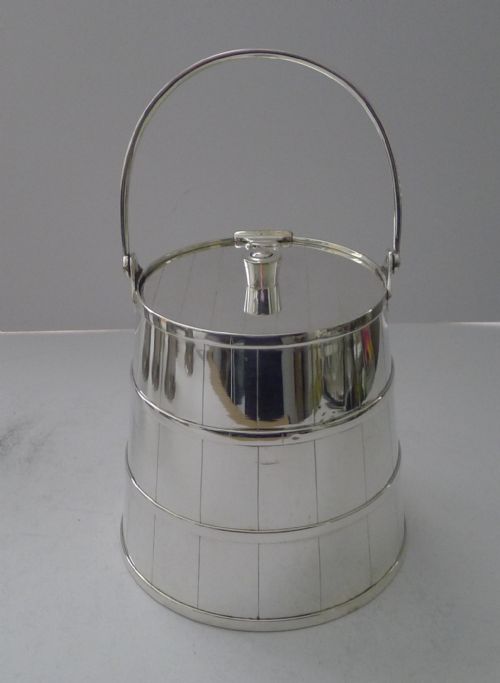
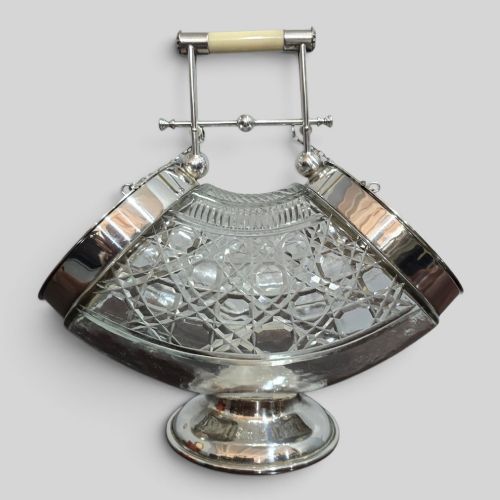
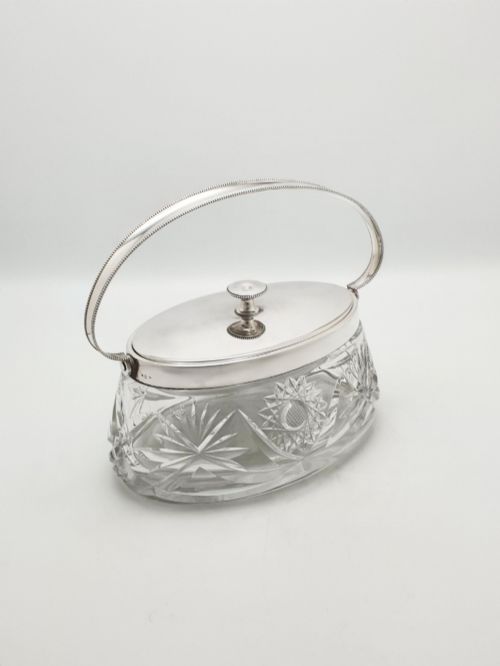
An edwardian biscuit barrel brings table elegance to tea service, offering lidded storage for crackers and sweets in glass, silver plate, or carved oak.
Edwardian Biscuit Barrel
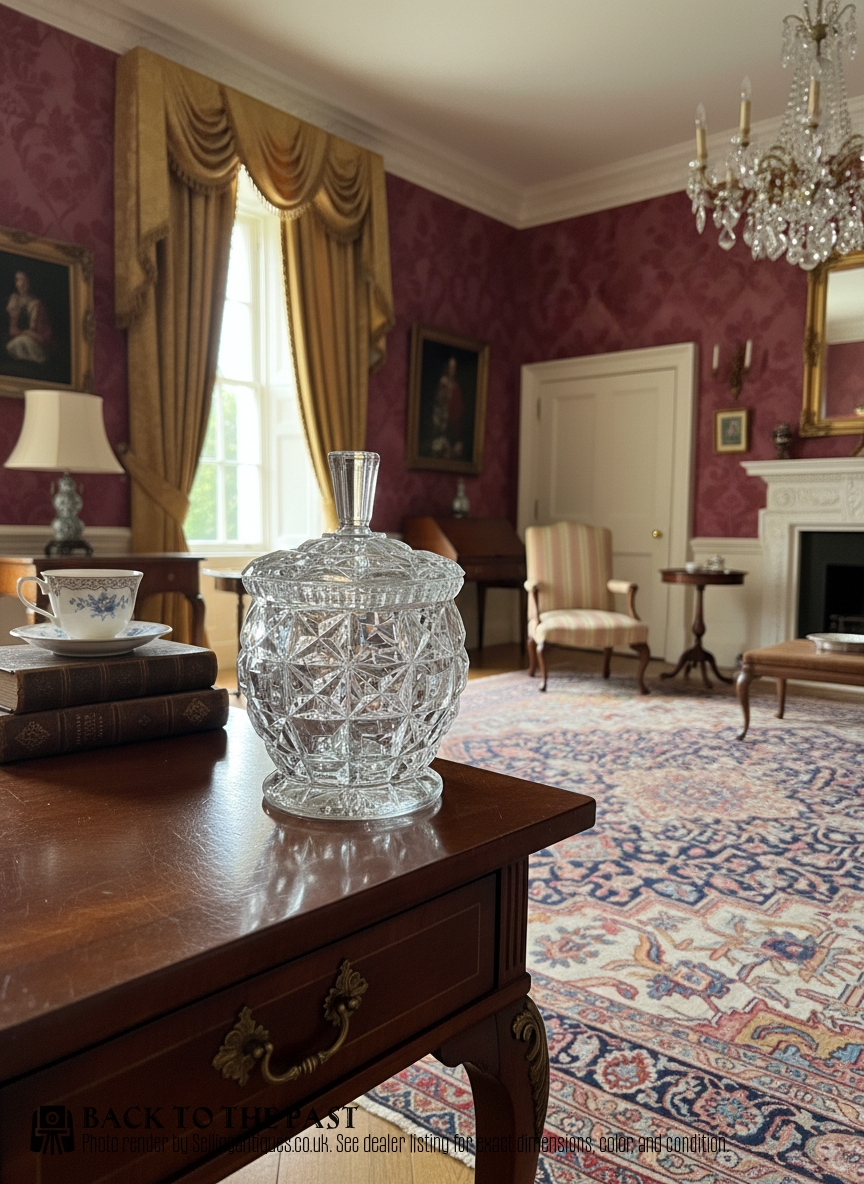
An edwardian biscuit barrel serves as a covered table container specifically designed to hold dry baked goods during formal tea services. These pieces frequently appear in domestic interiors from the late Victorian and Edwardian decades, continuing through the George V period.
The standard form encountered on this page combines a glass, ceramic, or wooden body with a hinged or lift-off metal lid and swing handle. Versions span cut glass, plain glass, earthenware such as Crown Devon or Wedgwood Jasperware, and solid oak mounted in silver plate.
How They Were Made
Makers utilised combinations of silver plate, sterling silver, and cast brass mounts fitted to bodies shaped from blown glass, pressed cut glass, or turned timber. Metal components often received intricate pierced decoration, engraving, or applied novelty forms such as hats and weights.
Ceramic bodies incorporated earthenware and jasperware decorated with flow blue patterns, enamel painting, or moulded relief details. Glass vessels relied on hobnail cutting, facet cutting, or ruby and cranberry staining techniques before receiving metal rims and lids.
Makers occasionally turned tea time into a guessing game by shaping containers as literal hats and heavy weights.
What Varies in Quality
Subtlety of mount casting and depth of glass cutting distinguish finer examples from standard production pieces. Heavier silver plating thickness and crisper detail in engraved or pierced ornamentation elevate an object's decorative presence.
The integration between materials defines overall merit, where secure mounting of handles, tight-fitting lids, and undamaged interior liners or ceramic bodies demonstrate superior original manufacturing standards.
John Grinsell And Sons·James Dixon And Sons·Crown Devon·Wedgwood
The Edwardian Biscuit Barrel Glossary
- Silver Plate
- A thin layer of silver fused to a base metal core such as copper or Britannia metal. This technique provided the lustrous appearance of solid silver at a lower production cost.
- Jasperware
- A type of fine stoneware developed by Josiah Wedgwood, characterised by a unglazed matte surface and contrasting applied white relief figures. It appears frequently in biscuit barrels with blue or green ground colours.
- Flow Blue
- A blue and white transfer-printing technique where the cobalt colour intentionally blurred slightly into the glaze during firing. This produced a soft, hazy aesthetic popular on earthenware bodies.
- Hobnail Cut
- A raised geometric pattern cut into glass resembling the faceted heads of old iron nails. It creates brilliant light reflection across the surface of crystal containers.
Edwardian Biscuit Barrel: Frequently Asked Questions
What were biscuit barrels used for?
These lidded vessels held dry biscuits, crackers, and sweets safely on the dining table or sideboard during afternoon tea. The fitted lid kept contents fresh while preventing moisture from softening the baked goods.
Servants brought them out during formal afternoon tea gatherings in middle and upper-class homes. Guests served themselves by lifting the hinged or removable metal cover.
How do I clean cut glass?
Wash glass bodies in lukewarm water using mild detergent and a soft cloth to protect the polished surface. Avoid sudden temperature changes to prevent thermal shock and cracking.
Dry the pieces thoroughly with a lint-free cloth to maintain the clarity of the cut patterns. Keep silver-plated mounts dry to prevent tarnishing.
Are liners necessary for use?
Liners made of glass, ceramic, or china protected wooden or metal bodies from crumb accumulation and moisture damage. Many surviving pieces retain their original removable inserts.
Using an intact liner preserves the interior structure of oak and silver-plated barrels. Replacements can serve functionally if the original insert is missing.
How do I identify Edwardian pieces?
Edwardian items typically date between nineteen hundred and nineteen ten, exhibiting lighter proportions than heavy Victorian designs. Decoration often leans toward neoclassical motifs, bright cut glass, and refined silver plate.
Maker marks stamped onto metal mounts provide precise dating clues through registry numbers and hallmarks. Style transitions between late Victorian aesthetics and early twentieth-century forms appear across these items.