


Silver Plate Cookie Jar
A silver plate cookie jar, traditionally known as a biscuit barrel, brings Victorian and Edwardian dining tables a touch of polished elegance.
Silver Plate Cookie Jar
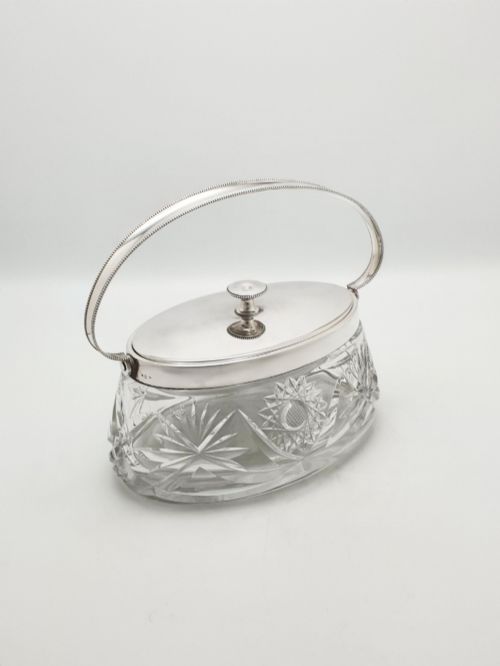
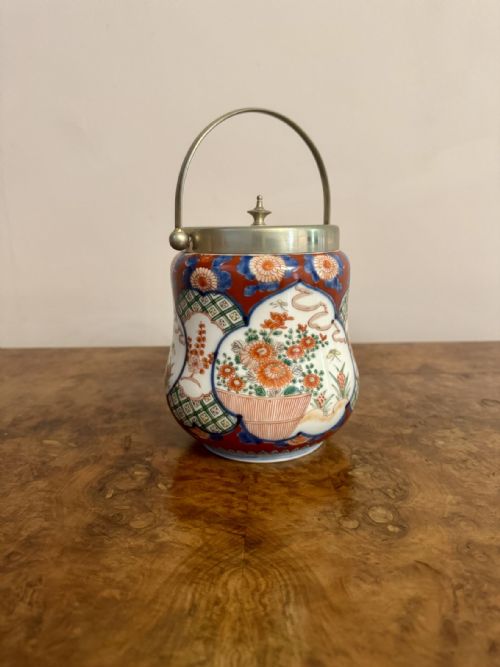
A silver plate cookie jar is a covered container designed to hold dry biscuits or cookies, appearing frequently in Victorian and Edwardian dining contexts. These pieces bridge the gap between functional household storage and formal tableware, often taking the form of cylindrical barrels or drum shapes.
Makers of the period produced these vessels in various forms, ranging from simple ceramic bodies to elaborate glass cylinders encased in metal mounts. The examples found here typically date from the mid-nineteenth century through the early twentieth century, spanning periods such as the Victorian and Edwardian eras.
How they were made
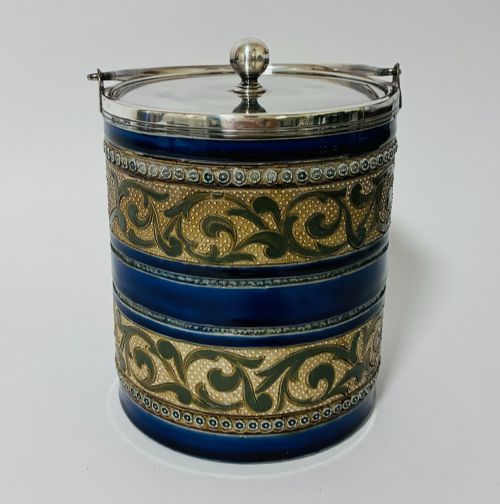
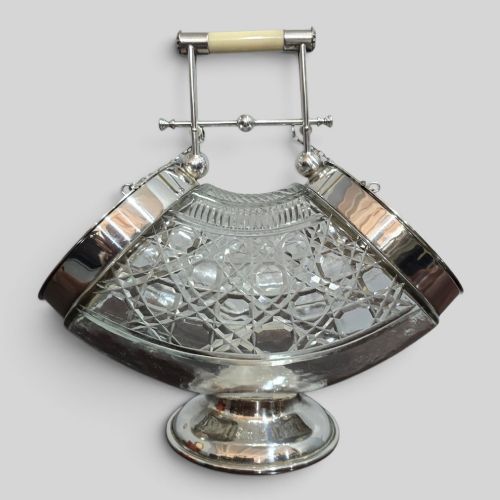
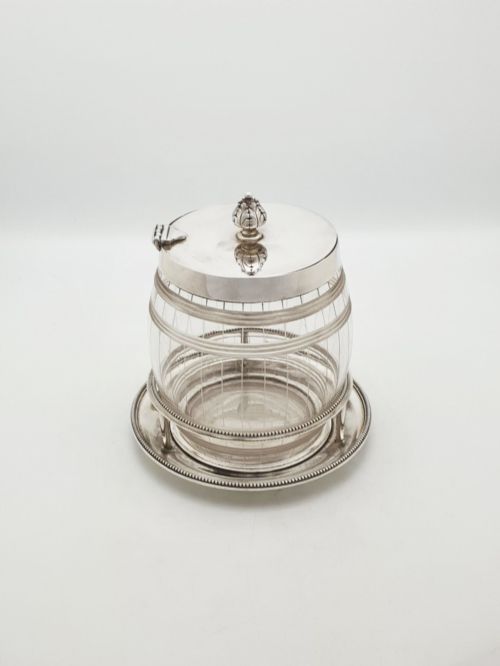
The construction relies on a combination of silver plated metal mounts paired with bodies formed from cut glass, stoneware, earthenware, or oak. Silversmiths applied silver plating over a base metal, creating a durable reflective surface that housed ceramic liners or thick glass inserts.
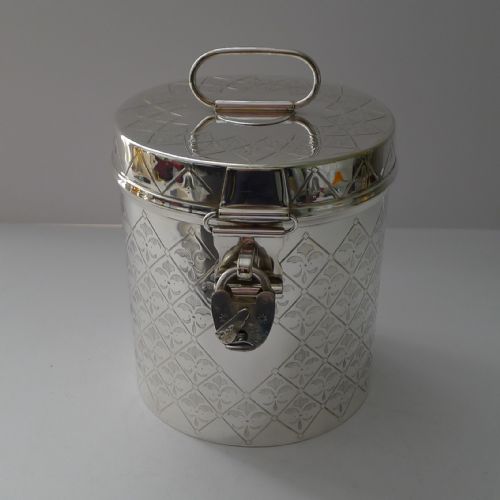
Decorative techniques varied widely, incorporating hobnail cutting on glass, moulded Jasperware, flow blue ceramic patterns, and pierced metalwork. Artisans secured these bodies with hinged lids, swinging handles, and specialised locking mechanisms.
Listings feature materials spanning cut glass, oak, stoneware, and cranberry glass alongside traditional silver plate.
What varies in quality
The standard of a silver plate cookie jar rests on the weight of the silver plating and the clarity of the underlying glass or ceramic body. Heavy gauge metal mounts and crisp, deep mould work or hand-cutting distinguish finer items from simpler production pieces.
Design complexity also defines the upper tiers, seen in novelty shapes like weights, automated mechanisms, and bespoke maker marks from notable workshops. The integration of specialised materials like cranberry glass or multi-coloured Jasperware elevates the refinement of the piece.
Mappin and Webb·Elkington and Co·Robert and Belk·Walker and Hall·John Grinsell and Sons·Doulton Lambeth·Crown Devon·Carlton Ware·Wedgwood·WMF
The Silver Plate Cookie Jar Glossary
- Biscuit barrel
- A covered container designed to store dry biscuits, frequently utilised on Victorian and Edwardian dining tables. These pieces are also historically referred to as biscuit boxes or cookie jars.
- Jasperware
- A type of fine stoneware developed by Wedgwood, characterised by a matte unglazed finish and raised white classical reliefs. It appears in various colours including blue upon these storage vessels.
- Cranberry glass
- A rich red-pink glass created by adding gold chloride to the molten batch during manufacture. It is often seen blown into moulds or faceted for barrel bodies.
- Silver plate
- A process where a thin layer of silver is bonded to a base metal such as copper or brass. This technique allowed manufacturers to produce lustrous tableware at a lower cost than solid silver.
- Hobnail cut
- A decorative pattern cut into glassware featuring rows of small, raised pyramidal knobs that catch the light. It provides both texture and visual sparkle to the body of the container.
Silver Plate Cookie Jar: Frequently Asked Questions
What is a silver plate cookie jar?
A silver plate cookie jar is a covered Victorian or Edwardian container historically used for serving dry biscuits at the dining table. These vessels combine silver plated metal mounts with bodies made of glass, ceramic, or wood.
They were designed to keep biscuits dry and fresh while adding a decorative element to the sideboard. Today, collectors value them for their diverse materials and period craftsmanship.
How were biscuit barrels used?
These containers sat on the dining table or sideboard during tea service and after-dinner hosting. Hosts opened the hinged lid to offer guests a selection of dry biscuits.
The inclusion of handles allowed servants or hosts to pass the vessel easily around the room during formal meals.
How do I clean silver plate?
Clean silver plate gently using a soft cloth and a specialised silver polish formulated for plated items. Avoid harsh abrasives that can wear away the thin silver layer over the base metal.
Wash glass or ceramic liners separately in warm soapy water and ensure they are completely dry before placing them back into the metal mounts.
How do I tell Victorian from Edwardian pieces?
Victorian pieces often display heavier ornamentation, ornate floral chasing, and rich colours like cranberry glass or deep Jasperware. Styles from this era tend towards the elaborate and neoclassical.
Edwardian items frequently lean towards lighter, airier designs with simpler pierced mounts and brighter glass or ceramic bodies, reflecting changing tastes at the turn of the century.