
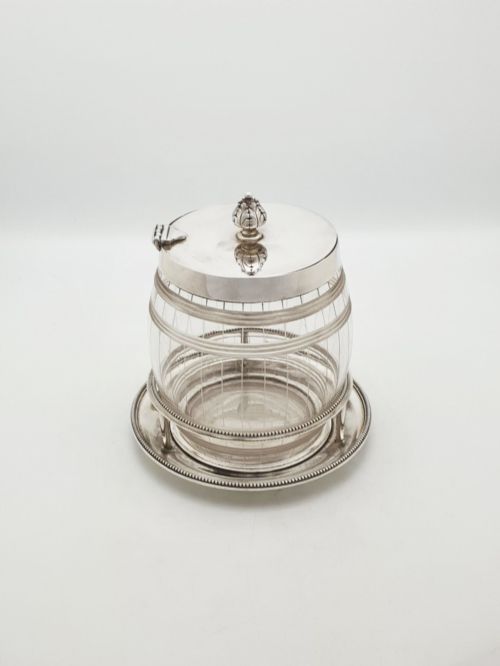
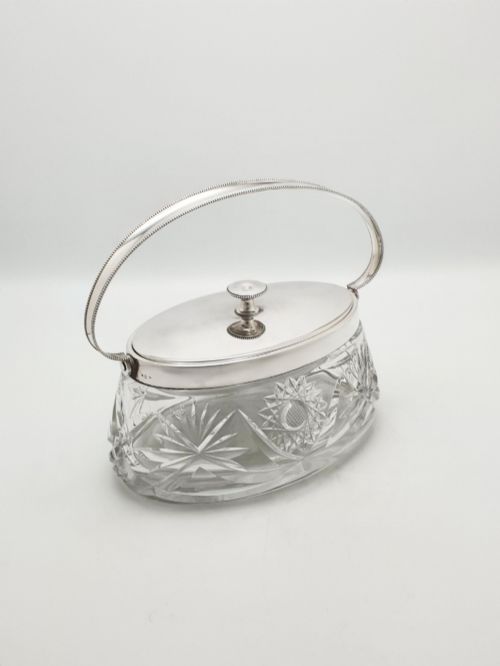


Silver Plated Biscuit Box
A silver plated biscuit box is an entertaining dining accessory from the Victorian and Edwardian periods, prized for keeping biscuits dry and dry biscuits stylishly presented on the table.
Silver Plated Biscuit Box
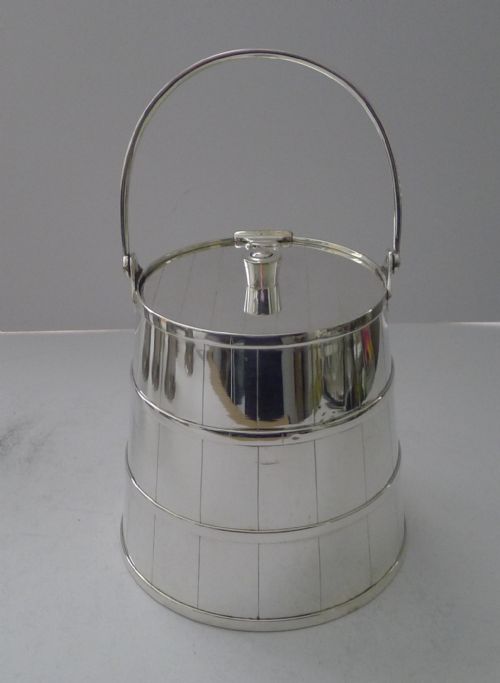
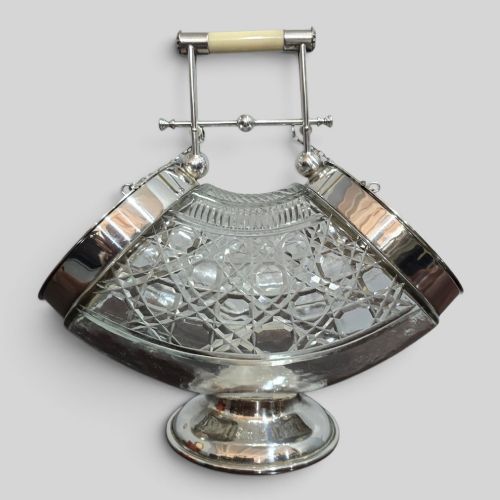
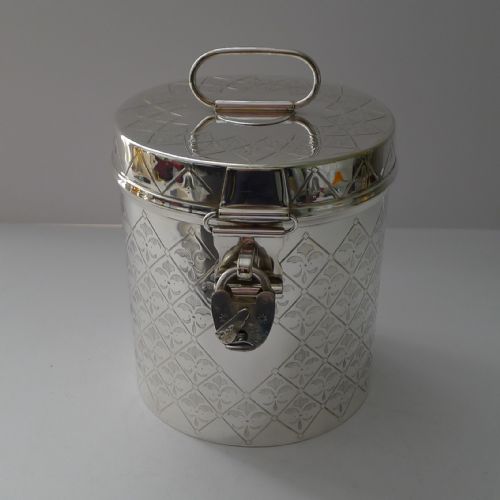
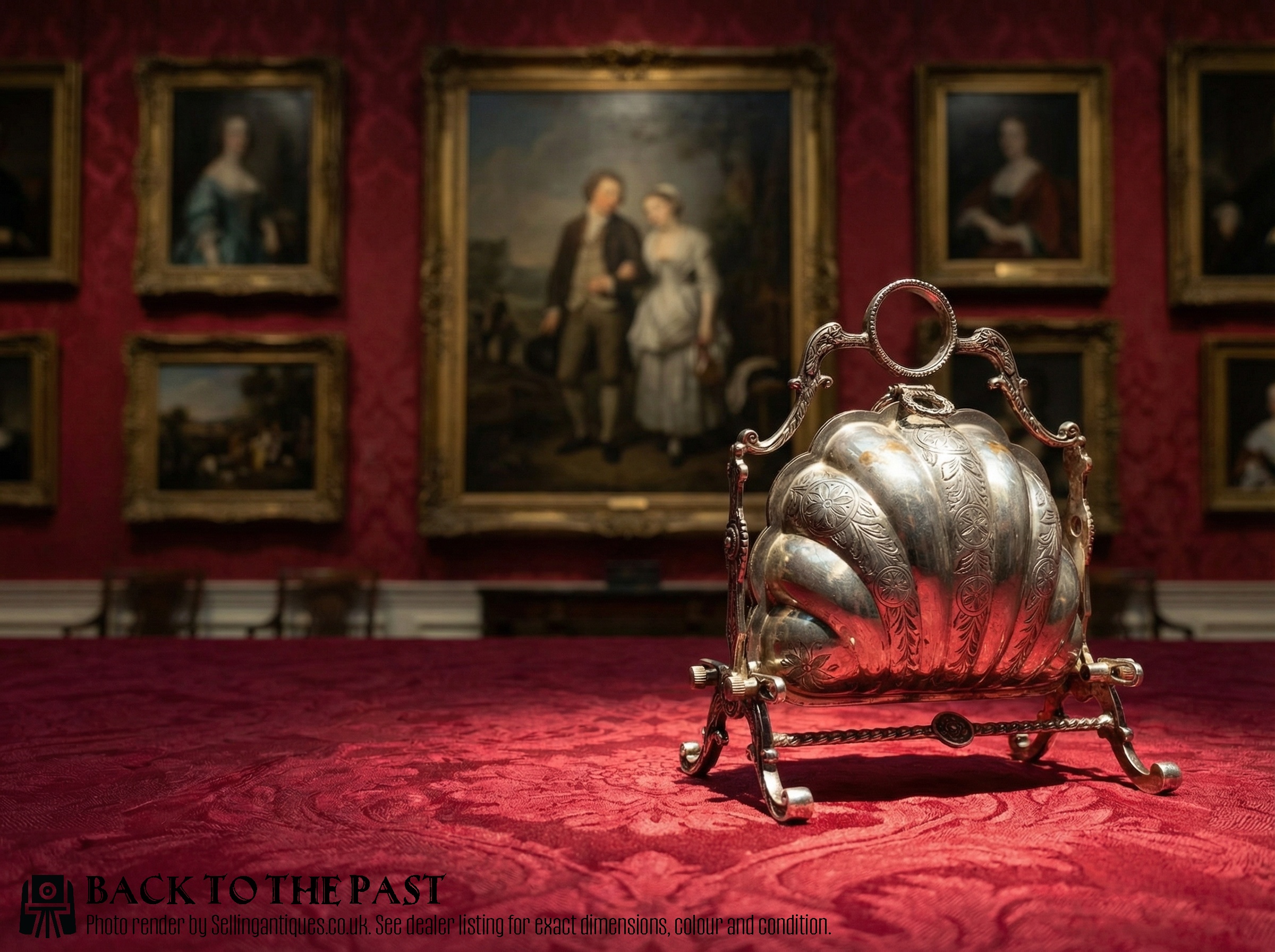
A silver plated biscuit box typically takes the form of a cylindrical drum, a hinged oval container, or a novelty shape such as a weight or a shell, originating primarily from British makers active during the nineteenth and early twentieth centuries. These vessels were designed for the dining table or parlour, often incorporating mechanical actions that open wings or reveal an interior liner.
The most common versions met on this page combine silver plate with cut glass liners or carved oak bodies, spanning styles from Victorian and Edwardian to Arts and Crafts and Art Deco. Pieces range from simple cylindrical containers to elaborate folding shell designs and warming barrels intended to keep contents fresh.
Materials and Techniques
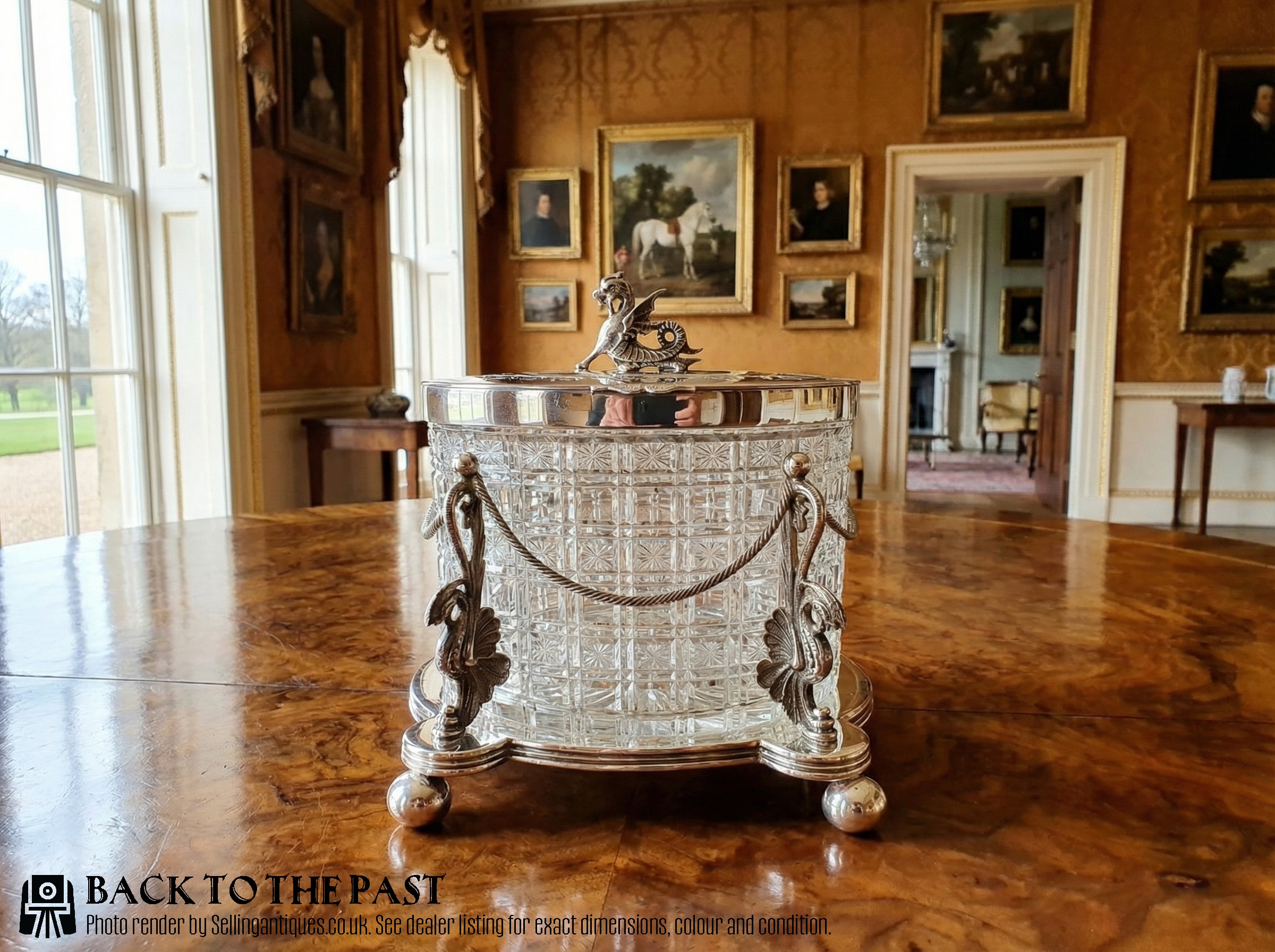
Makers utilised electroplated nickel silver (EPNS) over base metals to achieve a durable silver finish, often applying detailed embossing, piercing, or engraving to the metal mounts. Glass components were heavily cut or hobnailed, while wooden elements utilised solid oak, frequently carved or coopered into drum forms.
Mechanical ingenuity defined the construction of many pieces, employing spring-loaded hinges, push-button mechanisms, and sliding actions that allowed the lids or side panels to open smoothly. Finials cast in metal, sometimes in heraldic animal shapes, provided functional handles for the hinged lids.
Silver Plated Biscuit Box Retail Price Guide 2026
Typical asking prices for silver plated biscuit box among the pieces listed under this phrase on Sellingantiques today, from the lower quarter to the upper quarter. They describe what is for sale here now, not the wider market.
Some Victorian manufacturers created novelty biscuit boxes shaped like heavy iron weights or featuring thatched roofs to amuse dinner guests.
Design and Execution
The distinction between standard production and the top of the range rests on the complexity of the mechanism and the integration of materials, where automated folding actions and heavy cast mounts elevate a piece. Superior examples exhibit crisper hand-chasing on the silver plate and thicker, more precisely faceted cut glass liners.
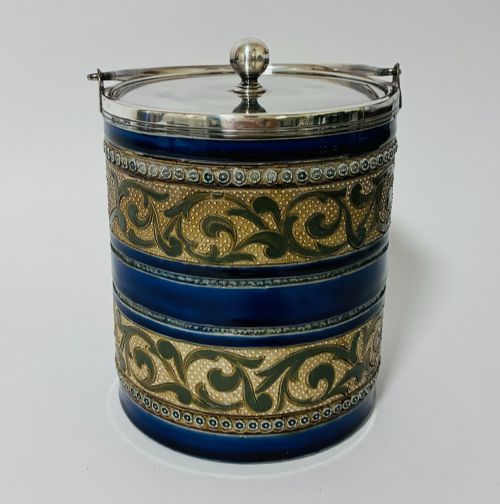
Renowned silversmiths and manufacturers applied greater artistic ambition to their output, producing novel architectural forms, thatched roof effects, or specialised ceramic liners from potteries like Doulton Lambeth and Spode that set them apart from basic utility items.
Mappin and Webb·Elkington and Co·Robert and Belk·Walker and Hall·Fenton Brothers·Henry Wilkinson and Co·John Grinsell and Sons·Martin Hall and Co
The Silver Plated Biscuit Box Glossary
- EPNS
- Electroplated Nickel Silver. This acronym denotes a base metal of nickel silver coated with a layer of pure silver through an electrolytic process.
- Finial
- A decorative knob or ornament fixed to the top of a lid. On these boxes, finials often take the form of animals or cast foliage.
- Hobnail
- A faceted glass-cutting pattern. This geometric style creates rows of sharp, protruding square points that catch the light.
- Drum
- A cylindrical container shape. This form mimics a musical drum and became a popular silhouette for oak and silver plated biscuit barrels.
Silver Plated Biscuit Box: Frequently Asked Questions
What is a silver plated biscuit box?
A silver plated biscuit box is a decorative container created during the Victorian and Edwardian eras to store and serve dry biscuits at the dining table. These pieces combined metal mounts with glass, ceramic, or wooden bodies.
Many examples featured hinged lids or clever mechanical actions designed to protect the biscuits from dampness while offering an impressive presentation for guests.
How do you use a biscuit box?
These boxes function as tabletop containers for holding biscuits, crackers, or sweets during formal dining and afternoon tea. The inner liner holds the food directly, keeping it separate from the outer metal or wooden structure.
Opening the lid often involves pressing a button or tilting a folding shell mechanism to reveal the contents for guests to help themselves.
How do you clean silver plate?
Cleaning silver plate requires a gentle silver polish and a soft cloth to remove tarnish without wearing away the thin layer of silver over the base metal. Harsh abrasives must be avoided entirely to preserve the engraved details and bright finish.
Removable glass or ceramic liners can be washed separately in warm soapy water before being dried and placed back inside the metal housing.
How can you tell Victorian from Edwardian pieces?
Victorian pieces tend to feature heavier, more ornate ornamentation, including deep embossing, elaborate heraldic finials, and complex mechanical folding actions. The materials often pair silver plate with rich cut glass or dark carved oak.
Edwardian items frequently lean towards lighter aesthetics, sometimes incorporating simpler geometric glass cutting, Arts and Crafts influences, or cleaner cylindrical drum silhouettes.