
Antique Silver Canister
An antique silver canister brings domestic history into focus, offering a tangible link to past tea rituals and vanity habits.
Antique Silver Canister
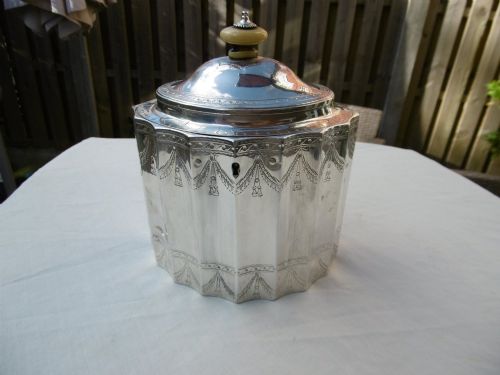
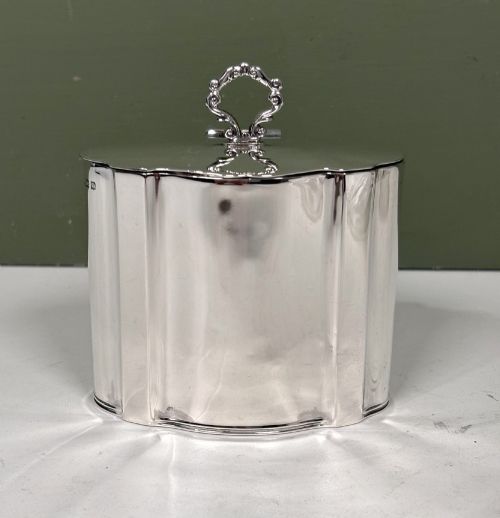
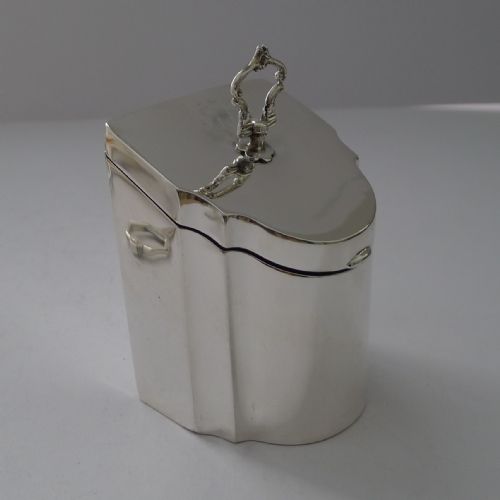
When searching for an antique silver canister, collectors encounter an array of vessels designed for dry goods, tobacco, and personal items. The pieces on this page span several centuries, originating from English workshops as well as Continental, Dutch, Indian, and Ottoman makers.
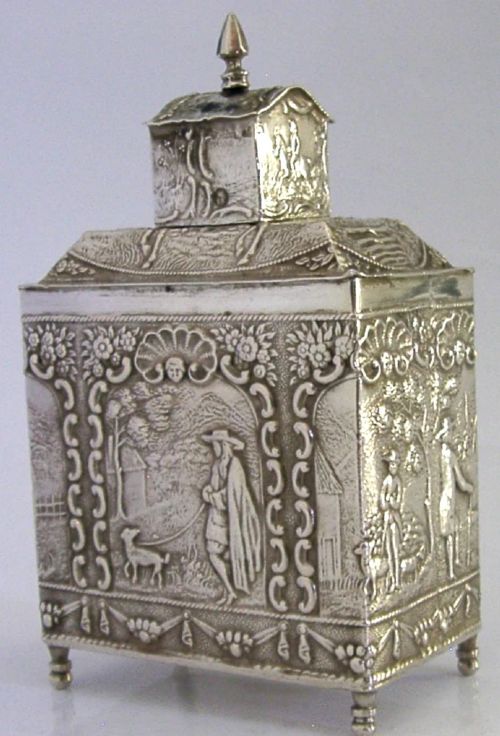
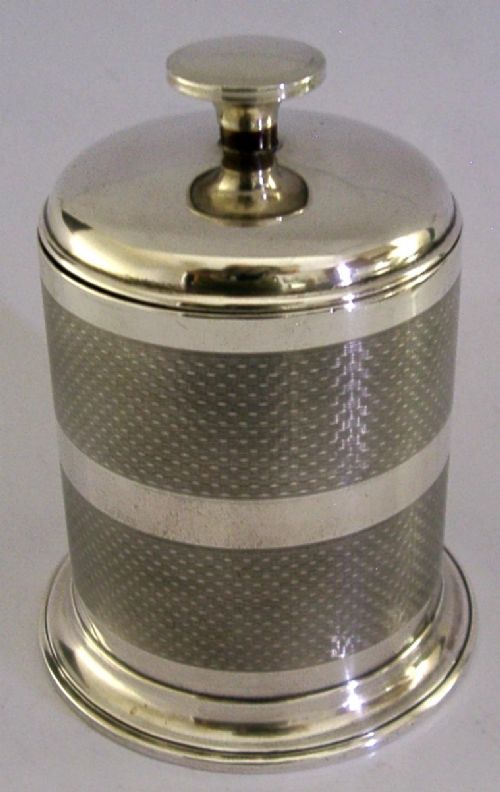
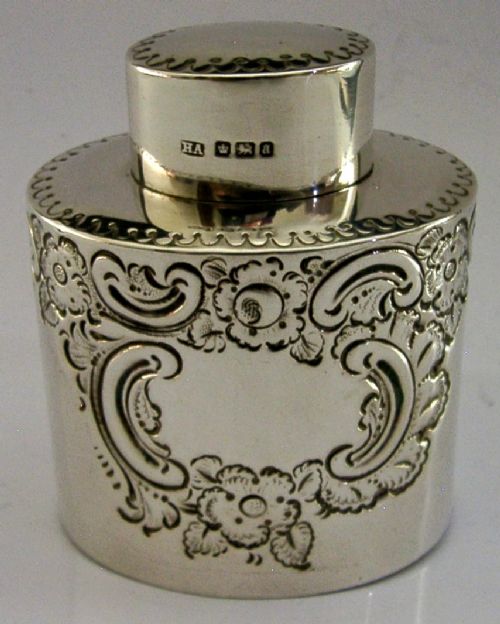
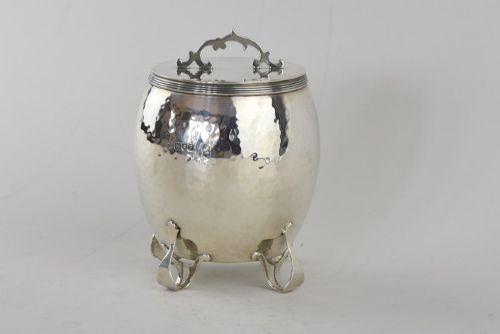
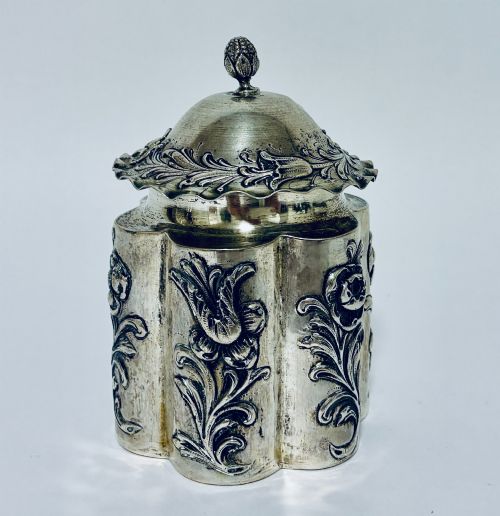
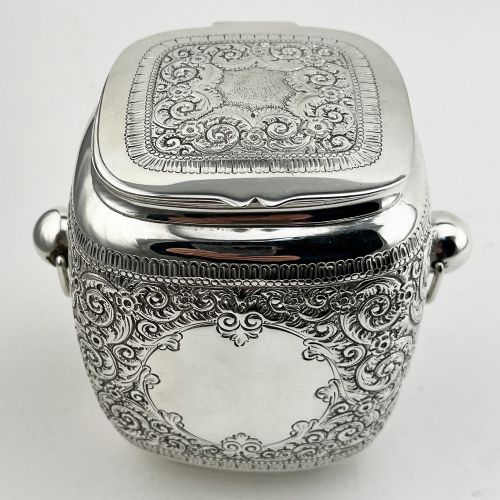
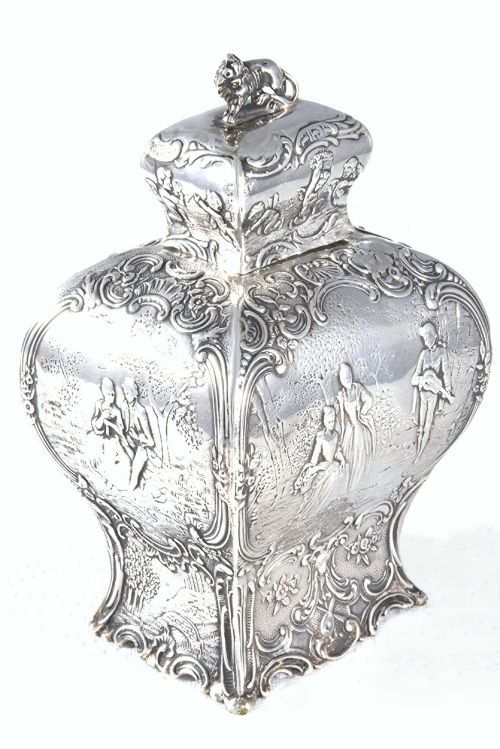
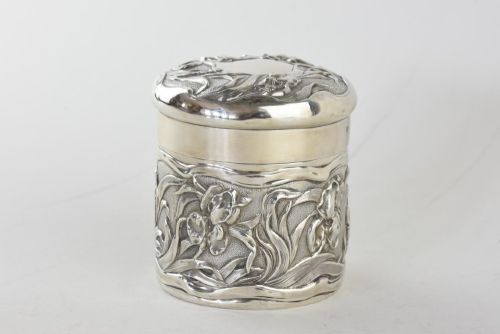
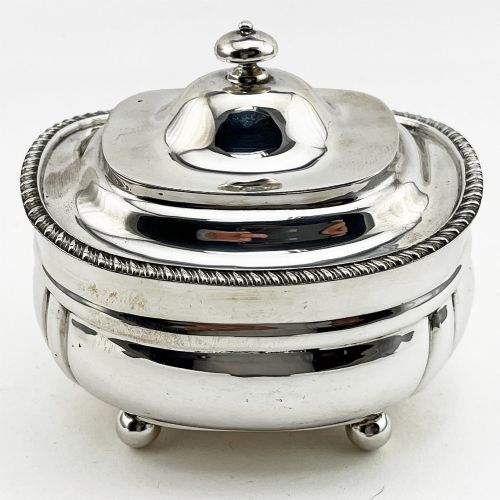
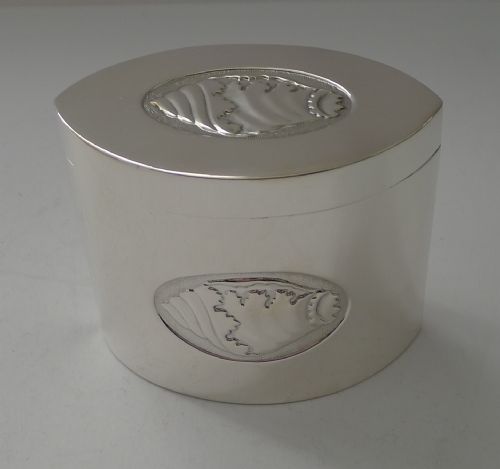
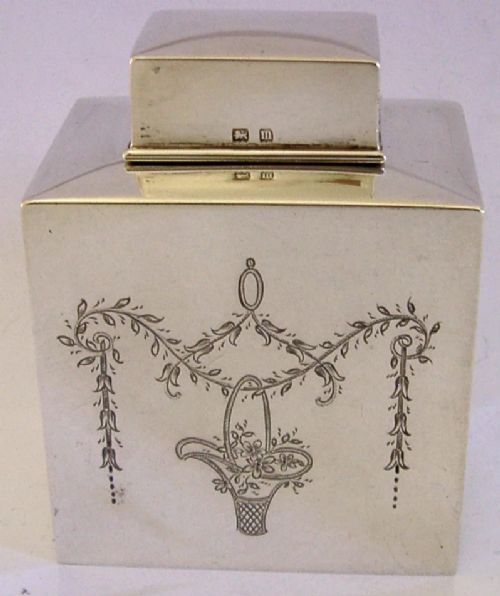
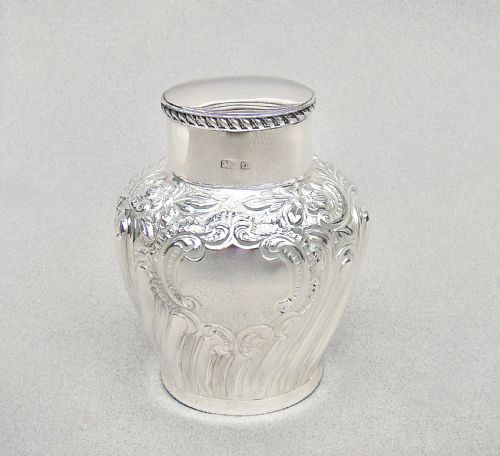
Tea caddies and canisters form the core of the selection, appearing in various shapes including oval, fluted, bombe, and knife box forms. Alongside these, buyers find trinket boxes, lidded beakers, and cigarette boxes sharing similar metalwork traditions.
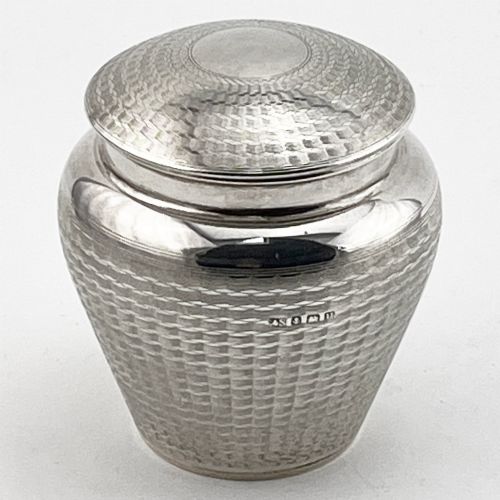
The objects frequently date from the Georgian, Victorian, and Edwardian eras, extending into the Art Deco period. Many incorporate fitted lids, pull-off covers, or lion mask handles, reflecting the changing tastes of domestic interiors over time.
Standard and Craftsmanship
The distinction between tiers of work rests on the weight of the metal and the crispness of the hand-applied decoration. Heavier gauge silver provides a substantial feel in the hand, whereas lighter vessels lack the same structural presence.
Detailing determines distinction, visible in the depth of repoussé work, the precise alignment of fitted lids, and the integration of decorative handles. Master silversmiths achieved clarity in hallmarks and ornamentation that sets their output apart from mass-produced items.
Antique Silver Canister Retail Price Guide 2026
Typical asking prices for silver canister among the pieces listed under this phrase on Sellingantiques today, from the lower quarter to the upper quarter. They describe what is for sale here now, not the wider market.
Some Victorian canisters doubled as hiding spots for tea leaves when the taxman called.
Charles Edwards·Robert Hennell·Goldsmiths and Silversmiths Company·Zimmermann·Thomas Hayes·Martin Hall and Co·Mappin and Webb·William Hutton and Sons Ltd·Thomas Bradbury·Peter Gillois·Thomas Heming
The Antique Silver Canister Glossary
- Repoussé
- A metalworking technique where the artisan hammers the design from the reverse side to form a raised relief on the front. This method creates ornate, tactile surface patterns on tea caddies and boxes.
- Hallmark
- An official stamp applied to precious metals indicating the standard of purity, the assay office, and the date letter. These marks allow collectors to trace the origin and exact year of manufacture.
- Bombe
- A swollen or bulging furniture and vessel shape characterised by convex curves. In silver canisters, this profile gives the body a rounded, opulent appearance.
- Gauge
- The thickness of the sheet metal used to construct an object. A heavier gauge denotes a higher volume of silver and greater durability.
- Caddy spoon
- A short-handled spoon specifically sized to measure loose tea leaves from a canister. These implements are frequently matched stylistically with the main caddy.
Antique Silver Canister: Frequently Asked Questions
What was a silver canister used for?
These vessels originally stored precious dry tea leaves when tea was an expensive commodity requiring secure containment.
Over time, similar lidded containers adapted to hold tobacco, cigarettes, or small personal valuables on dressing tables.
How do I clean antique silver?
Maintenance requires gentle washing with warm soapy water and a soft cloth to preserve the original patina.
Harsh abrasive dips strip away historical surface character and should be avoided in favour of dedicated silver polish used sparingly.
Can I use these for daily tea storage?
Most antique canisters remain fully functional for storing dry goods if the interior is clean and free from residue.
Many owners choose to display them as decorative objects rather than subjecting them to everyday kitchen use.
How do I identify the date of a piece?
Dating relies on reading the stamped hallmarks, which record the assay office and a specific letter corresponding to the year of production.
Stylistic markers such as neoclassical fluting or geometric Art Deco lines also offer clues to the period of origin.