
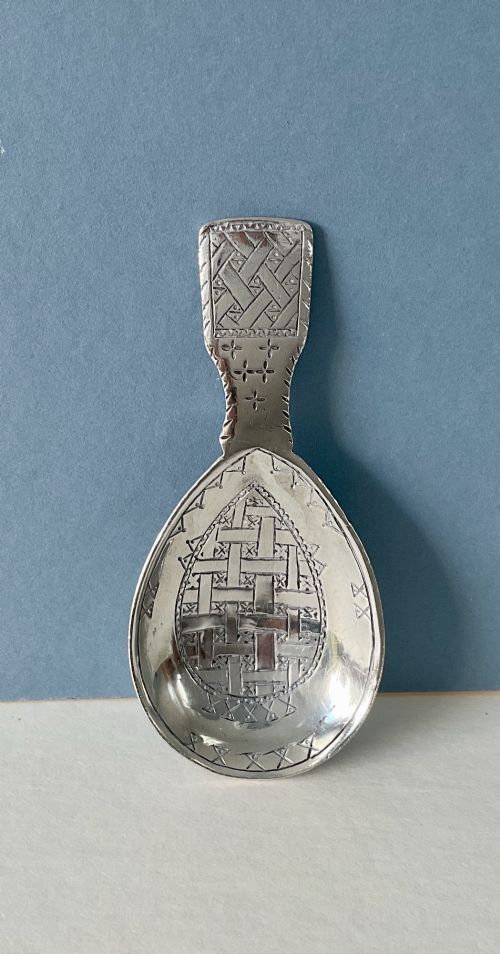
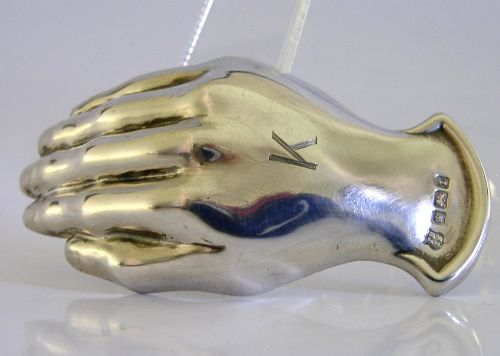
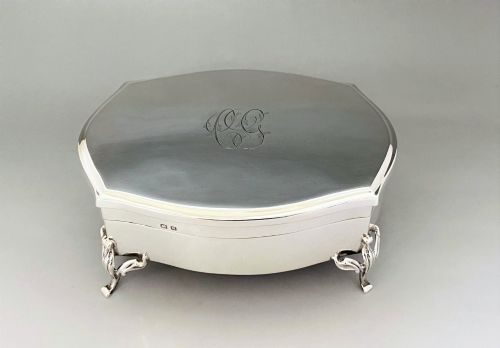
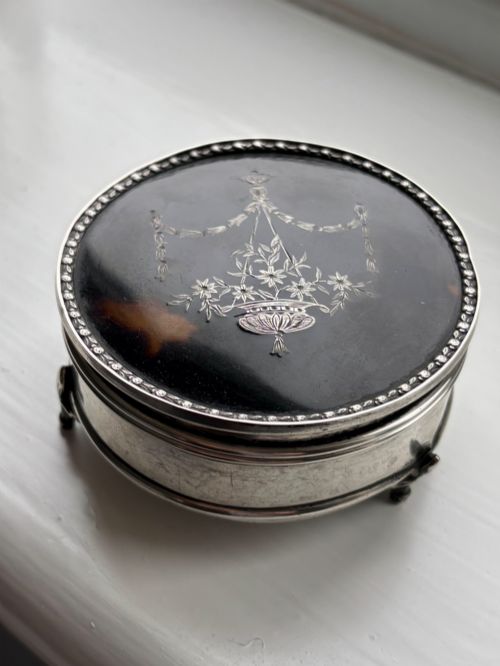
Edwardian Silver Caddy
An Edwardian silver caddy brings refined period character to the table, storing loose leaves with traditional British craftsmanship.
Edwardian Silver Caddy
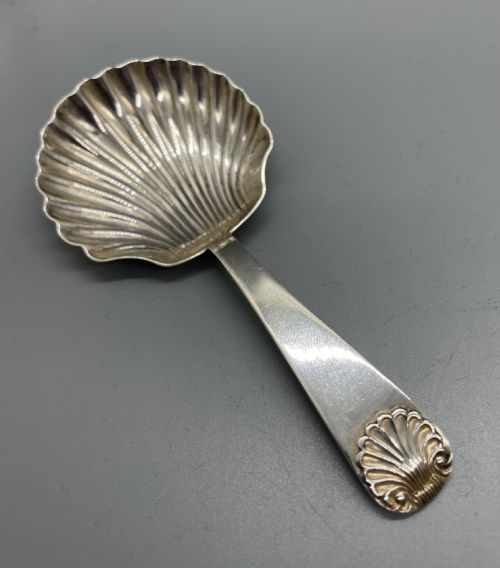
An edwardian silver caddy is a specialised storage vessel designed for loose tea leaves, originating primarily from the early twentieth century. Buyers seeking this phrase encounter tea caddies, boxes, and related items such as caddy spoons and biscuit jars.
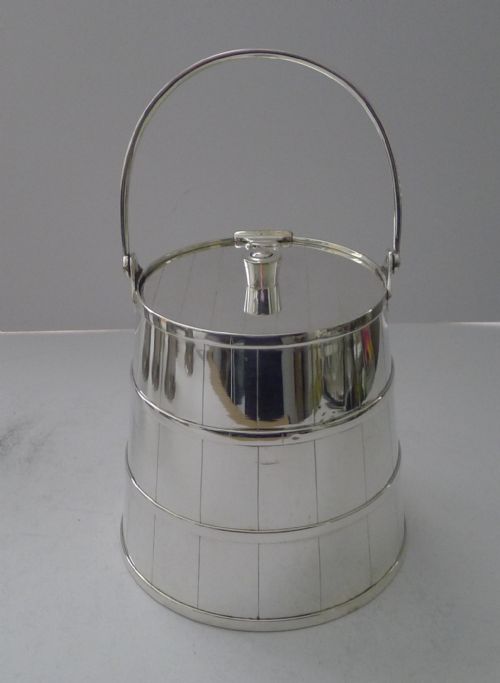
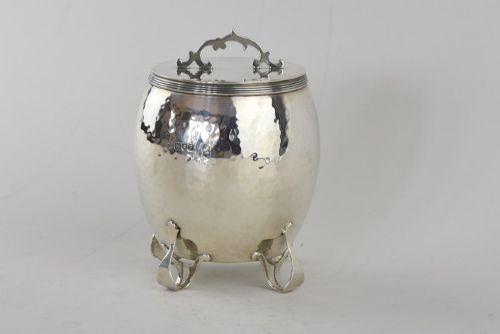
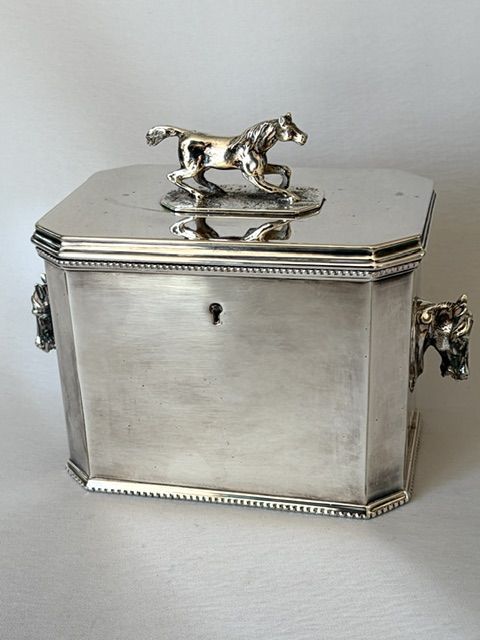
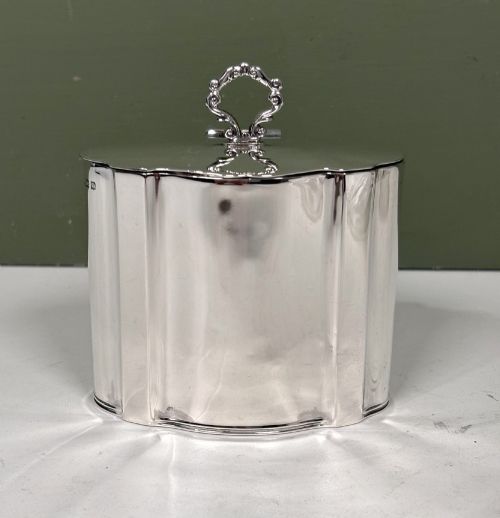
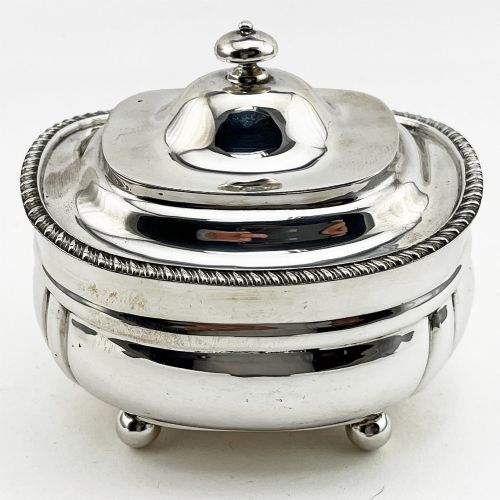
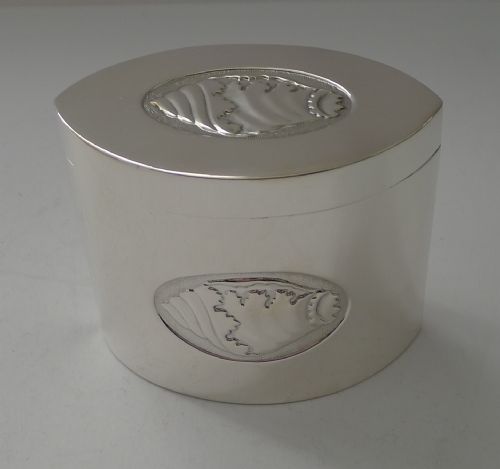
The pieces on this page reflect forms ranging from straightforward oval and bulbous bodies to bombe shapes, octagonal outlines, and neoclassical urn styles. Some examples take distinct forms, including a Georgian knife box or village and roman scenes.
Originating during the Edwardian era and surrounding years up to 1920, these items showcase the stylistic influences of the period alongside Arts and Crafts and Georgian Revival movements.
Materials and Technique
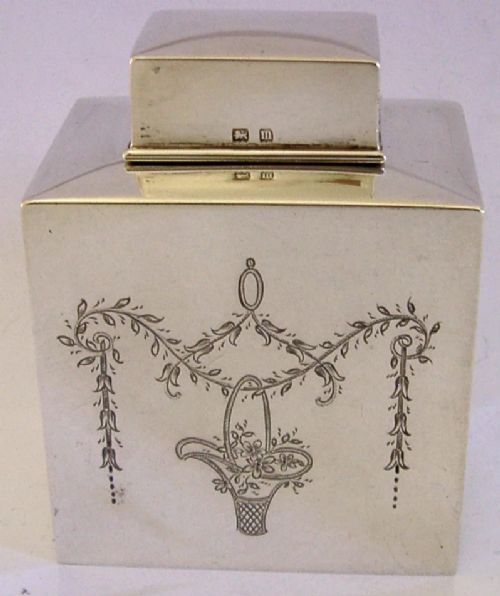
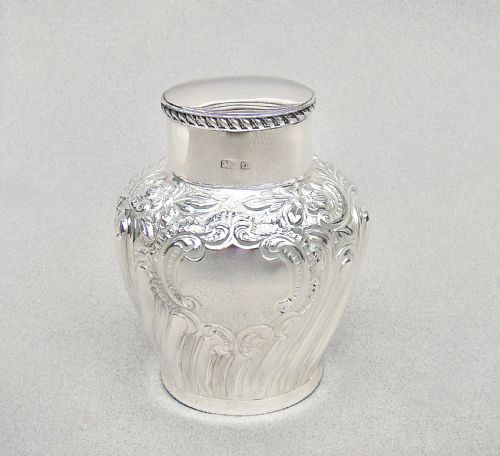
Makers utilised sterling silver and silver plating, often shaping the metal through hammering, engraving with floral scrolls, or forming bulbous oval fluted bodies.
Construction techniques include detailed embossing and the integration of decorative elements such as lion mask handles, cut glass components, and fitted spoons.
Retail Price Guide 2026
Typical UK retail prices for edwardian silver caddy, calculated from the Sellingantiques database of over a million retail prices indexed since 2003. This retail price guide relies exclusively on Sellingantiques data; no external sources or auction records are used, so the figures do not describe the wider market.
Defining Quality
Quality rests upon the crispness of chased or engraved floral scrolls and the structural integrity of hinged lids and handles. Substantial weight and clear hallmarks denoting specific makers and assay offices elevate an example.
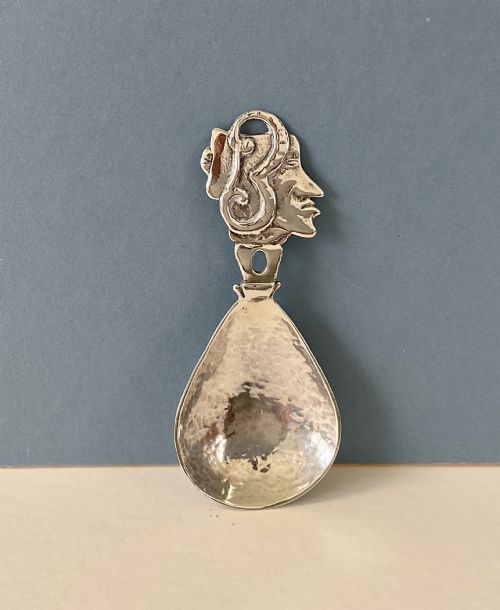
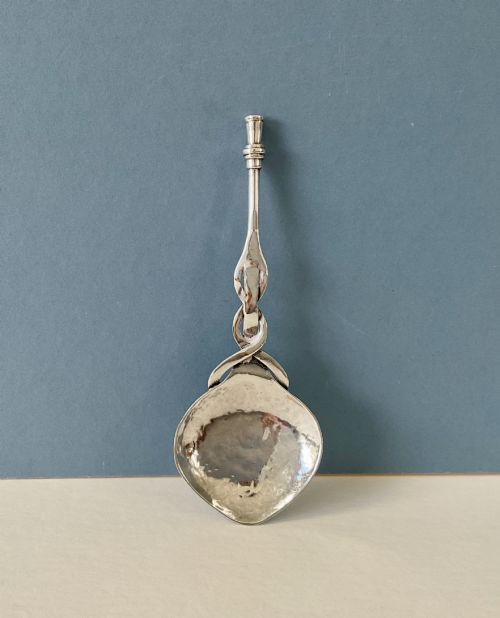
Artisanal distinction appears in specialised decorative motifs, such as hand-hammered surfaces associated with Arts and Crafts pieces or sculptural forms modeled after classical urns.
Charles Edwards·A & J Zimmerman Ltd·William Hutton & Sons Ltd·George Unite·Marples & Co·The Barker Brothers·Thos Bradbury & Sons·The Haseler Brothers·Edward Barnard & Son·T H Hazelwood & Co·Nathan & Hayes
The Edwardian Silver Caddy Glossary
- Sterling silver
- A standard alloy consisting of ninety-two point five percent silver by mass, utilised for durable British tableware and boxes.
- Hallmark
- An official mark stamped onto precious metal items to indicate standard of purity, place of assay, and year of manufacture.
- Caddy spoon
- A short-handled spoon specifically designed for measuring loose tea leaves from a caddy into a teapot.
- Bombe shape
- A rounded, bulging body profile popular in decorative silver vessels of the early twentieth century.
- Neoclassical
- A revival style drawing inspiration from classical antiquity, often featuring urn forms and symmetrical ornamentation.
Frequently Asked Questions
What is an edwardian silver caddy?
An edwardian silver caddy is a lidded container manufactured in the early twentieth century to keep loose tea leaves fresh and dry before brewing.
These vessels were standard fixtures in affluent households where tea was poured from a silver service in the drawing room.
How do I use an edwardian silver caddy today?
You can utilise an edwardian silver caddy to store specialty loose tea leaves on a kitchen shelf or dining sideboard.
The tight-fitting lids help preserve the aroma of the leaves while adding traditional metalwork texture to modern interiors.
How can I tell the period of a silver caddy?
Dating relies heavily upon the stamped hallmarks, which reveal the assay office and the specific year letter for manufacture between 1900 and 1920.
Stylistic cues such as Arts and Crafts hammered textures or Georgian Revival urn silhouettes also point directly to the Edwardian era.
What styles are common in these silver pieces?
The primary styles span standard Edwardian elegance, Arts and Crafts hand-worked surfaces, and Georgian Revival interpretations.
Motifs range from simple engraved floral scrolls to figurative village scenes and classical architectural shapes.