



Silver Tea Jar
A silver tea jar brings traditional British craftsmanship to the table, offering a secure container designed to preserve precious leaf blends.
Silver Tea Jar
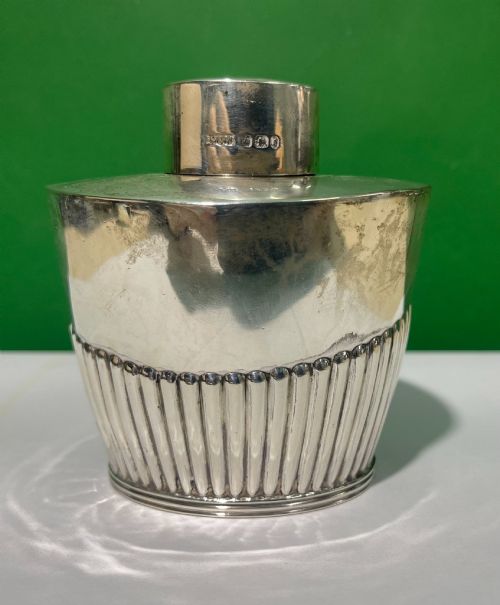
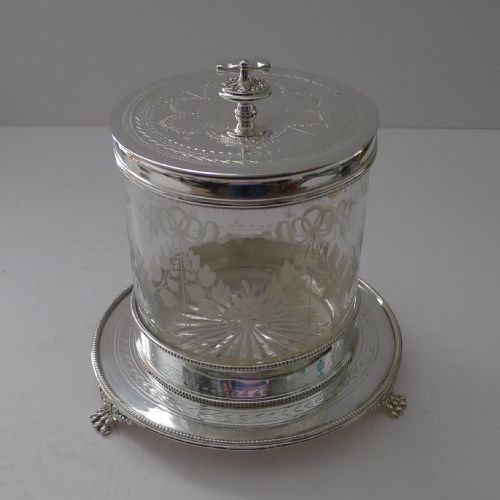
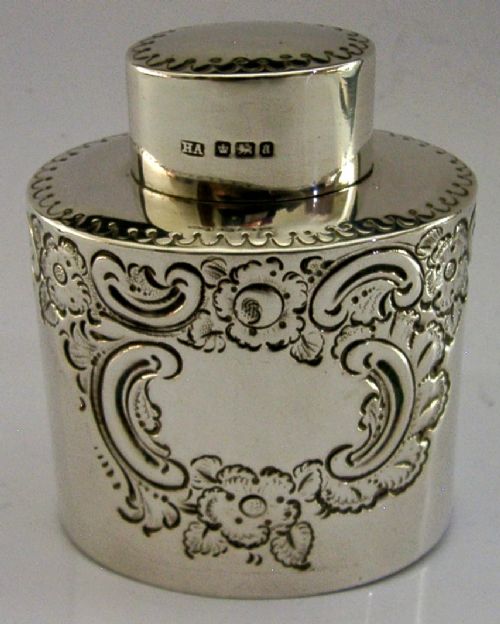
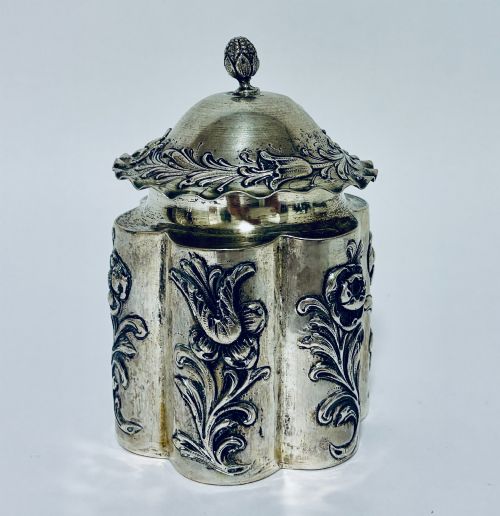
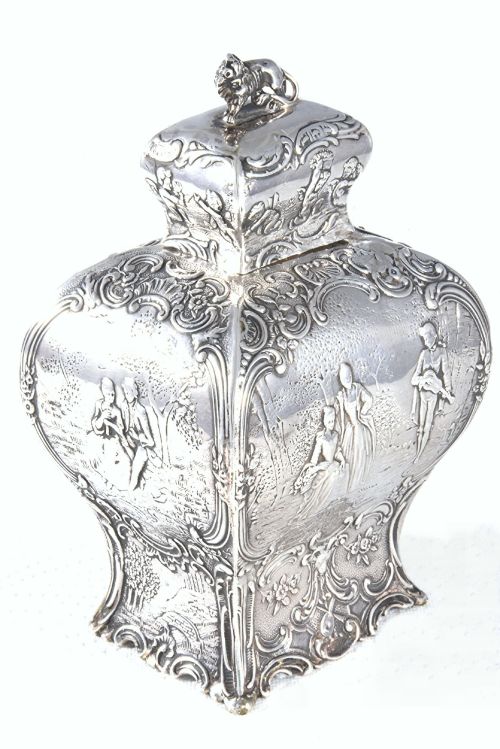
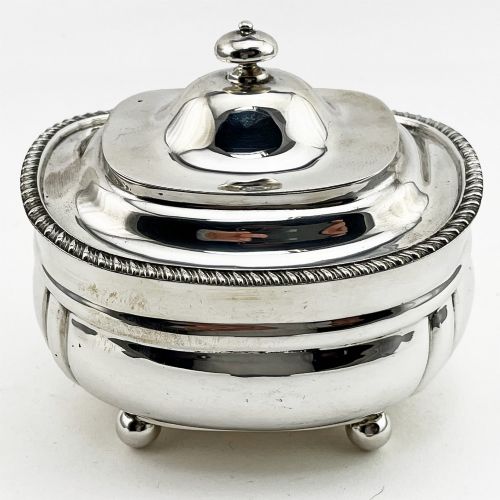
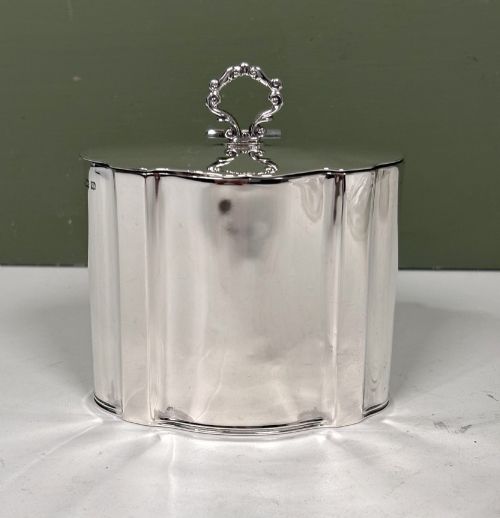
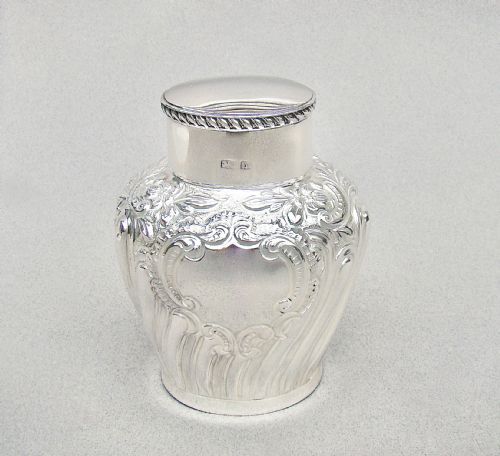
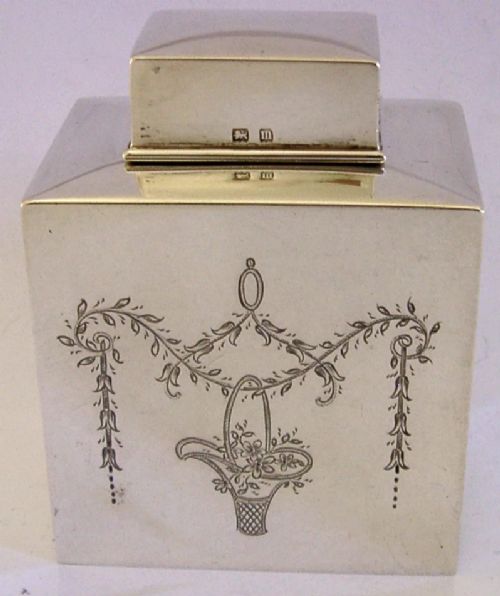
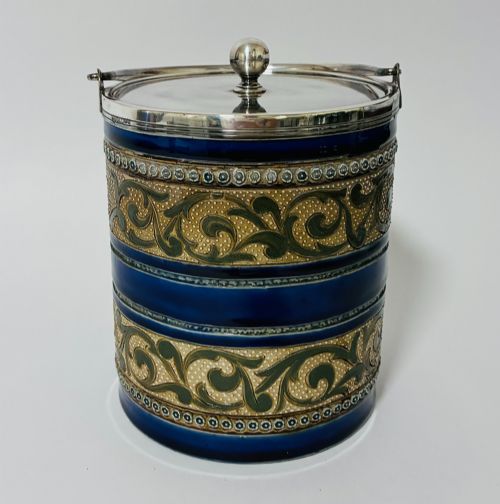
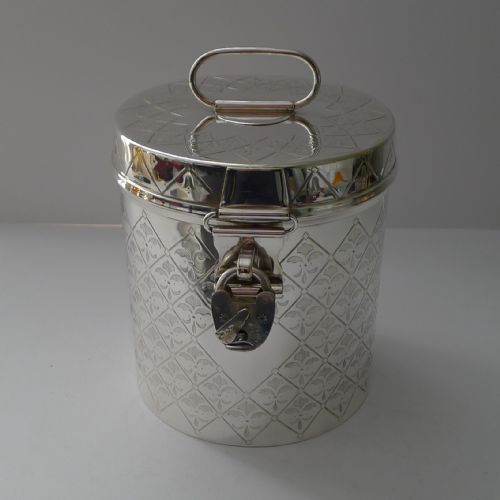
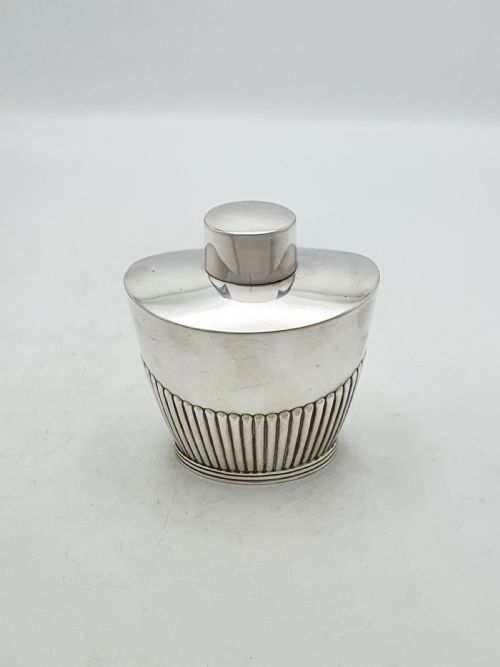
A silver tea jar encompasses traditional receptacles utilised for dry leaf storage, appearing across this selection primarily as tea caddies and occasionally as biscuit barrels or boxes. These items emerge from various decades spanning the Victorian, Edwardian, and Art Deco periods, alongside earlier Georgian examples.
The most common formats found in this inventory are sterling silver and silver-plated vessels shaped into ovals, cylinders, and bombe forms. Makers constructed these containers to sit proudly upon dining tables or within tea equipage cabinets.
Originating predominantly from British workshops in London, Sheffield, and Birmingham, these pieces reflect changing domestic habits. Collectors also encounter continental and Ottoman specimens alongside domestic productions.
Materials and construction
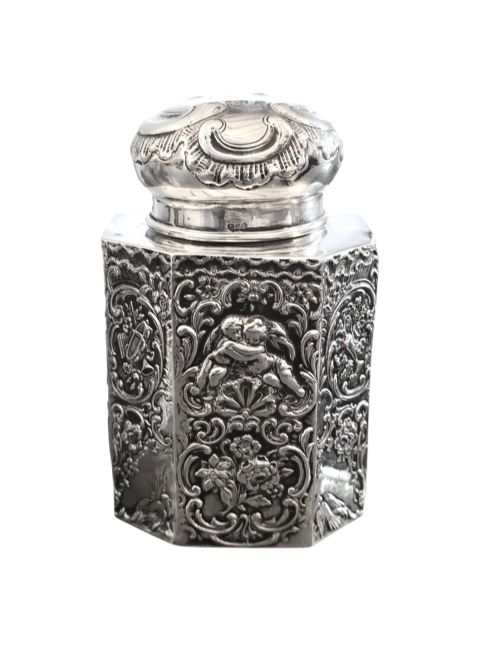
Artisans employed solid sterling silver, silver plate, and occasionally cut glass or oak to build these containers. Hammered surfaces demonstrate the Arts and Crafts approach, whilst repoussé decoration provides elaborate floral or figural relief.
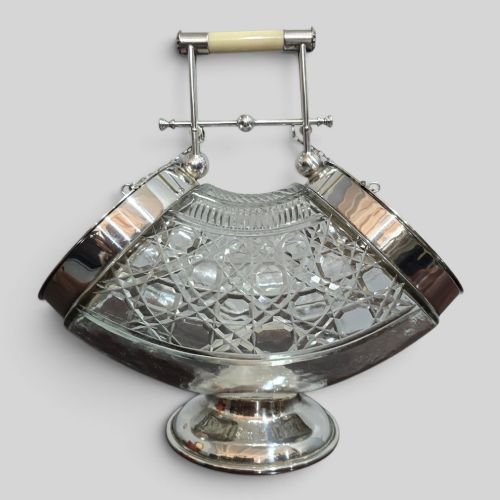
Smiths formed bodies through spinning, raising, or stamping sheet metal, attaching pull-off lids or hinged covers. Glass liners frequently accompany pierced silver frames, and locking mechanisms appear on larger biscuit boxes.
Silver Tea Jar Retail Price Guide 2026
Typical asking prices for silver tea jar among the pieces listed under this phrase on Sellingantiques today, from the lower quarter to the upper quarter. They describe what is for sale here now, not the wider market.
Listings feature sterling silver and silver plate alongside cut glass and oak materials spanning the Victorian and Edwardian eras.
Factors determining quality
The gauge of the metal dictates the structural integrity of each vessel, separating heavy, substantial pieces from lighter alternatives. Superior examples exhibit crisp hallmarks and precise fitting lids that rest securely upon the collar.
Execution of decorative detail reveals the maker's proficiency, from hand-hammered texturing to intricate pierced work. Renowned manufacturing firms achieved greater clarity in chasing and engraving than smaller commercial workshops.
Charles Edwards·Zimmermann·Thomas Hayes·Mappin and Webb·Robert and Belk·Walker and Hall·Ernest Druiff and Co·Goldsmiths and Silversmiths Co·Asprey and Co·Atkin Brothers
The Silver Tea Jar Glossary
- Tea Caddy
- A small container designed for storing loose tea leaves securely. Early forms often featured internal compartments with separate lids.
- Biscuit Barrel
- A large lidded jar intended for serving biscuits or baked goods at the table. They frequently combine ceramic bodies or cut glass with silver-plated mounts.
- Hallmark
- An official stamp applied to precious metals indicating the standard of purity, assay office, and year of manufacture. These marks provide definitive dating evidence.
- Repoussé
- A metalworking technique where the artisan hammers the design from the reverse side to form a raised relief on the front. This method creates decorative panels depicting foliage or scenes.
- Bombe
- A swollen or bulging profile shape popular in container design during the nineteenth century. This contour adds visual weight and dynamic curves to the piece.
Silver Tea Jar: Frequently Asked Questions
What is a silver tea jar?
A silver tea jar is a lidded container originally built to store loose tea leaves and protect them from moisture and light. These items function as decorative and practical objects within historical dining settings.
Today, collectors utilise them as display pieces or for storing small household items. Their enduring appeal stems from traditional metalworking techniques and period design.
How do I date a silver tea jar?
Dating relies heavily upon the assay office hallmarks stamped into the metal surface. These marks reveal the specific year letter and city of testing.
Stylistic indicators such as Victorian ornamentation or Edwardian proportions also help determine the era of production. Comparing construction methods further clarifies the manufacturing period.
Were these jars used only for tea?
Whilst primary usage centred on preserving valuable tea leaves, makers also adapted similar vessels for biscuits and tobacco. Larger lidded boxes served multiple purposes across different domestic rooms.
Some variants accommodated glass liners for perishable foodstuffs or functioned as trinket boxes. Their versatility reflects changing household requirements over successive generations.
How should I clean my silver tea jar?
Maintenance requires gentle cleaning with a specialised silver cloth to remove tarnish without abrading the surface. Harsh chemical dips should be avoided, particularly on pieces with applied decoration or organic liners.
Storing the container in a dry environment prevents rapid oxidation. Regular light polishing preserves the original lustre of the metal.