
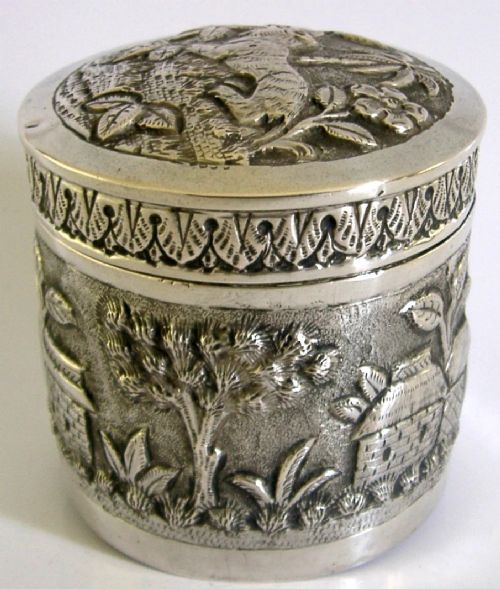
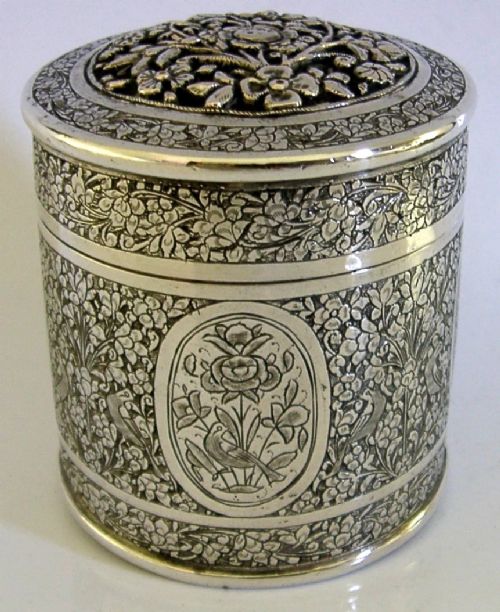


Chased Silver Tea Caddy
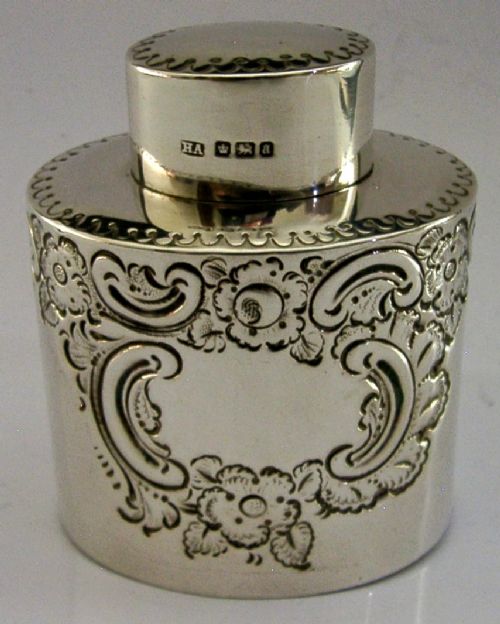
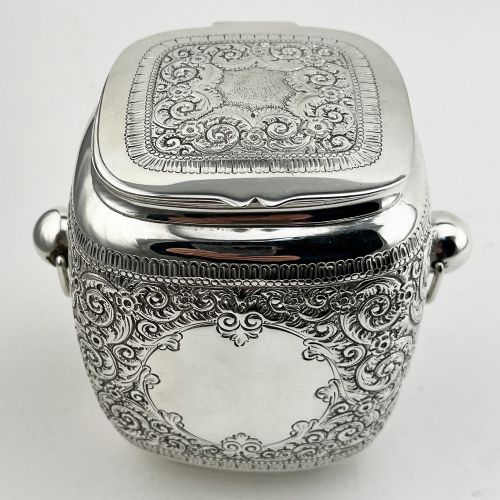
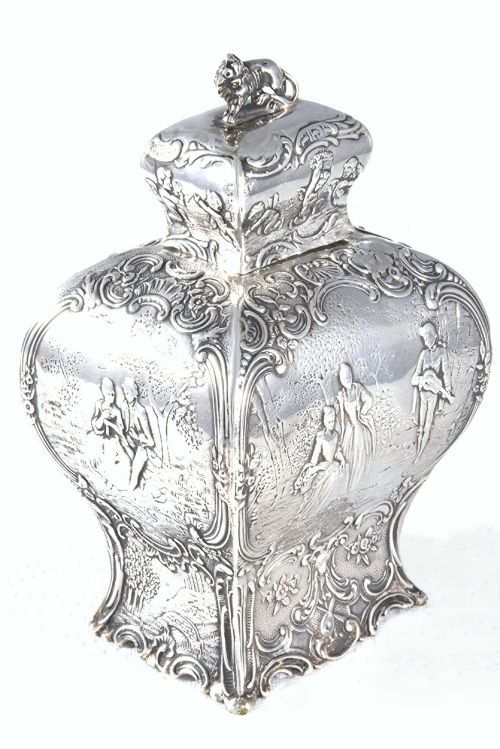
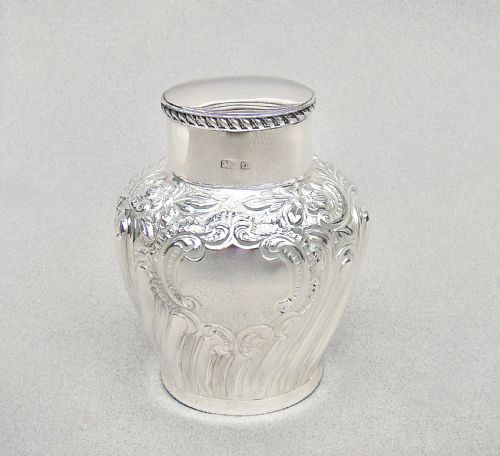
These chased silver tea caddy examples are fine metalwork vessels designed to hold loose leaf tea, bringing tactile history and period elegance straight to a room.

Chased Silver Tea Caddy
A chased silver tea caddy is a small storage vessel made to preserve and protect precious tea leaves in the home. The form spans several decades and centuries, ranging from George III Rococo pieces down to Edwardian creations.
Buyers browsing this selection encounter various regional interpretations alongside standard British forms. Examples include Anglo-Indian pieces, Ottoman Turkish boxes, and sterling silver items from Birmingham and London assay offices.
The most common forms on this page include oval vessels, bombe silhouettes, and rectangular boxes fitted with pull-off lids. Materials encompass solid silver, sterling silver, silver plate, and occasional contrasting details in ebony.
How they were made
Silversmiths constructed these vessels primarily from solid silver or sterling silver sheets, shaping them through hammering and soldering. Certain pieces utilise silver plate over a base metal core.
The defining characteristic of these items is the chasing technique, where artisans pushed and hammered the metal from the front to create raised decorative motifs without cutting away material.
Chased Silver Tea Caddy Retail Price Guide 2026
Typical asking prices for chased silver tea caddy among the pieces listed under this phrase on Sellingantiques today, from the lower quarter to the upper quarter. They describe what is for sale here now, not the wider market.
Tea was once so valuable that caddies often featured built-in locks, meaning eighteenth-century servants carried keys with the heavy responsibility of guarding the leaves.
What varies in quality
Quality rests in the crispness and depth of the chased ornamentation across the surface. Skilled metalwork displays sharply defined relief patterns that maintain their detail across curves and corners.
The weight of the metal and the precision of the lid fit distinguish ordinary boxes from superior examples. Thicker gauge silver provides a substantial feel in the hand and ensures structural integrity over centuries.
Martin Hall & Co·Thomas Hayes
The Chased Silver Tea Caddy Glossary
- Chasing
- The technique of hammering metal from the front to push it inward and create a raised design in relief. This contrasts with repoussé work, which is worked from the reverse side.
- Sterling silver
- A silver alloy consisting of significant purity by weight, commonly marked with traditional British assay office symbols. It provides the standard metal composition for fine antique tableware.
- Bombe
- A swollen or bulging convex shape utilised in the profile of specific caddies. The curved silhouette enhances the play of light across the chased decoration.
- Pull-off lid
- A snug-fitting lid that lifts straight off the neck of the caddy without hinges or threaded screws. It relies on precise metal fitting to stay secure.
Chased Silver Tea Caddy: Frequently Asked Questions
How do I clean antique silver?
Antique silver requires gentle maintenance using a soft cloth and specialised silver polish formulated to preserve the underlying metal. Aggressive scrubbing or frequent heavy polishing can wear away the delicate chased details over time.
Storing the caddy in a dry environment helps prevent rapid tarnishing. Many collectors prefer to let a natural dark patina develop in the recessed areas of the chasing to accentuate the design.
How do I date a silver caddy?
Dating a British silver caddy involves examining the hallmarks stamped directly onto the metal surface. These tiny marks typically indicate the assay office, the standard of silver, and a specific date letter corresponding to the year of manufacture.
Stylistic clues such as the silhouette, the presence of repoussé work, or specific ornamental motifs also help narrow down the period. Pieces lacking full British hallmarks often rely on regional markers and construction styles for attribution.
How were tea caddies used?
In historic households, the tea caddy sat in the parlour or dining room where the lady of the house dispensed the leaves for afternoon tea. Because tea carried high financial value, the containers were frequently built with locking mechanisms to restrict access.
Servants prepared the brew under supervision, and the caddy remained a symbol of hospitality and social status. Modern owners repurpose them to hold small trinkets, jewellery, or simply as decorative desk accessories.