



Repousse Silver Caddy
A repousse silver caddy brings tactile weight and hammered relief to the tea table, rewarding close inspection with intricate surface depth.

What these pieces are
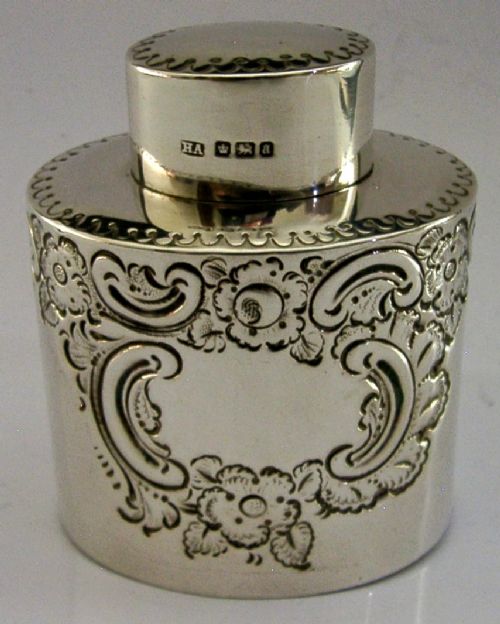
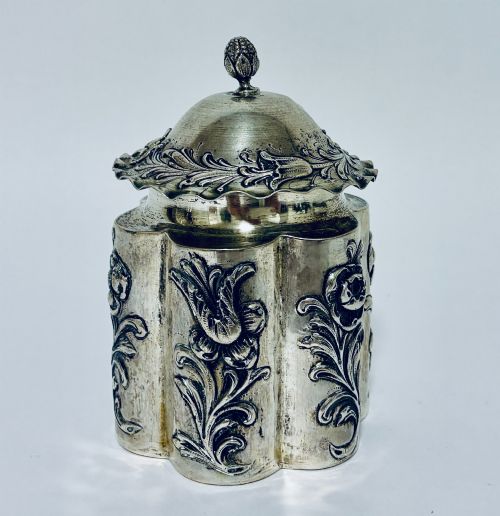
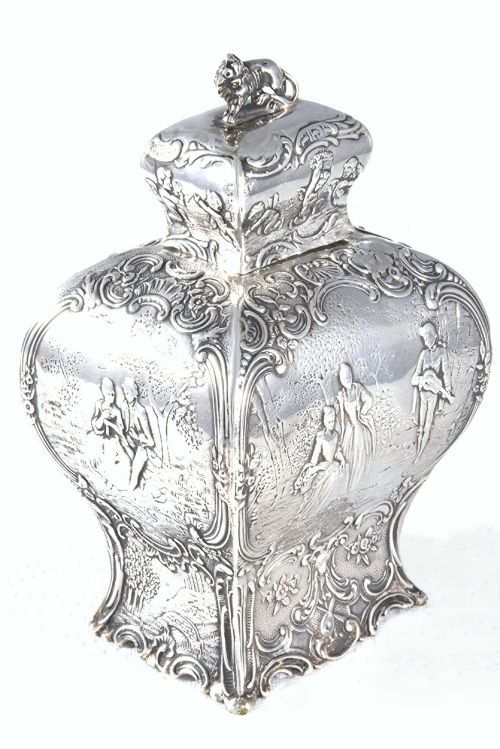
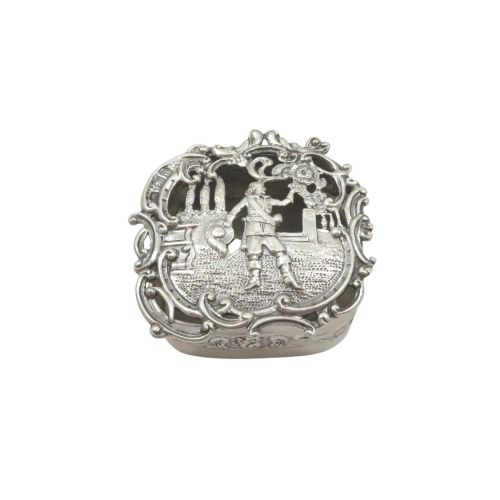
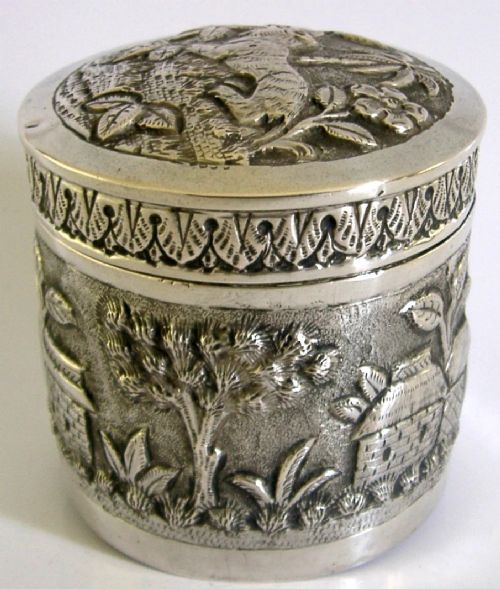
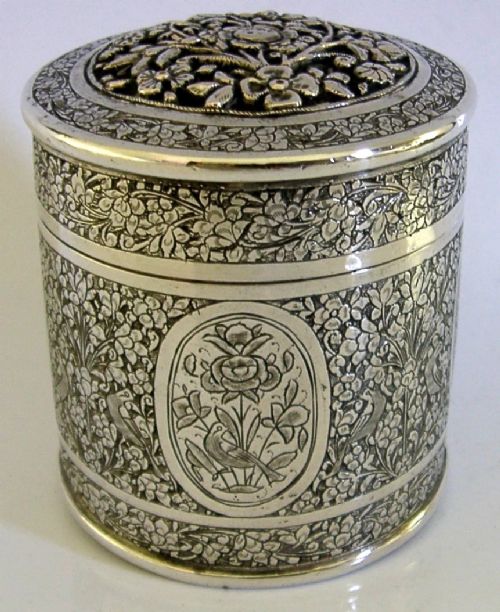
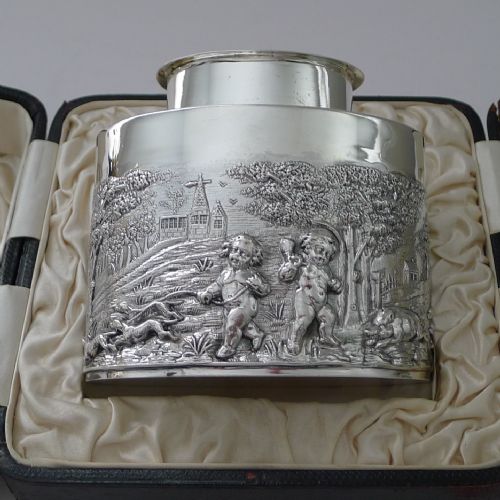
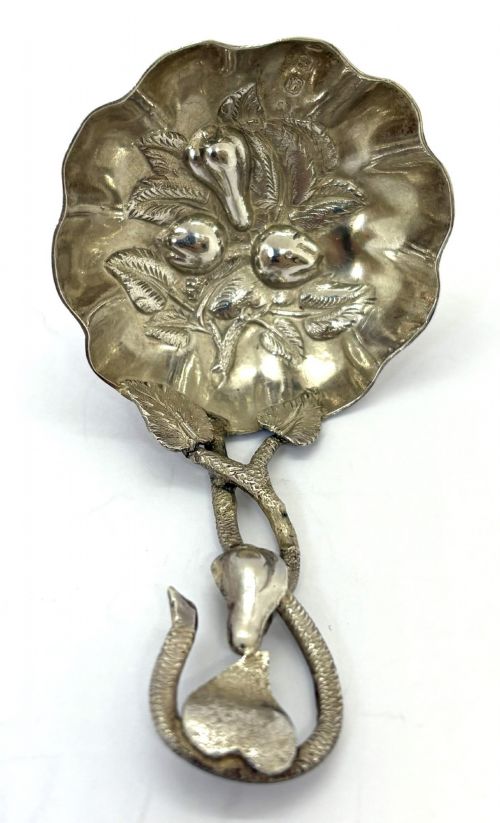
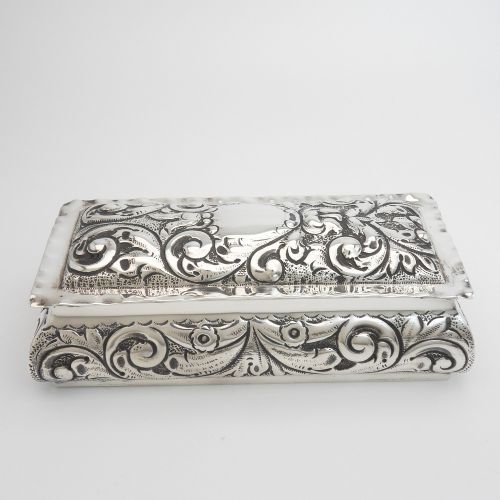
A repousse silver caddy is a lidded container designed to hold and protect dry tea leaves, fashioned with hammered and chased relief decoration. These vessels range from Victorian bombe forms to earlier George III Rococo examples, alongside Anglo-Indian and colonial pieces.
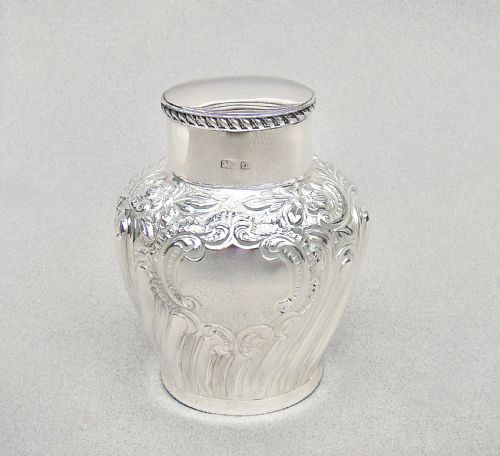
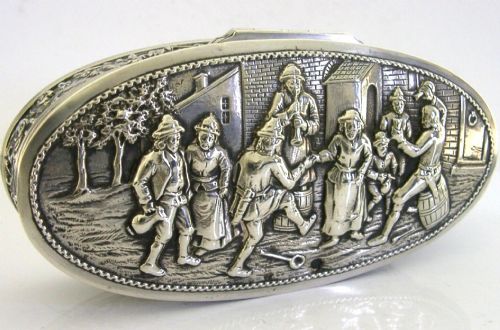
The versions most commonly met on this page date from the Victorian era and the early twentieth century, alongside eighteenth-century works. They appear as tea caddies and small lidded boxes, occasionally paired with materials such as ebony.
Collectors seek out a repousse silver caddy for its distinct three-dimensional surface texture, which sets it apart from plain or engraved tea storage vessels. Each piece reflects the specific decorative vocabulary of its period of manufacture, from British hallmarks to colonial workshops.
What varies in quality
The distinction between average and exceptional work lies in the depth and crispness of the hammered relief, where skilled chasing creates distinct shadows and tactile definition. Softer, shallow pressing yields a flatter appearance that lacks the sculptural presence of better examples.
Proportion and structural integrity also separate fine caddies from simpler items, particularly in the fit of the lid and the balance of the bombe or straight-sided form. Hallmarks, where present, provide clear markers of origin and date that anchor the piece within its historical period.
Retail Price Guide 2026
Typical UK retail prices for repousse silver caddy, calculated from the Sellingantiques database of over a million retail prices indexed since 2003. This retail price guide relies exclusively on Sellingantiques data; no external sources or auction records are used, so the figures do not describe the wider market.
Some colonial silver caddies feature lively repousse peacocks strutting across the lid.
The Repousse Silver Caddy Glossary
- Repousse
- A metalworking technique where the design is hammered from the reverse side to create a raised relief on the front. This method gives the metal a sculptural and tactile quality.
- Sterling silver
- An alloy consisting of pure silver and other metals, usually copper, to increase durability while maintaining a bright metallic lustre. British pieces often bear lion passant hallmarks to confirm this standard.
- Bombe
- A swollen or bulging convex shape frequently utilised in furniture and hollowware during the eighteenth and nineteenth centuries. It gives the silver caddy a rounded, curvaceous silhouette.
- Chasing
- The complementary process to repousse, executed on the front surface of the metal using punches to refine details and sharpen lines. It adds depth and contrast to the hammered relief.
Frequently Asked Questions
What is a repousse silver caddy?
A repousse silver caddy is a lidded vessel for storing tea leaves, decorated with hammered and chased relief ornament.
These pieces span periods from the eighteenth century to the early twentieth century, reflecting various regional styles.
How do I date a silver caddy?
Dating relies upon examining stamped hallmarks, maker's marks, and stylistic indicators such as form and decorative motifs.
Victorian pieces often feature specific date letters, while Georgian items display earlier assay office marks.
What styles of repousse work exist?
Styles range from George III Rococo scrolls to Victorian floral motifs and Anglo-Indian designs.
Each regional or period style employs distinct hammer techniques and decorative themes.
How should I clean a silver caddy?
Cleaning should be minimal to preserve the dark highlights within the chased recesses of the repousse work.
Aggressive polishing can flatten the crisp edges of the hammered relief and remove historic patina.