



Chased Silver Caddy
These chased silver caddy examples span Georgian, Victorian, and Edwardian periods, offering refined metalwork for storing dried tea leaves.
Chased Silver Caddy
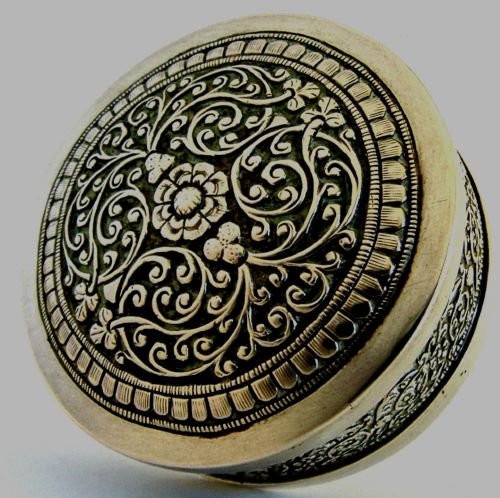
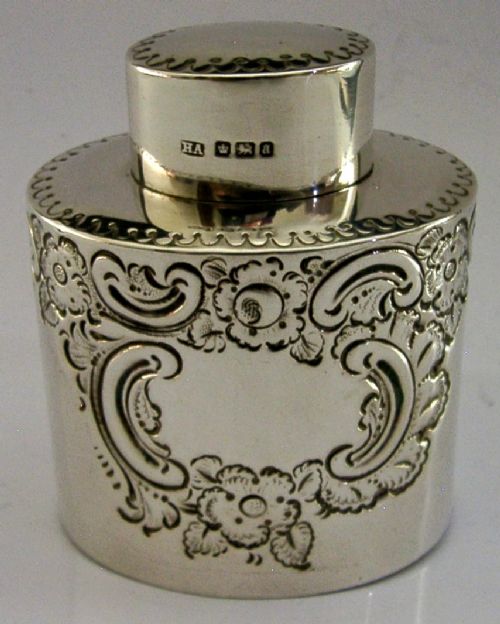
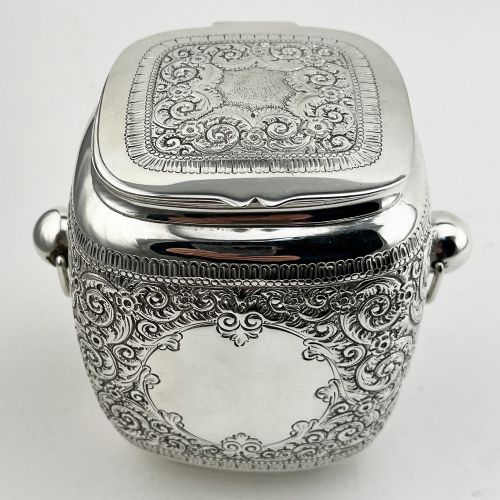
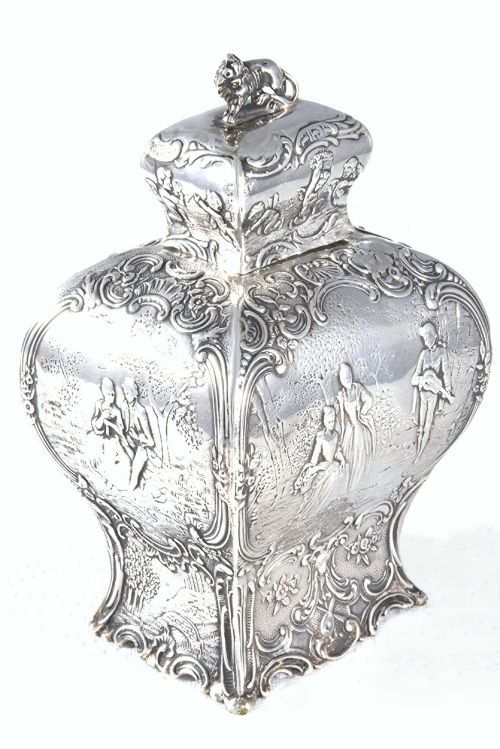
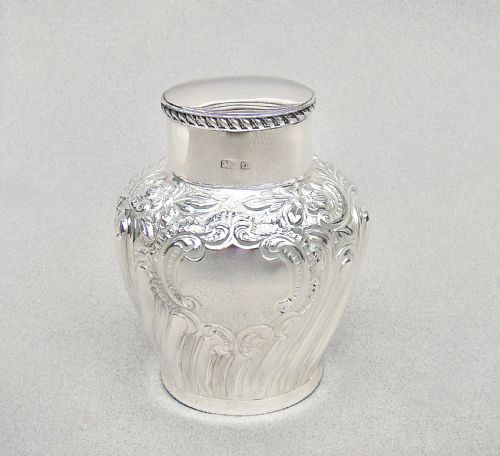
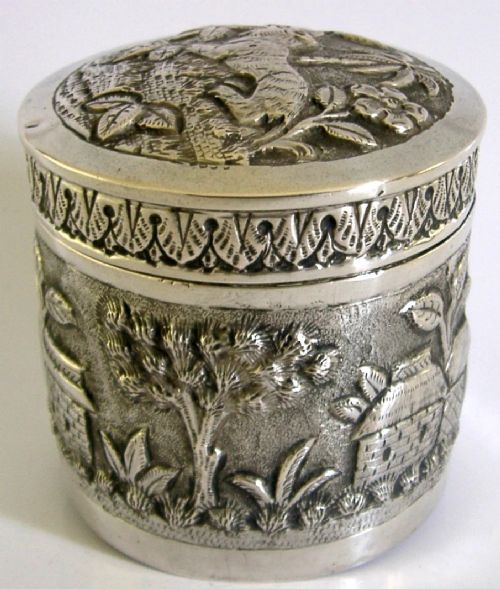
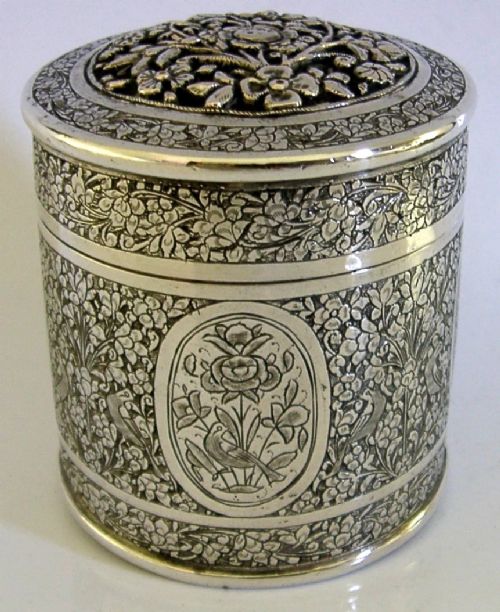
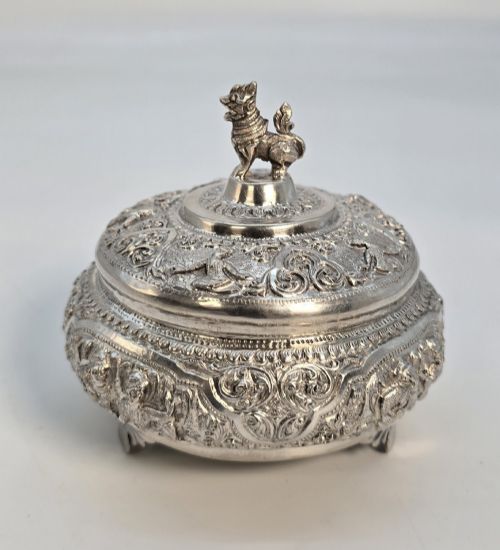
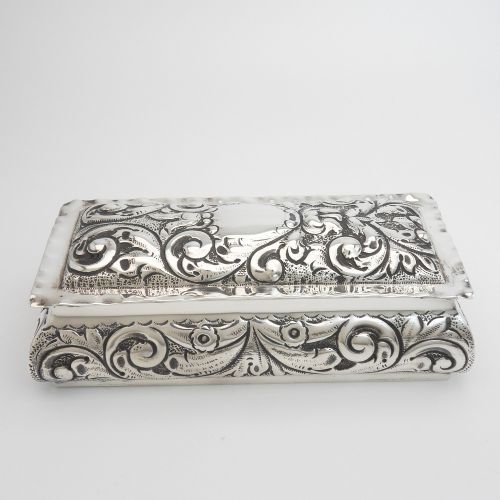
A chased silver caddy is a lidded container designed to hold and preserve loose tea leaves on a table or inside a tea chest. The pieces encountered on this page range from Georgian examples to later Victorian, Edwardian, and 19th century Indian creations.
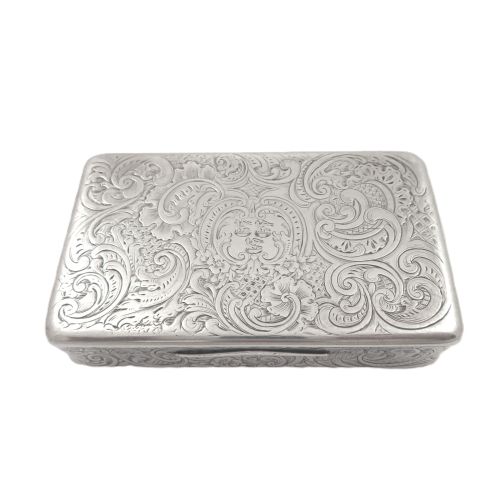
The form appears as tea caddies, boxes and caskets, snuff boxes, trinket boxes, lidded jars, and sugar boxes. Styles span Victorian, Edwardian, Georgian, Anglo-Indian, Ottoman, George III Rococo, and 19th century Indian designs.
What varies in quality
The distinction between tiers rests upon the crispness of the chased decoration and the weight of the metal used. Heavier solid silver pieces with deep, detailed relief work represent the upper end of the range compared to lighter plated items.
Maker attribution and regional origin also influence standing, with marked British provincial or London pieces alongside distinct Indian and Ottoman import styles showing varied levels of artisan execution.
Squirrels occasionally joined the domestic menagerie on Victorian sugar boxes alongside traditional floral motifs.
Martin Hall & Co·Thomas Hayes·A & J Zimmerman Ltd·Nathaniel Mills
The Chased Silver Caddy Glossary
- Chasing
- A metalsmithing technique where designs are hammered into the front surface of metal from the outside to push the material into relief. This creates decorative patterns without removing metal.
- Repoussé
- A method of shaping metal by hammering from the reverse side to form raised designs on the front. It often works in tandem with chasing to refine the details.
- Sterling silver
- An alloy consisting of pure silver and other metals, traditionally copper, standardised for strength and durability. Most British examples conform to this standard.
- Gilt lining
- A thin layer of gold applied to the interior surface of a silver vessel. This protected the silver from tarnishing when in contact with acidic substances or dry leaf.
- Pull-off lid
- A tightly fitted cover that lifts straight up without hinges or threads. It relies on precise craftsmanship to secure the opening.
Chased Silver Caddy: Frequently Asked Questions
What is a chased silver caddy?
A chased silver caddy is a decorative container made to hold loose tea leaves, featuring hand-hammered surface relief work. These items date across Georgian, Victorian, and Edwardian eras in various regional styles.
Craftsmen shaped sterling silver, solid silver, and silver plate into forms ranging from oval boxes to bombe caddies. They served both a practical storage function and a decorative role in formal rooms.
How do I date an antique caddy?
Dating relies on reading the hallmarks stamped into the metal, which indicate the assay office, city, and year of production. Stylistic clues such as George III Rococo details or Edwardian proportions also help place the piece.
Makers' marks provide further confirmation of the active period of the silversmith or firm. Comparing the form against documented pieces narrows down the decade of manufacture.
Were these caddies used only for tea?
While primarily made for dried tea leaves, similar lidded boxes and jars served related storage purposes on household tables. Some forms functioned as trinket boxes, lidded jars, sugar boxes, or snuff boxes.
Interior elements like gilt linings helped preserve different dry goods or fragrant items. Over time, owners often repurposed these containers for various small valuables.
What is the difference between solid silver and plate?
Solid silver and sterling silver pieces consist of precious metal all the way through their structure. Silver-plated items use a base metal core coated with a thin layer of silver.
Solid pieces generally carry hallmarks and possess greater weight and longevity. Plated versions offered an accessible alternative for decorative tablewares during the 19th century.