
Victorian Silver Caddy
A victorian silver caddy brings nineteenth-century dining ritual and craftsmanship directly to the modern tea table.
Forms and periods
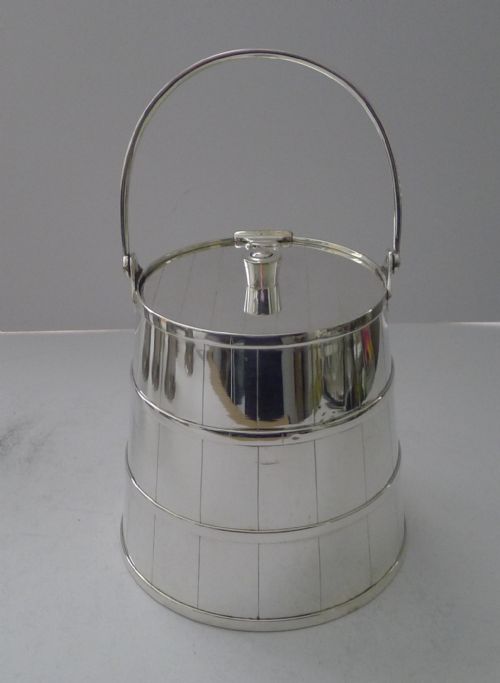
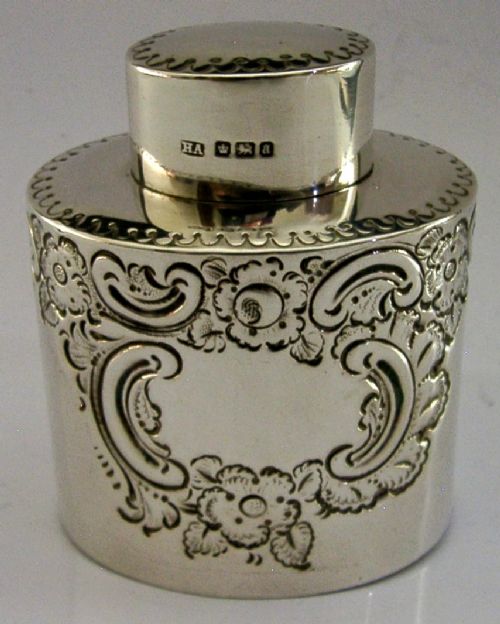
A victorian silver caddy sits at the heart of nineteenth-century tea storage, designed to keep precious loose leaves secure and aromatic. Buyers encounter these containers primarily as solid sterling silver vessels, though silver plated and mixed material examples also appear.
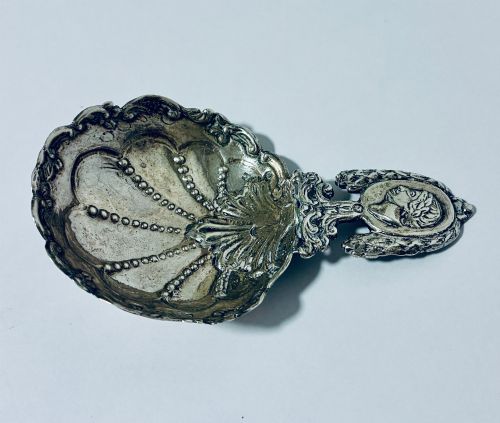
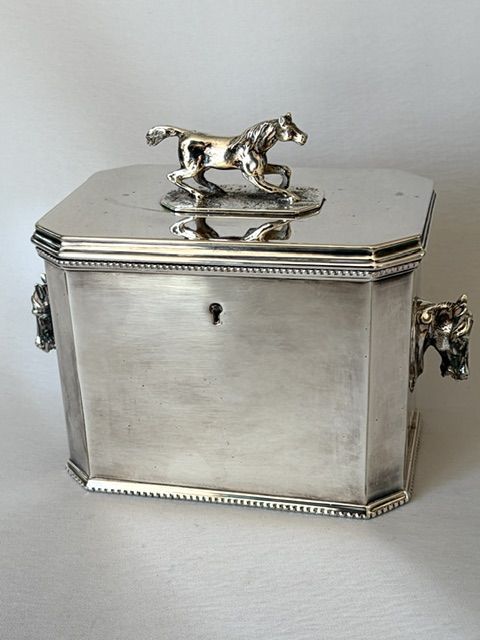
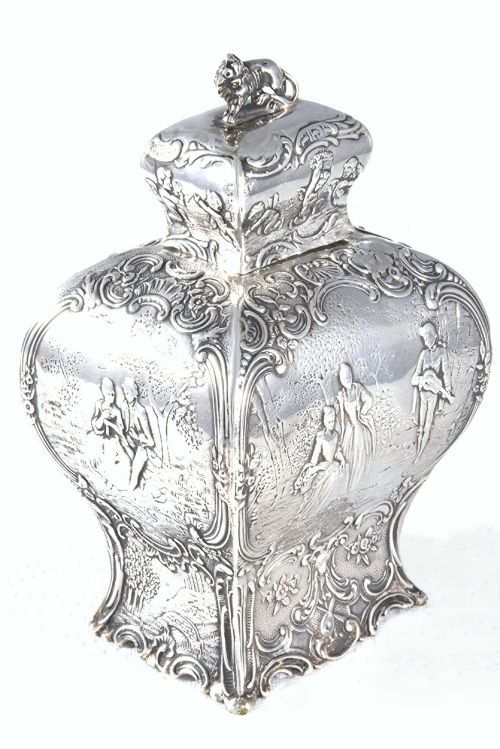
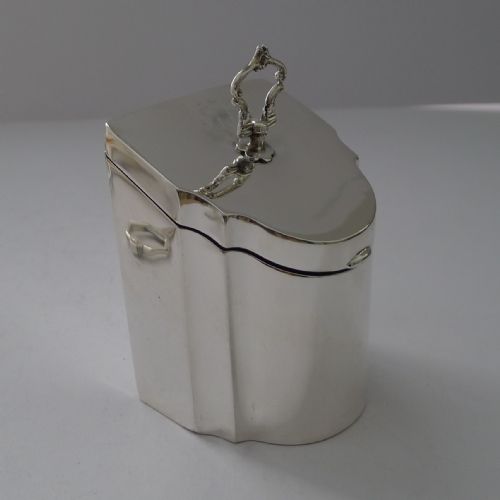
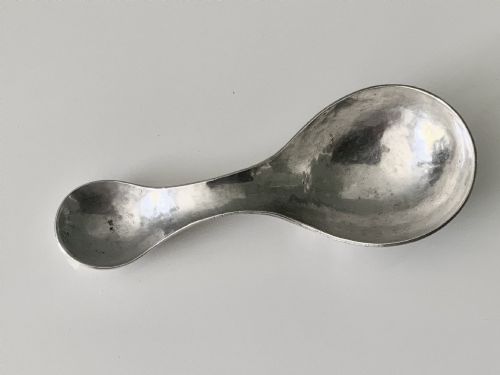
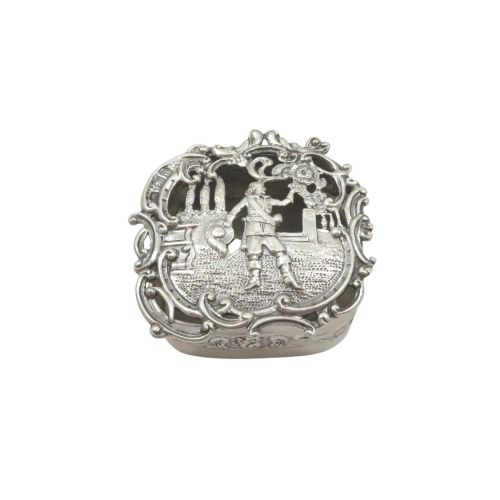
The pieces span the nineteenth century, with strong representation from the eighteen-nineties and Edwardian transitions, alongside occasional trinket boxes and dedicated caddy spoons. Forms range from plain oval and bombe shapes to ornate basket-weave designs and lion mask ornamentation.
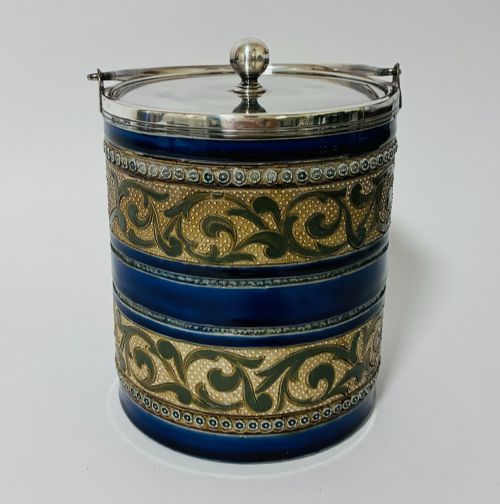
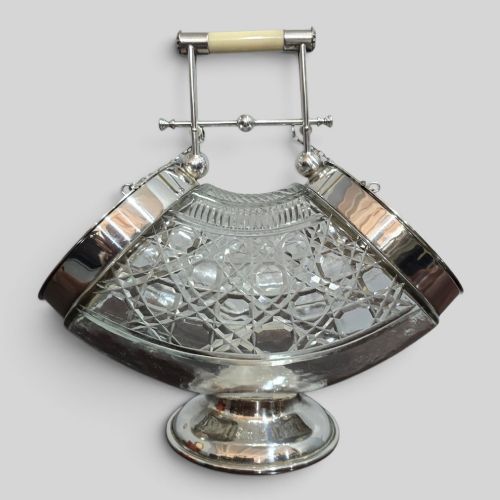
Makers utilised various combinations of sterling silver, cut crystal, oak, and tortoise-shell, creating functional containers that double as decorative dressing table boxes. Regional English and Scottish offices contributed distinct hallmarks, stamping objects from London, Birmingham, Sheffield, and Chester.
Materials and technique
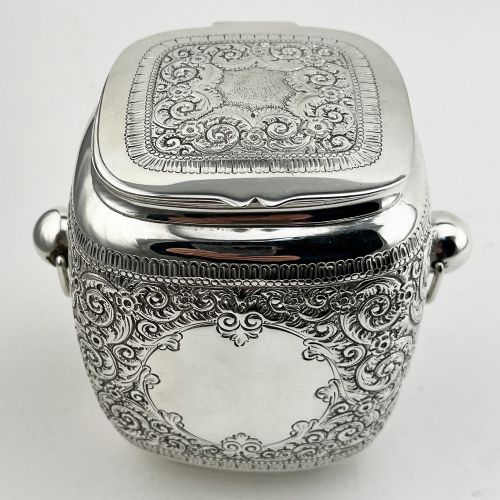
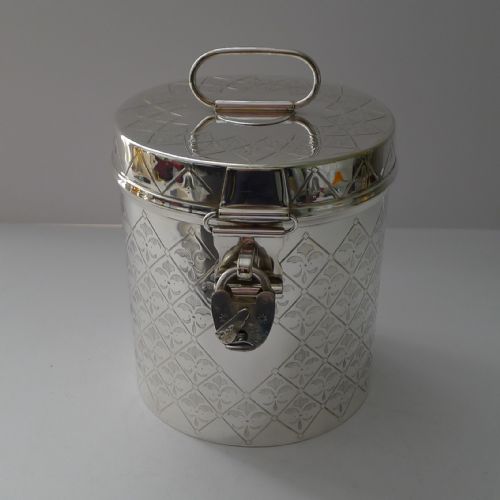
Silversmiths constructed these vessels using sterling silver sheets, hammering, raising, and soldering the metal to achieve oval, rectangular, or bombe profiles. Details such as pull-off lids and hinged mechanisms required precise fitting to maintain an airtight seal for tea leaves.
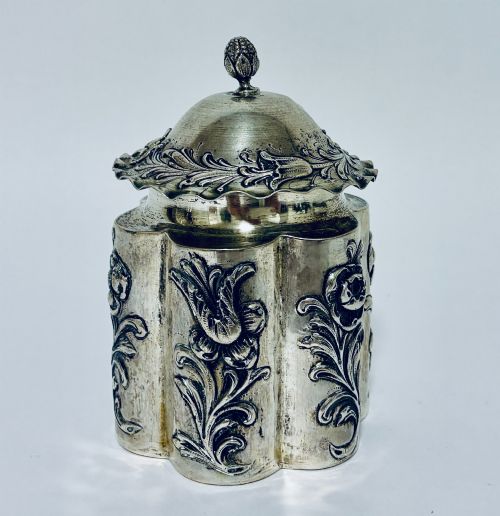
Decoration relied on hand engraving, repoussé work, and applied cast elements like lion masks or thistle motifs, demonstrating skilled surface manipulation. Cut crystal bodies married heavy lead glass with sterling silver collars, while composite boxes integrated oak or tortoise-shell panels held together by silver mounts.
Retail Price Guide 2026
Typical UK retail prices for victorian silver caddy, calculated from the Sellingantiques database of over a million retail prices indexed since 2003. This retail price guide relies exclusively on Sellingantiques data; no external sources or auction records are used, so the figures do not describe the wider market.
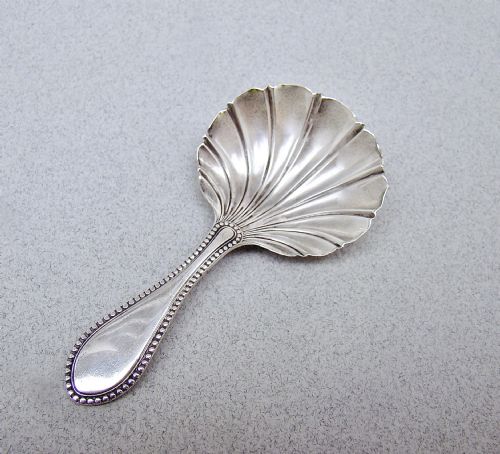
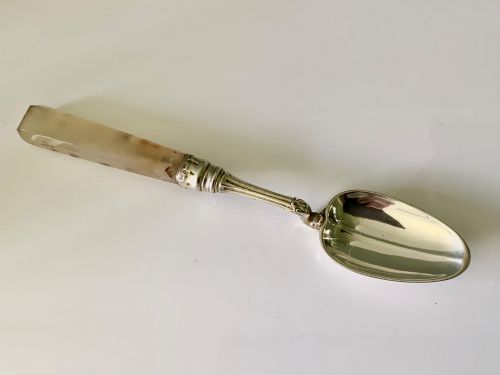
Collectors can pour tea using small sterling silver spoons shaped precisely like jockey caps or camels.
Assessing the work
The standard of a victorian silver caddy rests upon the crispness of its hand-engraved decoration and the structural integrity of its hinges and lids. Heavy gauge sterling silver provides a substantial feel in the hand, distinguishing superior boxes from lighter alternatives.
Makers' marks and full hallmarking clarity define the historical pedigree, with output from established workshops commanding attention for superior finishing. The successful integration of mixed media, such as fitted crystal or contrasting 15ct yellow gold elements, indicates ambitious nineteenth-century design.
William Hutton·Thomas Bradbury·Martin Hall and Co·Yapp and Woodward·Hilliard and Thomason·George Unite·The Goldsmiths and Silversmiths
The Victorian Silver Caddy Glossary
- Sterling silver
- A silver alloy containing 92.5 percent pure silver and 7.5 percent other metals, usually copper, ensuring durability for tableware. This standard metal forms the primary body of most traditional tea caddies.
- Hallmark
- An official stamp applied by an assay office indicating the purity of the metal, the year of production, and the maker. These tiny marks provide the definitive date and origin for antique pieces.
- Bombe
- A swollen or bulging convex shape characteristic of certain nineteenth-century decorative styles. This contour gives tea caddies a rounded, voluminous profile.
- Repoussé
- A metalworking technique where the smith hammers the design from the reverse side to form raised relief on the front. It creates tactile floral and scroll patterns across the silver surface.
- Caddy spoon
- A small specialised spoon designed specifically for measuring loose tea leaves from the caddy. These small implements often feature shell bowls or figural handles.
Frequently Asked Questions
What was a silver caddy used for?
These vessels stored expensive loose tea leaves safely under lock and lid during the nineteenth century. Tea was a valuable commodity, requiring sturdy containers to preserve aroma and prevent theft.
Today, they serve as decorative display pieces or functional containers for small trinkets and modern tea storage on sideboards.
How do I identify the date of a silver caddy?
Assay office hallmarks stamped directly onto the silver surface provide the exact year of manufacture and the city where it was tested. Date letters correspond to specific alphabetical cycles used by offices in London, Birmingham, Sheffield, and Chester.
Stylistic clues like Rococo revival shaping or Edwardian cut crystal integration also help narrow down the production era when marks are rubbed.
What is the difference between a caddy and a trinket box?
Tea caddies were originally engineered with tight-fitting lids or locks to keep dry tea leaves airtight and secure. Many nineteenth-century boxes share similar proportions, leading makers to describe them interchangeably as dressing table boxes or trinket boxes.
Internal partitions or lack of airtight seals often distinguish general boxes from dedicated tea containers.
How should I care for antique silver?
Clean the silver gently using a soft microfibre cloth and a reputable specialist silver polish only when tarnish becomes heavy. Avoid harsh abrasive dips that strip away the subtle patination built up over a century of handling.
Keep the pieces away from direct moisture and extreme temperature fluctuations to protect any internal wooden linings or crystal components.