
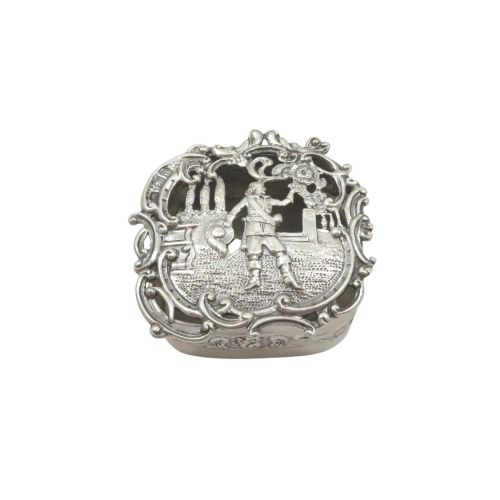
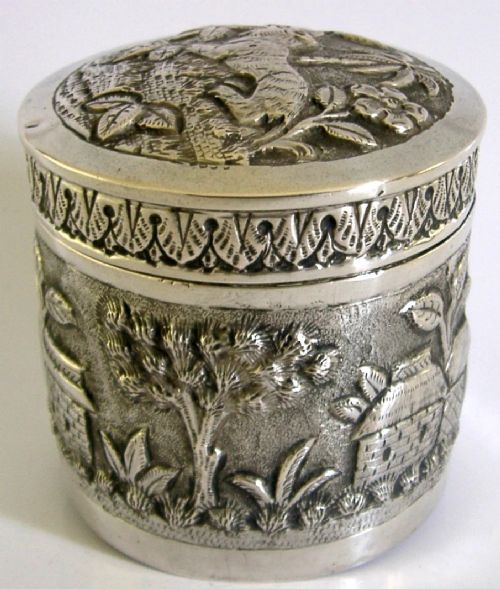
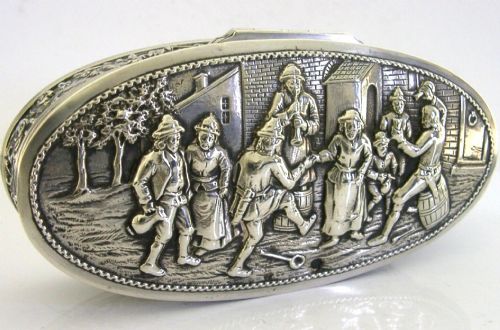
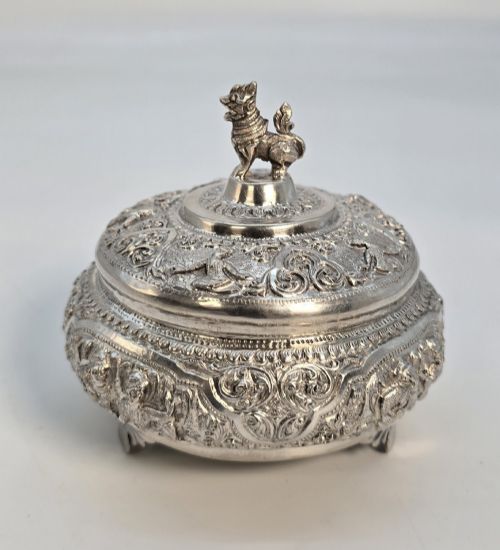
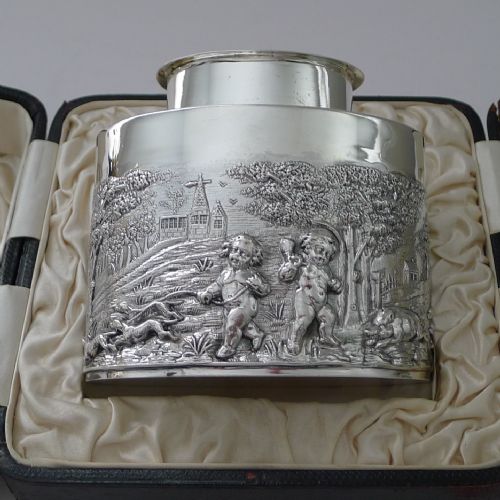
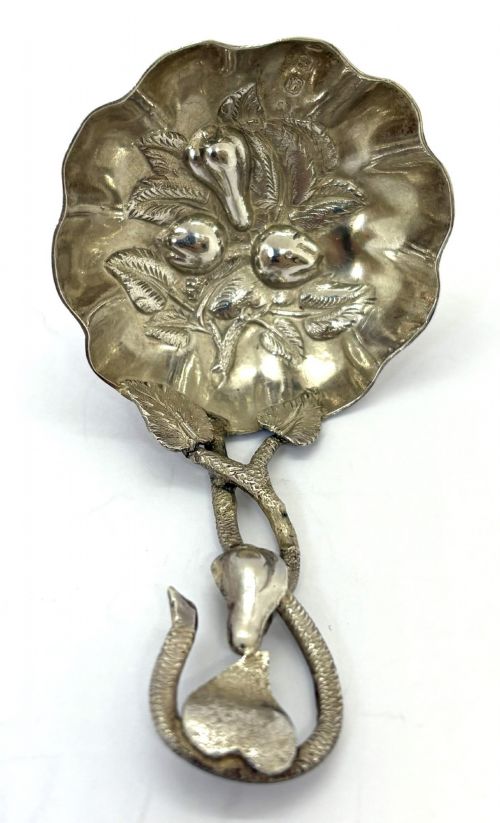


Embossed Silver Caddy
An embossed silver caddy brings tactile depth and historic character to a room, holding dry tea leaves inside hammered and chased metal walls.
Embossed Silver Caddy
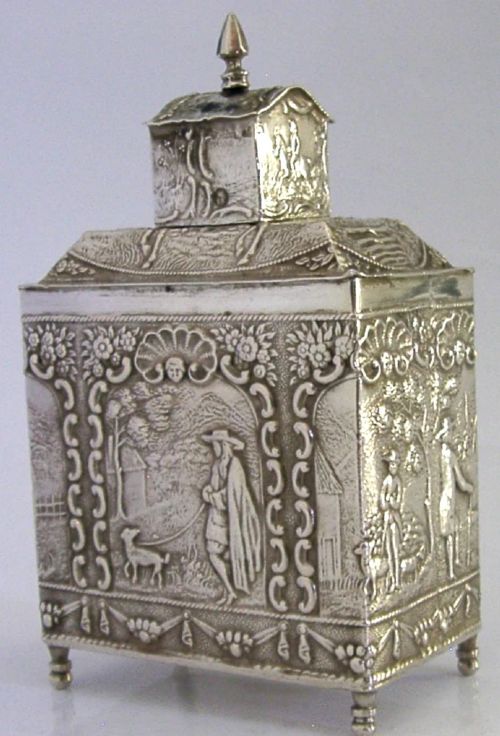
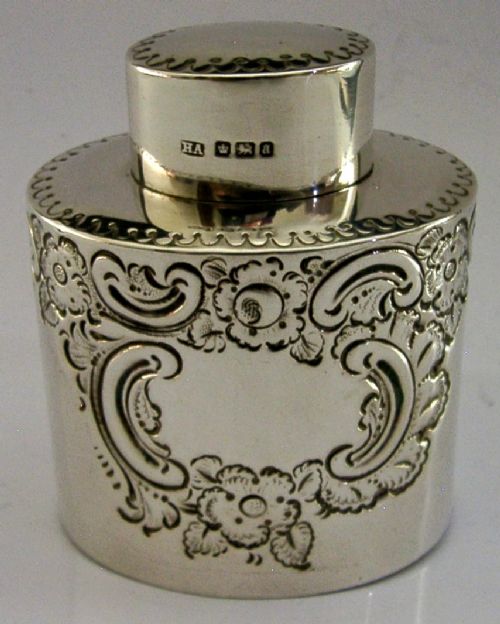
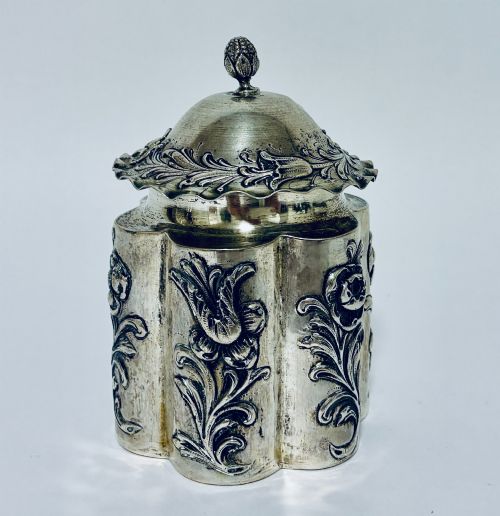
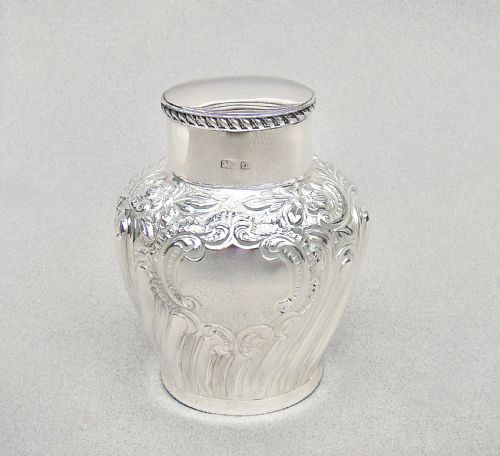
When you search for an embossed silver caddy, you are looking at small lidded containers designed to store tea, alongside related forms like tea canisters and caddy spoons. These pieces range from Georgian shapes to Victorian and Edwardian examples, often featuring raised patterns across their surfaces.
The version you are most likely to meet on this page is a Victorian or Edwardian sterling silver piece, frequently shaped as an oval or square box with a pull-off lid. Alongside English examples, Continental items from Dutch makers and ornate pieces from the Raj period in India appear regularly.
Beyond standard tea caddies, the selection includes decorative boxes, lidded jars, trinket boxes, and individual spoons. Materials stretch from solid silver and sterling silver to silver plate, metal, and copper, reflecting diverse origins and styles.
How they were made
Silversmiths utilised solid silver, sterling silver, and silver plate, sometimes combining them with base metals, copper, or traditional plating techniques such as Old Sheffield Plate. The primary method involved hammering and working the metal from the reverse side to create raised, three-dimensional designs.
Chasing and repoussé techniques defined the decoration, allowing makers to push out motifs from the inside and refine details from the exterior. Makers also incorporated pierced metalwork, engraved cartouches, and fitted pull-off lids to complete each vessel.
Embossed Silver Caddy Retail Price Guide 2026
Typical asking prices for embossed silver caddy among the pieces listed under this phrase on Sellingantiques today, from the lower quarter to the upper quarter. They describe what is for sale here now, not the wider market.
Geographic origins represented across the inventory include English, Continental, Dutch, and Indian colonial styles, encompassing both traditional repoussé work and pierced designs.
What varies in quality
Quality rests in the crispness and depth of the repoussé work, where deeply hammered scrolls, floral motifs, and figurative scenes retain sharp relief rather than flattening out from wear or heavy polishing. The weight of the metal also dictates substance, with heavier solid silver pieces offering a more substantial feel in the hand.
Maker attribution separates standard production from notable pieces, with stamped hallmarks and identifiable makers like William Comyns, Thomas Hayes, or William Hutton & Sons Ltd. adding clear provenance. The integrity of the structure, the snug fit of the pull-off lid, and the preservation of original surface detail further distinguish finer examples.
Thomas Hayes·William Hutton & Sons Ltd·Berthold Herman Muller·Thomas Shepherd·William Comyns·Deakin & Francis
The Embossed Silver Caddy Glossary
- Repoussé
- A metalworking technique where the smith hammers metal from the reverse side to form a raised design on the front. This method gives embossed silver caddies their characteristic tactile surface.
- Sterling silver
- An alloy consisting of pure silver and other metals, usually copper, standardised for strength and purity. English pieces from the Victorian and Edwardian periods frequently carry hallmarks confirming this standard.
- Pull-off lid
- A snug-fitting lid that lifts straight off the mouth of the caddy without hinges or screws. Many nineteenth-century tea caddies utilise this simple closure.
- Old Sheffield Plate
- A composite material made by fusing a thin sheet of silver to a thicker copper base. It appears on earlier Georgian items before electroplating became common.
- Cartouche
- An ornamental frame or panel, often left vacant for an engraved monogram or crest. They appear frequently on Victorian boxes and canisters.
Embossed Silver Caddy: Frequently Asked Questions
What is an embossed silver caddy?
An embossed silver caddy is a small lidded container originally used for storing loose tea leaves in a dry state. Makers decorated the exterior surfaces with raised patterns using hammering and chasing techniques.
These objects were kept in the home during the Georgian, Victorian, and Edwardian eras, serving both a functional storage purpose and a decorative role in reception rooms.
How do I identify the date of a silver caddy?
Dating relies primarily on official hallmarks stamped into the metal, which indicate the assay office, the specific year letter, and the maker's mark. Stylistic clues such as Rococo Revival curves or Art Nouveau motifs also point to particular decades.
Examining the construction methods, lid style, and wear patterns helps narrow down whether a piece originates from the Georgian period or later Victorian workshops.
Can I use an antique caddy for modern tea?
Yes, an antique embossed silver caddy functions well for storing loose leaf tea today, provided the interior is clean and dry. The tight-fitting pull-off lids help keep air out and preserve the flavour of the leaves.
Care should be taken to avoid abrasive cleaners on the exterior so the raised repoussé details remain crisp and undamaged.