

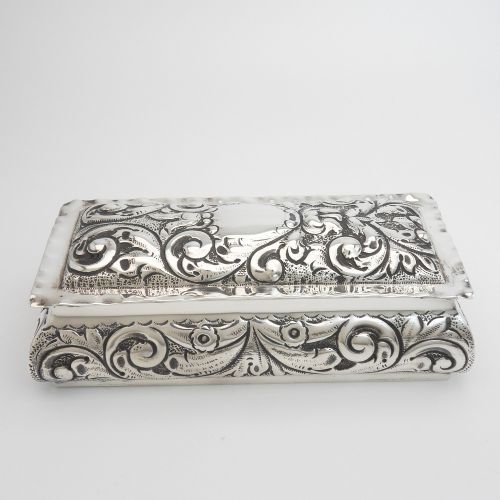


Chased Sterling Silver Caddy
A chased sterling silver caddy brings tactile weight and period grace to any tea service or desk.

Chased Sterling Silver Caddy
A chased sterling silver caddy is a small container designed originally for dry tea leaves, alongside related boxes for sugar or snuff. These pieces span Georgian, Victorian, and Edwardian periods, running from the mid-eighteenth century into the early twentieth century.
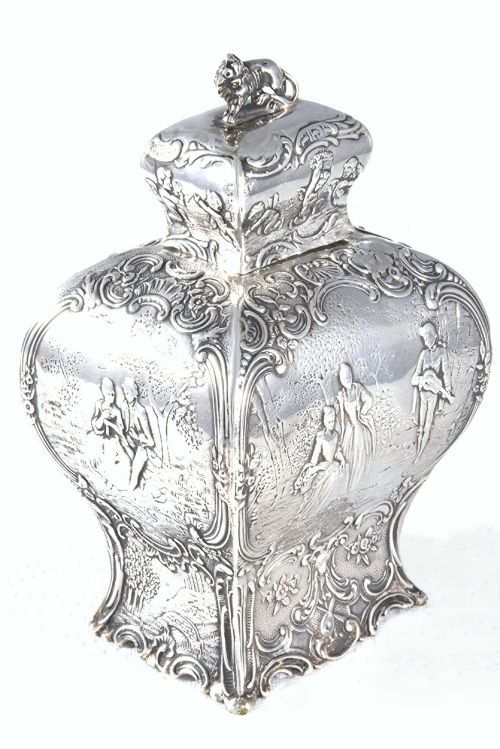
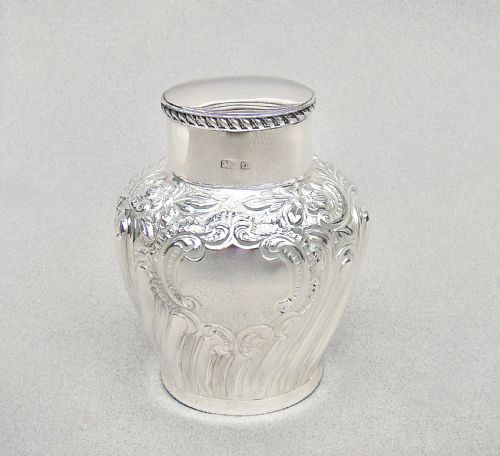
The form varies across these eras from George III Rococo and Georgian Revival designs to rounded oval shapes, bombe silhouettes, and whimsical forms such as a squirrel sugar box. Most examples on offer belong to the Victorian and Edwardian decades, executed in sterling silver.
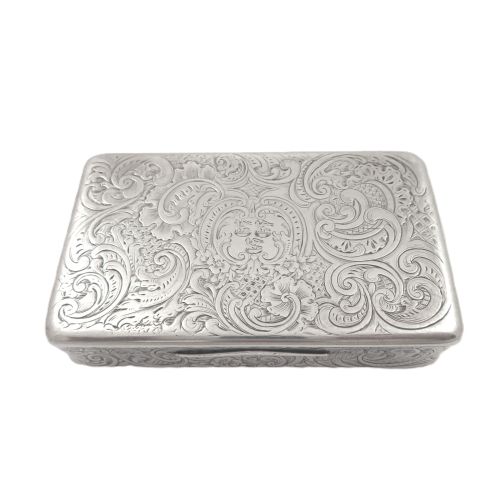
Alongside standard tea caddies, related forms occasionally appear, including table snuff boxes and trinket boxes. Each piece reflects the prevailing decorative tastes of its manufacturing era, from crisp classical lines to exuberant surface ornament.
How they were made
Silversmiths formed these vessels from sterling silver, shaping the body through hammering, raising, or soldering sheet metal into rigid forms. Selected pieces include interior gilding, adding a warm metallic flash to the inner chamber.
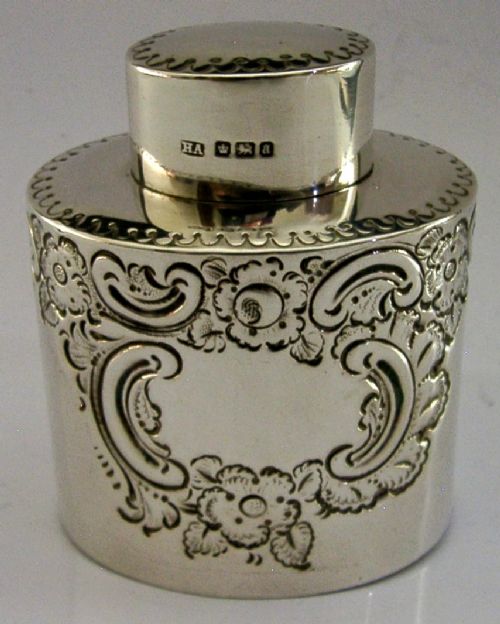
Chasing and repousse techniques created the textured, high-relief ornamentation characteristic of these objects. Artisans worked the metal from behind to push out the design, then refined the details from the front using hammers and punches.
Accompanying elements like wooden components appear in specific materials such as ebony, whilst tight-fitting pull-off lids or hinged closures completed the construction.
Listings span the Victorian, Edwardian, and Georgian periods, utilising sterling silver alongside occasional ebony and gilding.
What varies in quality
The depth, crispness, and artistic control of the chased and repousse decoration set individual pieces apart. Stronger examples display deeply pushed metal with sharp botanical, figural, or scroll details that retain their definition under close inspection.
Structural integrity and the retention of original components, such as gilt interiors and well-fitted lids, influence the character of each box. Maker marks and clear hallmarks contribute historical weight, pointing to known workshops and assay offices in cities like Birmingham and London.
Thomas Hayes·A & J Zimmerman Ltd·Nathaniel Mills
The Chased Sterling Silver Caddy Glossary
- Sterling silver
- A silver alloy containing 92.5 percent pure silver and 7.5 percent other metals, usually copper, chosen for durability in domestic plate. This alloy forms the standard material base for these containers.
- Chasing
- A metalworking technique where the artisan pushes and depresses the front surface of the metal with punches to create a raised or textured design. It is frequently paired with repousse work from the reverse.
- Repousse
- A method of hammering metal from the reverse side to create a raised relief pattern on the front. This technique produces the bold, tactile surface decoration seen on Victorian and Georgian boxes.
- Bombe
- A swollen, bulging contour found on the sides of certain caddies, particularly popular during the Victorian era. This curved profile adds visual volume and catches the light across the chased panels.
- Gilt lining
- A thin layer of gold applied to the interior surface of a silver box, protecting the metal from tea acids or snuff and providing a rich contrast. It is often found inside nineteenth-century caddies and boxes.
Chased Sterling Silver Caddy: Frequently Asked Questions
What is a chased sterling silver caddy?
A chased sterling silver caddy is a small lidded vessel fashioned from sterling silver, decorated with hammered surface relief, and made to hold tea leaves.
Historically, these containers kept precious dry tea secure and dry in wealthy households before tea bags became common.
How do I date a silver caddy?
You date a silver caddy by examining the official hallmarks stamped into the metal, which indicate the assay office, standard, and year of manufacture.
Stylistic cues such as the heavy ornamentation of Victorian repousse work or the restrained lines of Georgian pieces also help narrow the period.
How were silver caddies used originally?
These boxes stored loose tea leaves in the dining room or drawing room, often under lock and key since tea was an expensive commodity.
Servants or the host would measure out the leaves using spoons kept alongside the caddy before brewing the pot.
How do I clean an antique silver caddy?
Cleaning requires a soft cloth and a gentle silver polish formulated for antiques, avoiding harsh abrasive dips that strip the character from recessed chased details.
Leaving a degree of dark patinated contrast in the deep recesses often highlights the craftsmanship of the chasing work.