
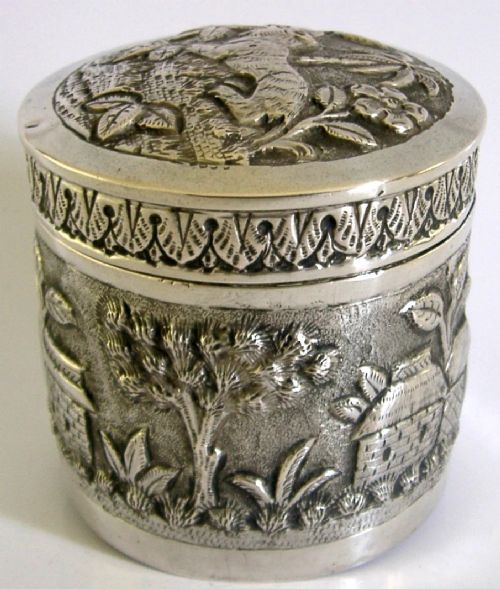


Vintage Silver Tea Container
These vintage silver tea container pieces range from crisp Edwardian caddies to substantial Victorian biscuit barrels, bringing genuine character to any table.
Vintage Silver Tea Container
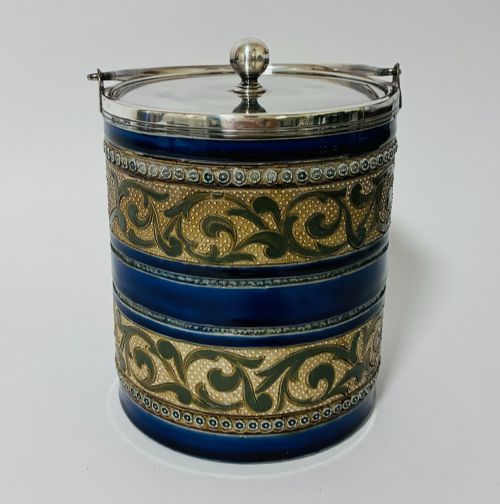
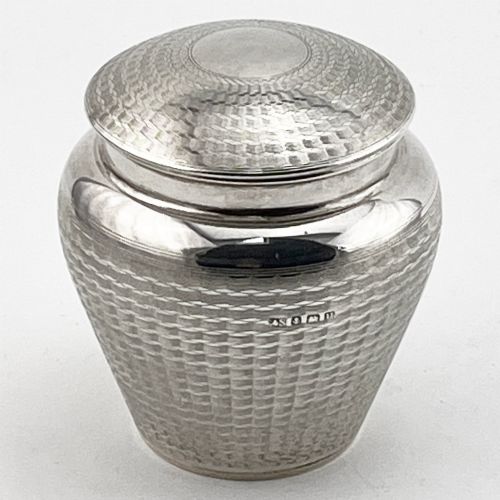
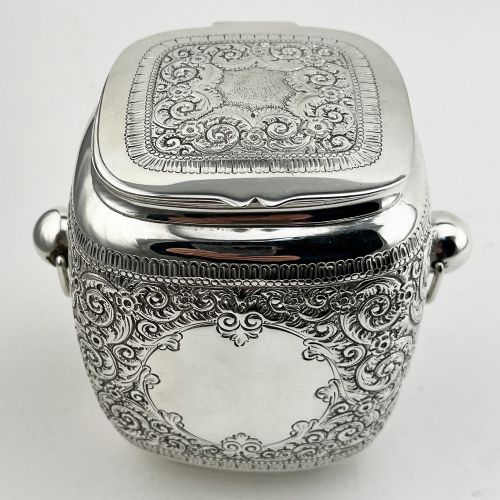
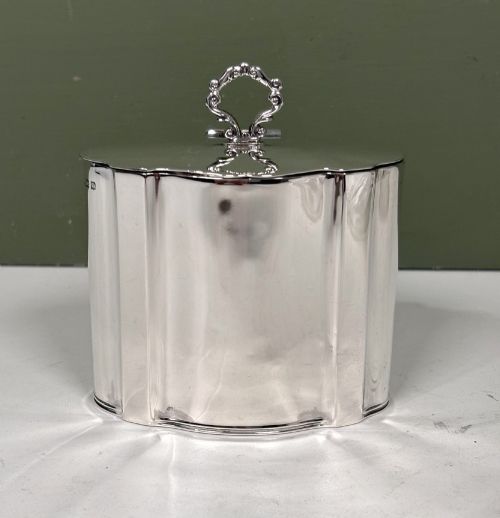
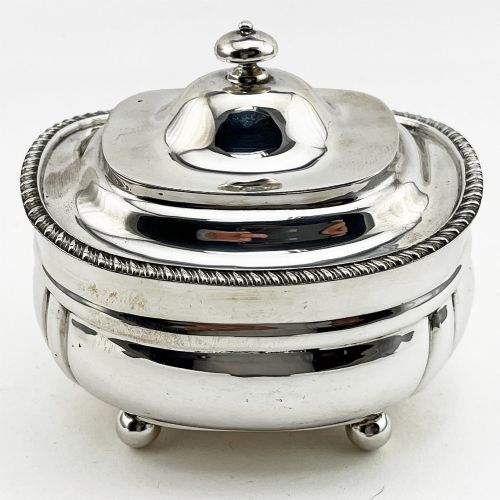
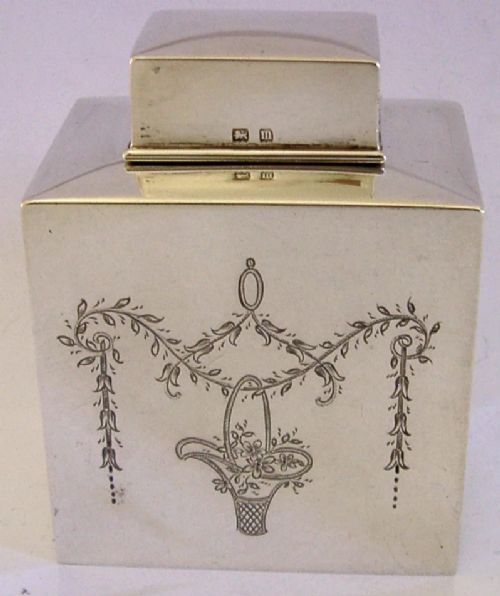
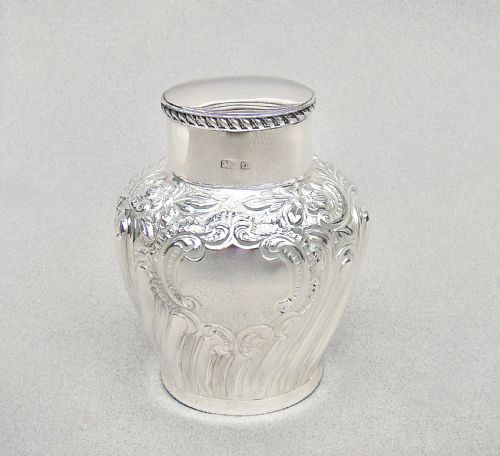
A vintage silver tea container takes several distinct forms across these listings, appearing most frequently as lidded tea caddies and lidded biscuit barrels. These vessels were originally designed to protect dry tea leaves or biscuits from moisture and loss of flavour in the home.
The selection encompasses pieces originating across the Victorian, Edwardian, and George V periods, alongside later mid-century examples from the 1940s. Styles span traditional Victorian and Edwardian aesthetics, Art Deco symmetry, and decorative Anglo-Indian craftsmanship.
How they were made
Makers utilised traditional silversmithing techniques including hammering, spinning, and piercing to shape sterling silver and silver-plated copper into detailed caddy bodies. Hallmarks stamped directly into the metal record the assay office, city, and date of manufacture for many of the solid silver items.
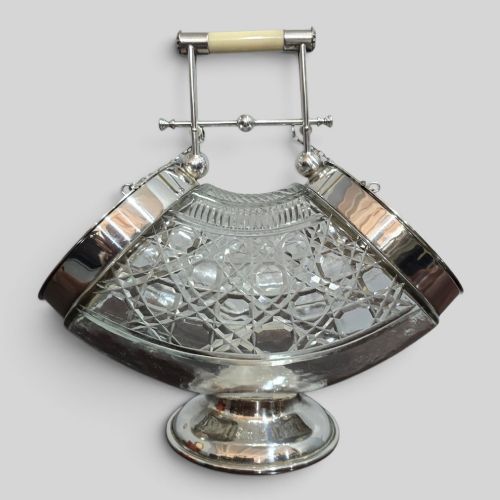
Ceramic and glass bodies were shaped independently before receiving their metal mounts, collars, and hinged lids. Cut glass and crystal vessels relied on wheel-cutting to achieve deep geometric patterns across the exterior surface, while earthenware and stoneware received glazed finishes.
Listings span solid sterling silver and silver plate alongside cut crystal, stoneware, and earthenware bodies.
What varies in quality
Quality rests significantly upon the weight and gauge of the metal used in the construction of the body and lid. Thicker sterling silver provides structural rigidity and allows crisper hand-engraved or embossed ornamentation to endure without softening.
The integrity of mechanical components, such as hinges on lidded boxes and the fit of covers, dictates the refinement of the piece. Clear, crisp hallmarks and well-executed maker marks indicate workshop standards from period silversmiths.
Martin Hall & Co·Thomas Hayes·William Hutton·Ernest Druiff & Co
The Vintage Silver Tea Container Glossary
- Tea caddy
- A small vessel designed to store loose tea leaves securely. They typically feature tight-fitting lids to preserve the aroma of the contents.
- Biscuit barrel
- A lidded container used for serving and storing biscuits on the dining or drawing-room table. These often combine ceramic or glass bodies with metal mounts.
- Sterling silver
- An alloy consisting of pure silver and other metals, usually copper, standardised at a specific purity level. It serves as the primary material for high-grade antique boxes.
- Silver plate
- A base metal, such as copper or nickel silver, coated with a thin layer of pure silver. This technique offered a decorative metallic finish at a lower cost than solid silver.
- Hallmark
- A series of official marks stamped on precious metal items in Britain. These symbols indicate the metal purity, the assay office, and the year of manufacture.
- Hobnail cut
- A decorative surface pattern carved into glassware resembling the hobnails on traditional boots. It creates a faceted texture that catches the light.
Vintage Silver Tea Container: Frequently Asked Questions
What is a tea caddy?
A tea caddy is a dedicated lidded container built to keep loose tea leaves fresh and dry in domestic settings. Historically, these vessels were kept locked to protect expensive imported leaves.
Today, they function as decorative objects or small storage boxes for tabletops and mantlepieces.
How do I clean silver containers?
Silver containers require gentle cleaning with a soft cloth and a specialised silver polish formulated to remove tarnish without abrading the metal surface. Harsh chemical dips should be avoided on antique pieces to preserve original patination.
Glass and ceramic sections can be washed separately in warm soapy water, ensuring the metal mounts remain dry.
What is a biscuit barrel?
A biscuit barrel is a covered jar or container created to hold biscuits and dry baked goods during parlour tea service. They became common fixtures in British middle-class households during the Victorian era.
Materials frequently include ceramic bodies paired with plated metal swing handles and lids.
How can I date my silver?
British silver items carry hallmarks that typically include a date letter corresponding to a specific assay office year cycle. Comparing these stamped letters against standard hallmark tables reveals the exact year of testing.
Maker marks and standard lion passant symbols confirm the purity and origin further.