
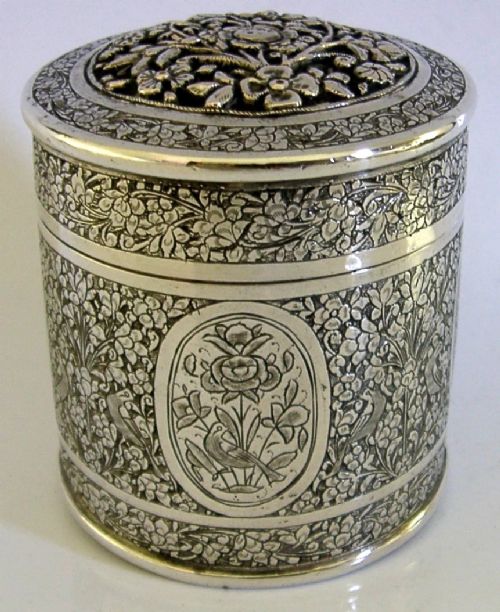


Repousse Silver Tea Jar
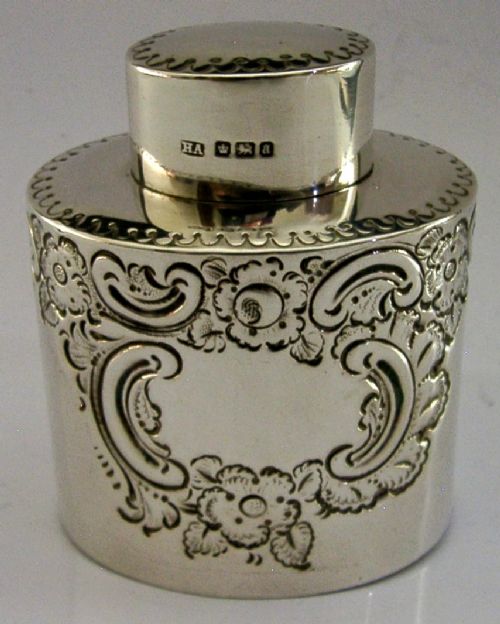
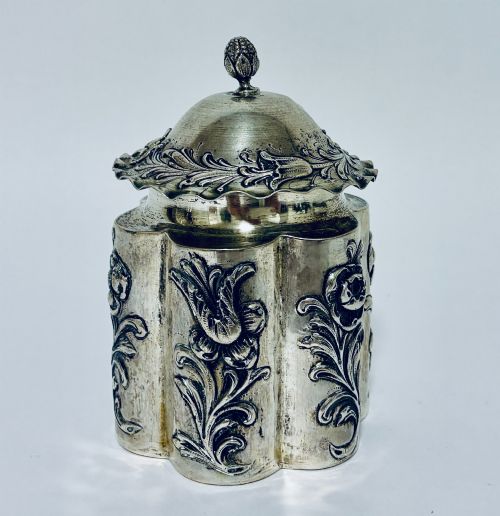
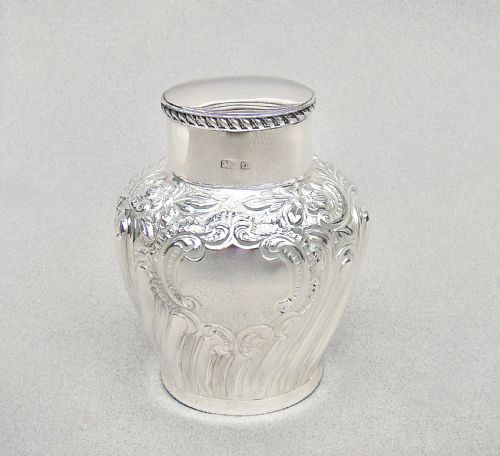
These repousse silver tea jar pieces are chased metal storage vessels crafted to hold loose leaves on the dining table, offering tactile surface work that collectors prize.
Repousse Silver Tea Jar
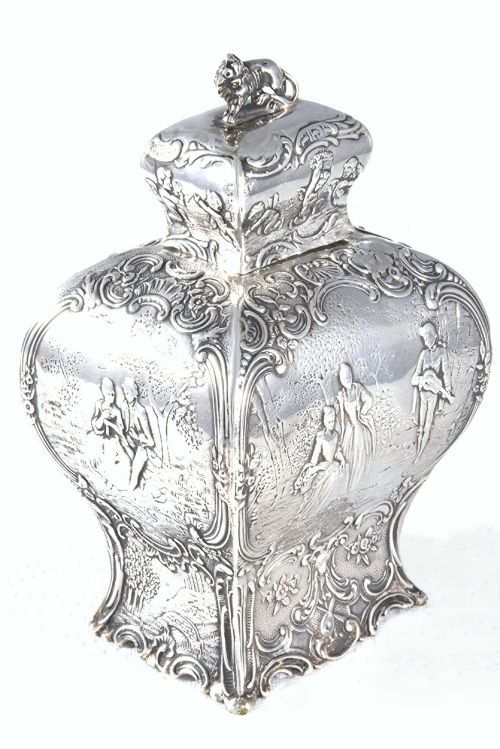
A repousse silver tea jar is typically encountered on this page as a Victorian or Edwardian tea caddy made from sterling silver, solid silver, or continental silver. These vessels take forms such as bombe shapes, oval boxes, and rectangular caddies fitted with pull-off lids.
The selection includes examples originating from English assay offices in cities like Birmingham and London, alongside Ottoman Turkish pieces and continental items. Production spans from the late nineteenth century through to the early twentieth century, drawing on Georgian Revival and Rococo Revival design themes.
Buyers also encounter related variations produced in silver plate and copper, demonstrating the wider material scope found within this specific category. Each piece serves primarily as a lidded container designed for dry leaf storage while functioning as a decorative table object.
How they were made
Makers shaped these containers using sterling silver, solid silver, and copper, occasionally incorporating ebony details for handles or fittings. The signature technique involves hammering and punching the metal from the reverse side to create raised ornamental motifs on the exterior surface.
Silversmiths applied finishing touches by hand, ensuring that lids fitted snugly onto bodies shaped into oval, rectangular, or bombe profiles. Workshops in Birmingham and London stamped these containers with hallmarks to designate metal purity and production year.
Materials recorded across the inventory include sterling silver, solid silver, silver plate, copper, and ebony.
What varies in quality
Quality in these pieces rests upon the crispness and depth of the chased metalwork, where sharper relief denotes superior craftsmanship. The weight of the metal and the structural integrity of the lid fitting further distinguish finer examples from standard production.
The presence of clear hallmarks from recognised assay offices adds archival clarity that elevates an item's standing among collectors. Maker attribution also plays a role, with documented silversmiths commanding greater interest for their finished output.
Thomas Hayes
The Repousse Silver Tea Jar Glossary
- Repousse
- A metalworking technique where the design is hammered into relief from the reverse side. This method creates tactile surface decoration across the body of the container.
- Tea Caddy
- A box or jar manufactured to store loose tea leaves securely. These vessels often feature fitted lids to preserve the aroma of the contents.
- Sterling Silver
- An alloy consisting of pure silver and other metals to increase durability. Items made to this standard frequently bear official assay office hallmarks.
- Bombe
- A swollen, convex shape used in the body of silver containers. This curved profile reflects light across the chased surface ornamentation.
- Sheffield Plate
- A composite material formed by fusing a sheet of silver to a copper base. This technique appeared on alternative dining wares before electroplating became common.
Repousse Silver Tea Jar: Frequently Asked Questions
What is a repousse silver tea jar?
A repousse silver tea jar is a lidded container created to store dry tea leaves. These vessels feature raised patterns hammered directly into the metal surface.
They appear primarily in Victorian and Edwardian styles, reflecting domestic habits from the late nineteenth and early twentieth centuries.
How do I date a silver tea caddy?
Dating relies heavily upon the stamped hallmarks found on the metal body. These assay marks indicate the year of manufacture and the city where the piece was tested.
Stylistic cues such as Rococo Revival motifs or bombe contours also point toward specific decades like the eighteen-nineties.
What materials are these tea jars made from?
The primary material seen across these listings is sterling silver or solid silver. Some examples utilise continental silver, silver plate, or copper.
Additional elements include ebony components utilised for functional or decorative contrast on the vessels.
How were these tea jars used originally?
These containers held expensive loose leaf tea in the dining room or drawing room. Servants or hosts measured out portions using spoons while keeping the leaf dry.
Their decorative repousse surfaces ensured they remained visible on sideboard displays rather than being stored away.