




Hallmarked Silver Tea Canister
A hallmarked silver tea canister is a domestic vessel for storing loose leaf tea securely, prized for its gleaming metalwork and period character.
Hallmarked Silver Tea Canister
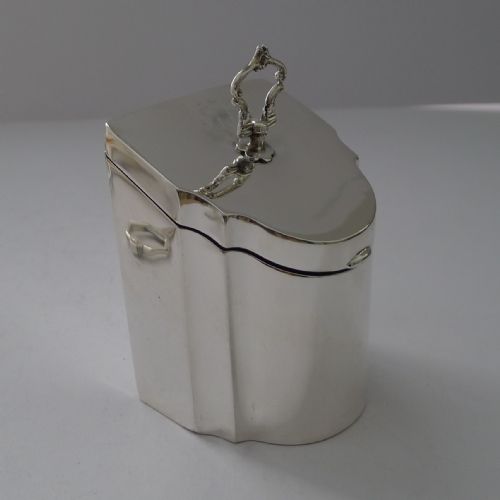
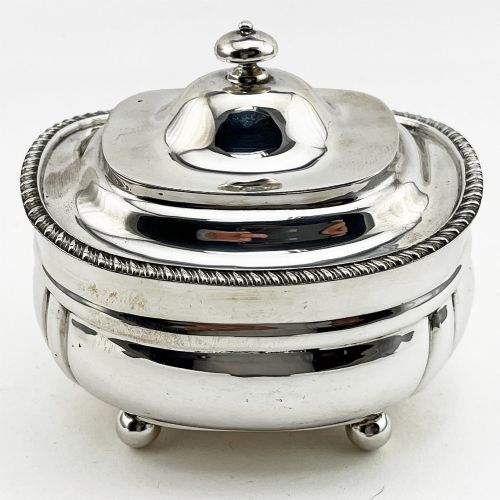
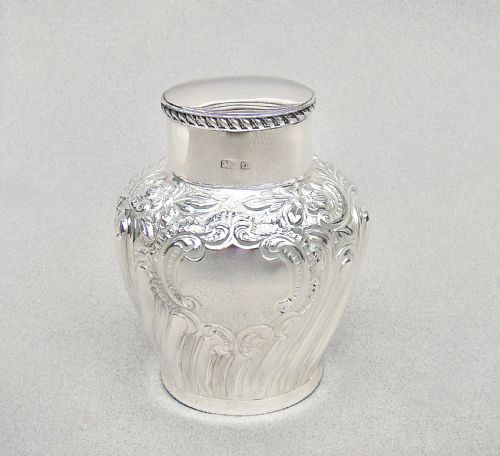
A hallmarked silver tea canister typically takes the form of a lidded box or caddy designed to preserve the delicate aroma of dry leaves. Buyers searching this phrase encounter examples ranging from late eighteenth century George III pieces to mid twentieth century creations.
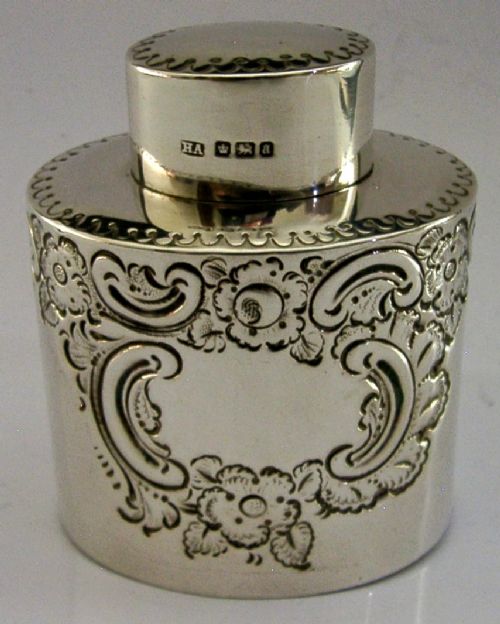
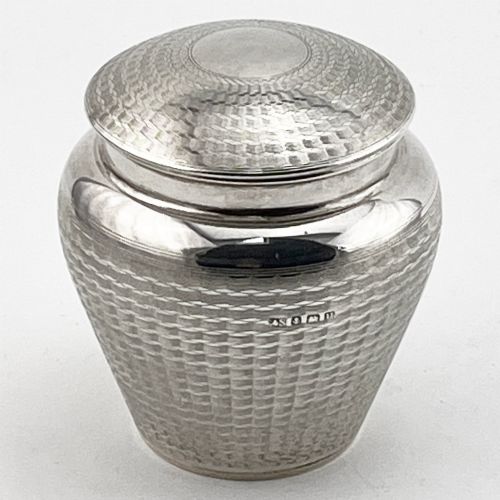
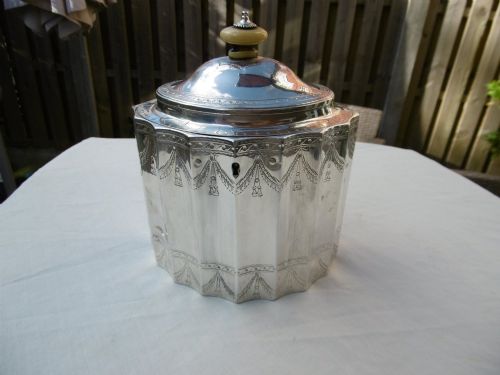
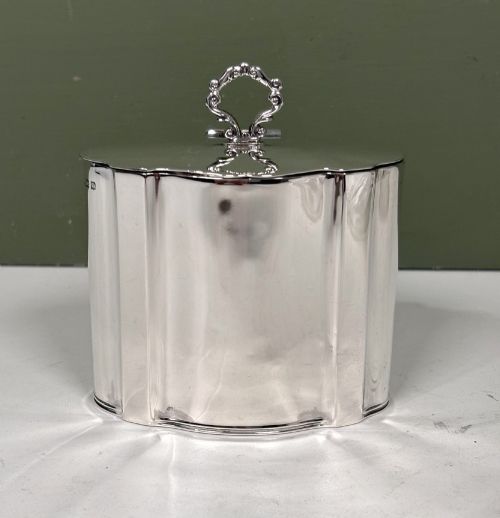
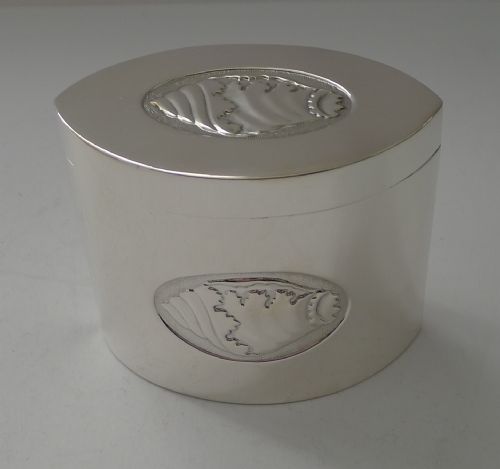
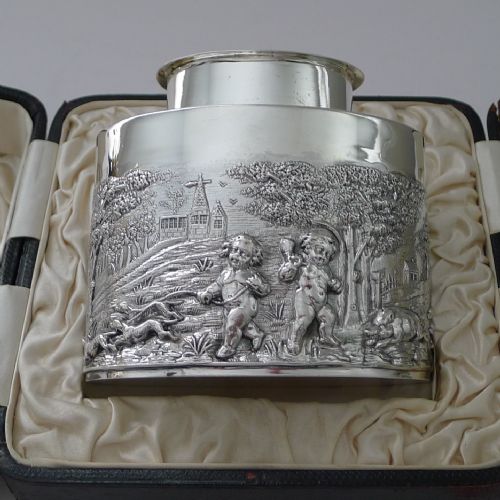
The form appears frequently in Victorian and Edwardian iterations, often shaped as oval boxes or knife box forms. These vessels served an essential role in wealthy households where tea was kept under lock and key by the mistress of the house.
Makers utilised sterling silver alongside cut crystal bodies with silver collars and lids. Many pieces exhibit neoclassical influences, fluted sides, or repousse surface decoration characteristic of their respective eras of production.
Materials and construction methods
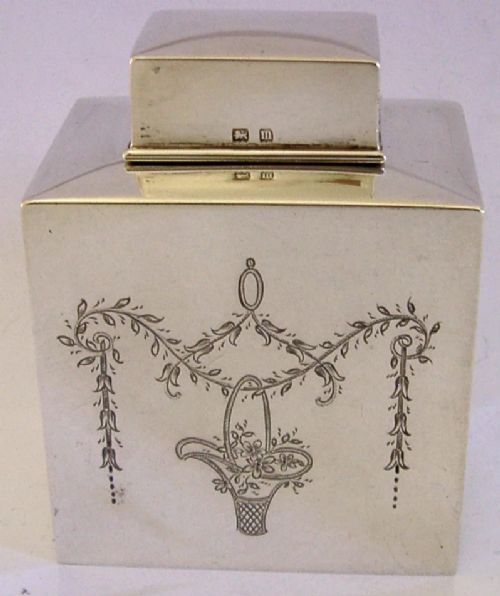
Silversmiths constructed these vessels primarily from solid sterling silver, shaping the metal through hammer work, spinning, or pressing before applying decorative chasing and repousse details. Assay offices in London, Birmingham, Sheffield, and Chester applied official hallmarks to certify the metal purity.
Certain examples combine heavy cut crystal glass bases with solid silver mounts and pull off lids. Internal elements occasionally incorporate wood or bone components, particularly in handles or insulating spacers on specific box forms.
Listings span from the eighteenth century George III period through the Victorian, Edwardian, and Art Deco eras into the mid twentieth century.
Distinguishing quality in silver canisters
Quality rests in the substantial weight of the sterling silver and the crispness of the hallmarking stamps, which should remain clear and legible. Heavier gauges of metal prevent denting and provide a satisfying solidity in the hand.
The finesse of decorative work, whether hand chased repousse floral motifs or precise fluting, separates standard utility pieces from master smith output. Well fitted lids that close securely without excessive play indicate superior craftsmanship from workshops such as those of recognised silversmiths.
Robert Hennell·Zimmermann·Thomas Hayes·William Hutton and Sons Ltd·Ernest Druiff and Co·Goldsmiths and Silversmiths Co
The Hallmarked Silver Tea Canister Glossary
- Hallmark
- An official stamp applied by an assay office to indicate the metal purity, origin city, and date of manufacture. These tiny marks provide the primary means for dating British silver.
- Repousse
- A metalworking technique where the silversmith hammers the design from the reverse side to form raised patterns on the front. This decorative method creates tactile floral and scroll motifs.
- Pull off lid
- A removable cover that relies on a snug friction fit rather than a hinge or screw thread. Such lids are common on oval and cylindrical tea caddies.
- Sterling silver
- An alloy consisting of ninety two point five percent silver and seven point five percent other metals, usually copper. This standard ensures the durability required for functional domestic items.
- Fluted
- Decorated with parallel shallow grooves running vertically along the body of the vessel. This classical design detail catches the light across curved silver surfaces.
Hallmarked Silver Tea Canister: Frequently Asked Questions
How do I clean my silver tea canister?
Use a soft microfiber cloth with a dedicated silver polish to remove tarnish gently, avoiding harsh abrasives that scratch the metal surface.
Wash the interior with warm soapy water and dry thoroughly to protect any residual original linings or delicate hallmarks.
Are these canisters safe for storing modern tea?
Solid sterling silver is non reactive and perfectly suitable for holding dry foodstuffs like loose tea leaves.
Ensure the lid fits snugly to keep out moisture and preserve the flavour of your blends just as historical owners intended.
What do the stamps on the bottom mean?
The small stamped symbols comprise the maker mark, the assay office sign, the lion passant for sterling standard, and a date letter.
Together these tiny impressions reveal precisely where and when the silversmith completed the piece.
Why do some canisters have crystal bodies?
Cut crystal gained popularity in the Edwardian era because it allowed owners to see the remaining tea levels at a glance.
Silversmiths paired the heavy glass with ornate sterling necks and matching lids to combine brilliance with structural durability.