



Georgian Style Silver Caddy
A georgian style silver caddy brings neoclassical proportion to the tea table, offering solid metal vessels for dry leaf storage.
Understanding the georgian style silver caddy
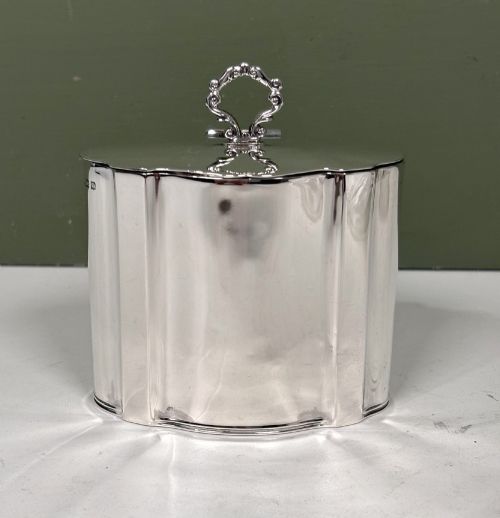
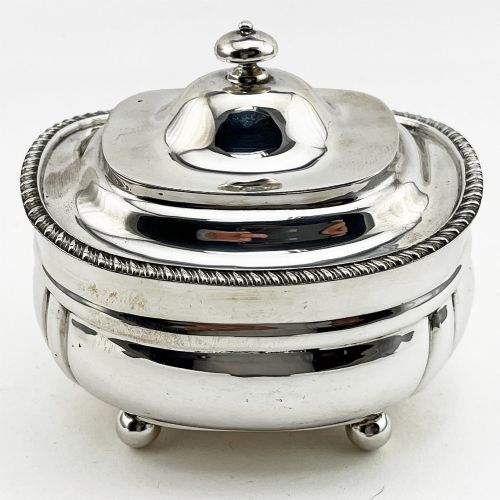
When you search for a georgian style silver caddy, you are looking at twentieth-century revival pieces that echo eighteenth-century tea equipage. These tea caddies and boxes draw directly on the neoclassical vocabulary popular during the Georgian era, reinterpreted by later silversmiths.
On this page, you are most likely to meet Edwardian and 1920s examples that embody this revival taste. These objects take the form of lidded boxes and canisters originally designed to lock away expensive tea leaves from domestic staff.
The pieces listed span the Edwardian period through the 1920s, showing how twentieth-century makers kept earlier classical aesthetics alive. Their forms directly mirror the functional containers used in great houses centuries before.
Distinguishing quality across the range
The division between standard production and the top of the range rests entirely on the weight of the silver and the reputation of the maker. Heavier gauge metal provides a substantial feel in the hand that lighter boxes simply lack.
Execution of the neoclassical ornament defines the upper tier, where crisp chasing and balanced proportions elevate a simple container into high art. Pieces bearing marks from distinguished silversmith firms demonstrate superior craftsmanship compared to anonymous workshop output.
Retail Price Guide 2026
Typical UK retail prices for georgian style silver caddy, calculated from the Sellingantiques database of over a million retail prices indexed since 2003. This retail price guide relies exclusively on Sellingantiques data; no external sources or auction records are used, so the figures do not describe the wider market.
Early tea was so valuable that locking the caddy was a serious household duty entrusted only to the lady of the house.
Zimmermann·Goldsmiths and Silversmiths Co.
The Georgian Style Silver Caddy Glossary
- Sterling Silver
- A silver alloy containing 92.5 percent pure silver by mass, with other metals constituting the remainder. This standard ensures the necessary durability for functional tea containers.
- Neoclassical
- An artistic style inspired by the classical art and culture of ancient Greece and Rome. This aesthetic dominates the decorative vocabulary found on these revival caddies.
- Hallmark
- An official stamp applied by an assay office to indicate the purity of a precious metal object. These marks often reveal the date of manufacture and the city of origin.
- Edwardian
- The period covering the reign of King Edward VII, spanning from 1901 to 1910. Many revival pieces on the market share stylistic roots with this era.
- Tea Caddy
- A small box or jar used to store tea leaves safely. The term evolved from catty, the Chinese weight measurement for tea.
Frequently Asked Questions
What is a georgian style silver caddy?
A georgian style silver caddy is a twentieth-century metal box created to emulate eighteenth-century tea storage vessels. These pieces utilise neoclassical design principles to achieve classical proportions.
Makers working in the Edwardian era and the 1920s produced these items to satisfy continuing demand for antique aesthetic forms. They serve as functional containers rooted in historical revival styles.
How were silver tea caddies used?
These boxes stored expensive tea leaves securely in the domestic settings of large households. Because tea was a costly commodity, the container usually featured a lock to restrict access.
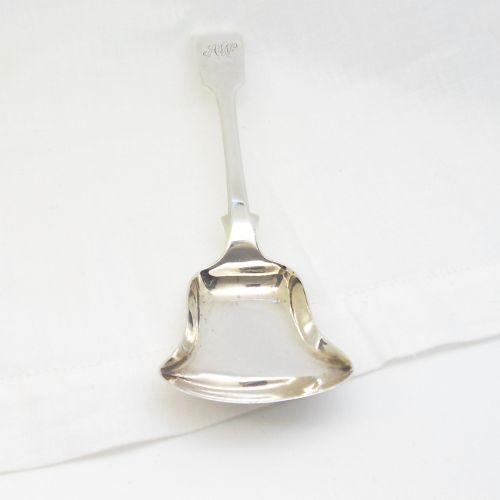
Servants or householders measured out the leaves for each tea service using spoons specifically designed for the task. The solid metal construction helped protect the dry contents from light and moisture.
How do I identify Edwardian silver?
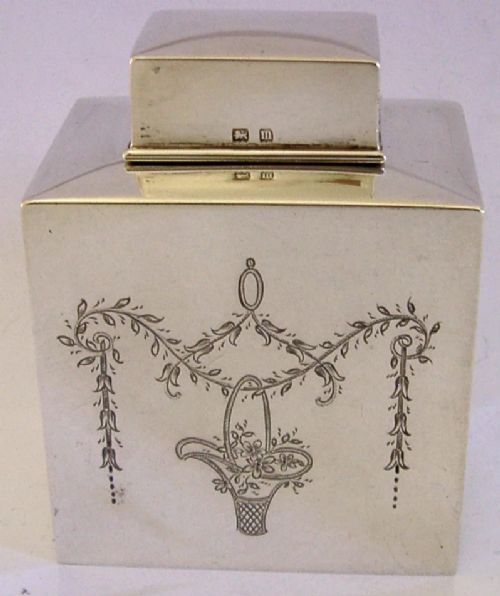
Edwardian silver is identified primarily through official hallmarks stamped directly onto the metal by assay offices. These marks typically include a date letter, a standard mark, and the maker's stamp.
Stylistic cues such as neoclassical swags and urn motifs also point towards this period of production. Examining the weight and construction methods helps confirm the early twentieth-century origin.
What defines neoclassical style?
Neoclassical design draws inspiration from the art and architecture of classical antiquity. It relies on symmetry, geometric restraint, and classical decorative motifs.
On tea caddies, this translates to clean lines, restrained borders, and balanced panel layouts. The style avoids excessive Victorian clutter in favour of orderly classical grace.