

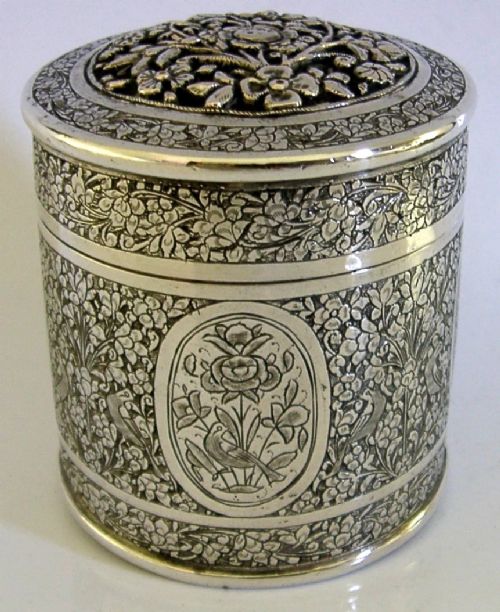


Solid Silver Tea Canister
A solid silver tea canister is a tactile vessel designed to hold dry leaf, most commonly met here in Victorian, Edwardian and Georgian forms.
Solid Silver Tea Canister
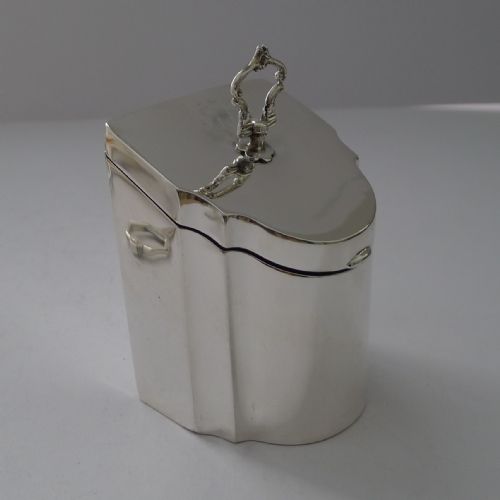
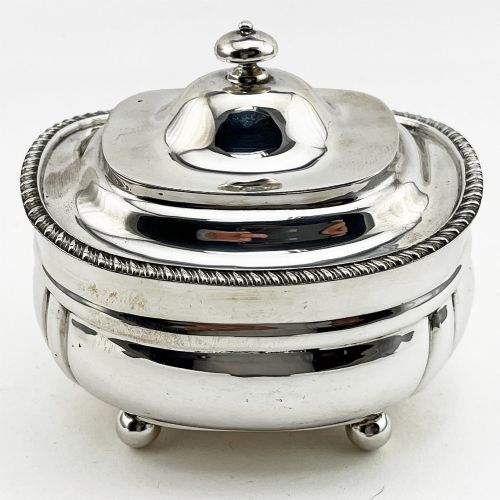
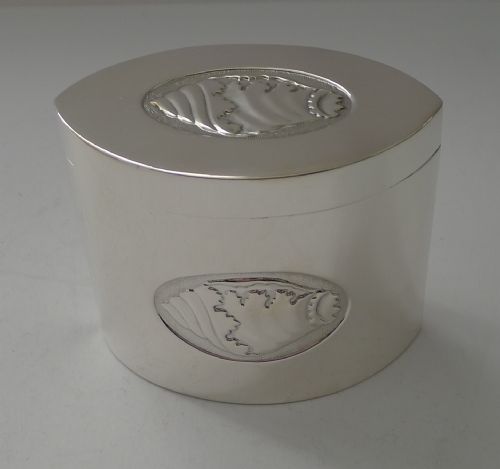
A solid silver tea canister is a metal container historically utilised to store and protect valuable dry tea leaves in domestic settings. When you search for a solid silver tea canister, you encounter vessels shaped as boxes, knife forms, and novelty paint tins originating from British, European, Ottoman, and Indian workshops.
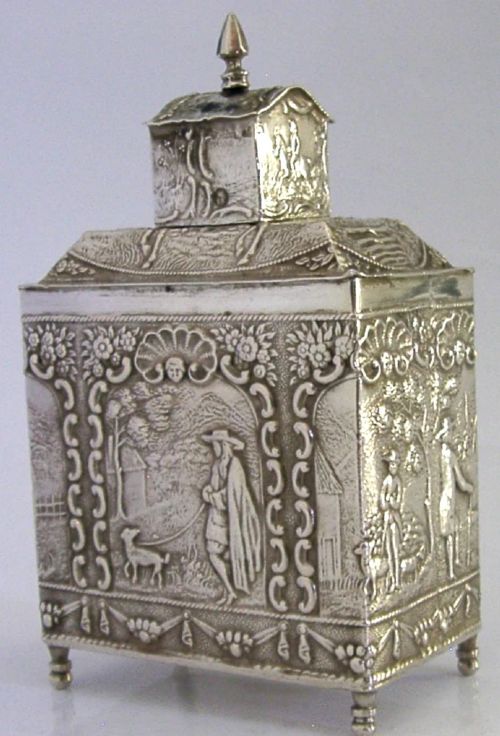
The pieces you meet most frequently on this page span the late nineteenth century and the early twentieth century, carrying hallmarks from assay offices in London, Birmingham, Sheffield, and Chester. Alongside standard British domestic caddies, the selection includes pieces with Dutch rococo revival repousse work, Ottoman ornamentation, and Anglo-Indian designs.
Earlier examples date back to the Georgian period, including mid-eighteenth-century pairs and sets housed in shagreen cases. While many items function purely as lidded containers for leaf, related objects such as caddy spoons and biscuit boxes also appear within the wider grouping.
Materials and construction
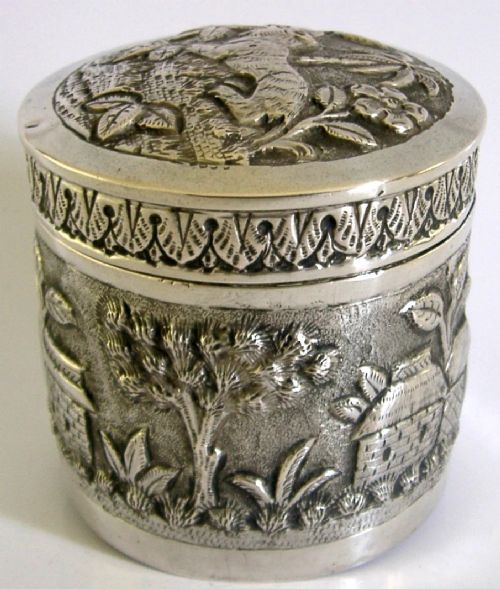
These vessels are fashioned primarily from sterling silver or solid silver, occasionally paired with interior elements of ebonised wood or contrasting materials. Metalsmiths utilised techniques such as hand-hammering, repousse chasing, and casting to build rigid bodies capable of sealing tight against moisture.
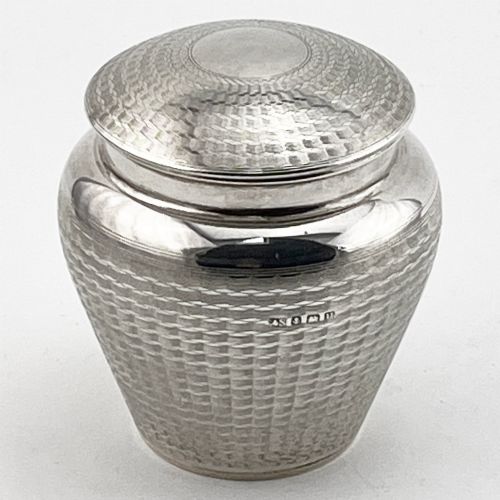
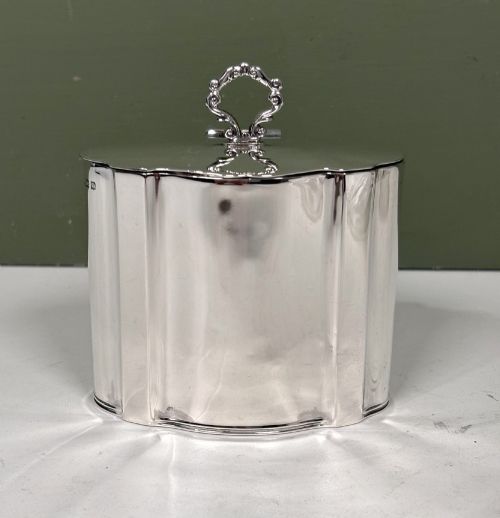
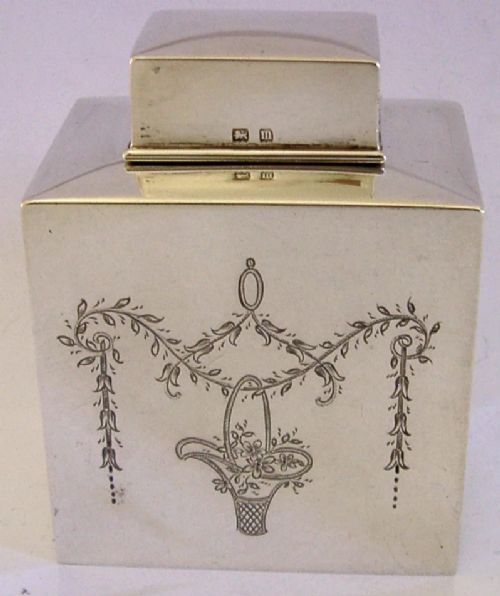
Surface decoration ranges from intricate chased Chinoiserie scenes and Dutch rococo motifs to clean, plain panels typical of George V and Edwardian design. Maker marks, date letters, and assay office symbols are stamped directly into the metal to verify silver standard and origin.
One exceptional Edwardian piece takes the delightful form of a painted metal paint tin, executed entirely in solid silver.
Evaluating standard and manufacture
The calibre of a solid silver tea canister rests upon the thickness of the metal sheet and the integrity of the gauge used by the silversmith. Heavier pieces demonstrate a substantial physical presence, while lighter vessels rely entirely on surface relief for rigidity.
Execution of detail separates workshop output, seen in the crispness of repousse chasing and the precise alignment of fitted lids. Signed pieces by notable makers or retailers carry distinct marks of specialised craftsmanship compared to unmarked provincial items.
Zimmermann·Asprey and Co.·Atkin Brothers·Goldsmiths and Silversmiths Co.·Peter Gillois·Thomas Heming
The Solid Silver Tea Canister Glossary
- Repousse
- A metalworking technique where the silversmith hammers the design from the reverse side to form raised relief on the front. This method creates textured pictorial scenes across the body of the container.
- Assay office
- An official body responsible for testing the purity of precious metal items and stamping them with statutory hallmarks. British offices include London, Birmingham, Sheffield, and Chester.
- Date letter
- A specific alphabetical character stamped into silver to denote the exact year the piece was hallmarked and tested. It serves as the primary method for dating British antique silver.
- Shagreen
- Undressed skin from a shark or ray, historically utilised to cover luxury protective cases for tea caddies. Its distinctive granular texture made it a favoured material in the eighteenth century.
- Sterling silver
- An alloy consisting of silver and other metals, typically copper, maintaining a standard purity proportion. British items meeting this standard carry the lion passant hallmark.
Solid Silver Tea Canister: Frequently Asked Questions
What is a solid silver tea canister?
A solid silver tea canister is a lidded metal vessel historically used to store and preserve dry tea leaves before airtight packaging became common.
These containers range from simple Georgian boxes to elaborate Edwardian repousse cylinders and novelty forms.
How do I date a silver tea canister?
You date a silver tea canister by locating the official hallmarks stamped into the metal by an assay office.
These marks typically include a standard purity symbol, a town mark, and a specific date letter corresponding to the year of manufacture.
Were these containers used for anything else?
While primarily designed for dry tea leaves, some surviving vessels served as trinket boxes or were housed in fitted cases with multiple companion canisters.
Similar boxes from the period were also produced to hold biscuits or sugar.
How do I care for antique silver?
Antique silver benefits from gentle cleaning using a soft cloth and specialised silver polish only when necessary to remove tarnish.
Storing pieces in a dry environment prevents excessive oxidation and preserves the crispness of the original chasing.