


Bright Cut Silver Caddy
A bright cut silver caddy brings eighteenth and nineteenth-century tea storage and serving directly to the modern table.
What these pieces are
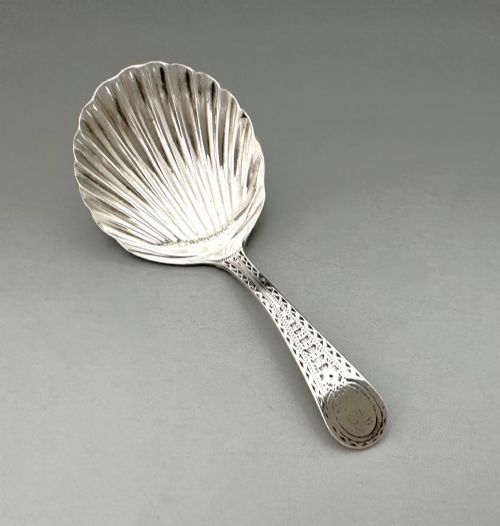
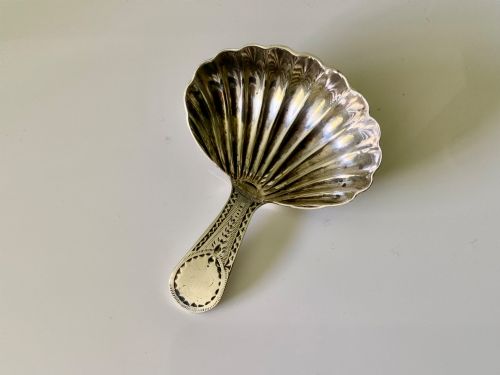
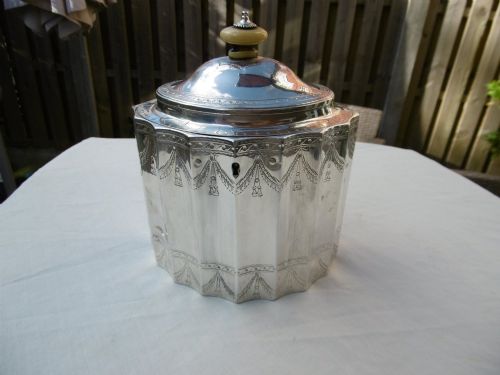
A bright cut silver caddy is a piece of antique silverware designed for storing or serving dry leaf tea during the eighteenth and nineteenth centuries. The objects seen on this page span the eighteenth century and the Victorian era, taking the form of tea caddies and caddy spoons.
The George III period and the Victorian era provide the primary styles for these items, with origins rooted in English manufacture including Sheffield and Birmingham. Buyers meet both substantial storage vessels and smaller serving spoons finished with crisp engraving.
Tea caddies and caddy spoons reflect the changing domestic rituals of elite households where tea was a valuable commodity kept under lock and key. The surviving examples demonstrate how silversmiths applied decorative engraving to both large containers and small implements.
How they were made
Makers fashioned these pieces from sterling silver, shaping vessels and spoons through hammering, fluting, and soldering techniques. Some examples incorporate bone alongside the precious metal to form handles or insulators.
Bright cutting involves faceted engraving where angled V-shaped cuts catch the light to produce a sparkling pattern across the silver surface. Silversmiths used gravers to remove tiny chips of metal, creating geometric borders, floral motifs, and initials.
Early tea drinkers required specialised spoons because tea leaves were far too costly to measure carelessly.
What varies in quality
The depth and precision of the bright cut engraving separate standard items from finer works, as crisp faceted cuts retain their sharp reflectivity over centuries of gentle use. Softer or worn patterns indicate shallow initial cutting or excessive polishing down to the base metal.
Proportion and structural integrity dictate the standing of a piece, particularly in fluted tea caddies where symmetry matters to the overall visual balance. Maker marks left by silversmiths such as Robert Hennell, Atkin Brothers, or Joseph Taylor add distinct historical documentation to superior items.
Robert Hennell·Atkin Brothers·Joseph Taylor
The Bright Cut Silver Caddy Glossary
- Bright cut
- An engraving technique utilising faceted V-shaped cuts that reflect light from multiple angles to create a brilliant decorative pattern. This method distinguishes flat surface decoration from deeper relief work.
- Caddy spoon
- A small spoon specifically designed for measuring loose tea leaves from a caddy into a teapot. These implements frequently feature decorated bowls and short handles shaped to fit inside storage containers.
- Fluted
- Having parallel shallow concave grooves running vertically along the body of an object. This styling adds texture and catches light across curved silver surfaces.
- Sterling silver
- An alloy consisting of pure silver and other metals, traditionally copper, standardised for durability in silverware. Hallmarks stamped onto the metal confirm this composition.
- Hallmark
- A series of official marks stamped onto precious metal items to indicate the maker, standard of purity, assay office, and year of manufacture. These symbols allow collectors to trace the exact origin of a piece.
Frequently Asked Questions
What is a bright cut silver caddy?
A bright cut silver caddy is an antique vessel or spoon decorated with faceted angular engraving designed to catch the light.
These pieces date primarily from the eighteenth and nineteenth centuries and served in the domestic storage and preparation of tea.
How were these silver items used?
Tea caddies stored precious tea leaves securely, while caddy spoons measured out individual portions for the teapot.
Because tea was an expensive commodity, these containers were often kept locked until tea time.
How do I care for antique silver?
Antique silver benefits from gentle cleaning using a soft cloth and specialised silver polish only when necessary to remove tarnish.
Avoiding harsh abras<bos>99 brushes preserves the crisp edges of the bright cut engraving over time.
How can I tell the period of a piece?
Hallmarks stamped into the metal provide specific letters and symbols that reveal the assay office and year of manufacture.
Stylistic details like fluting and the geometry of the bright cut engraving also point toward the George III or Victorian eras.