
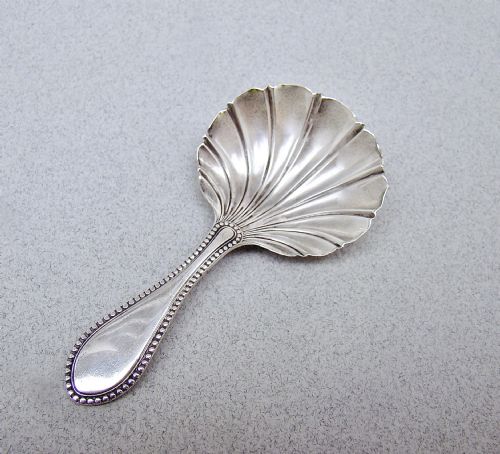
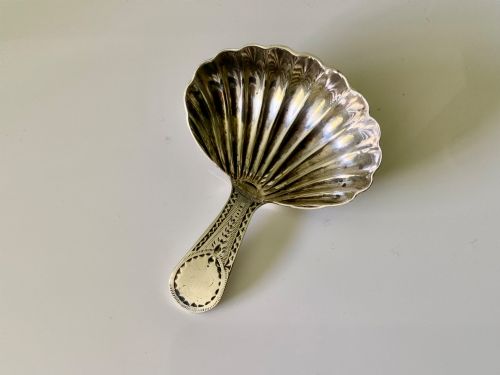
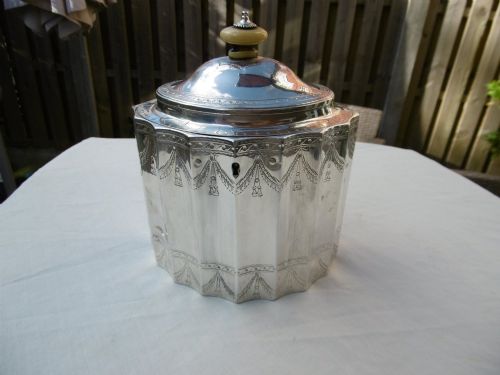
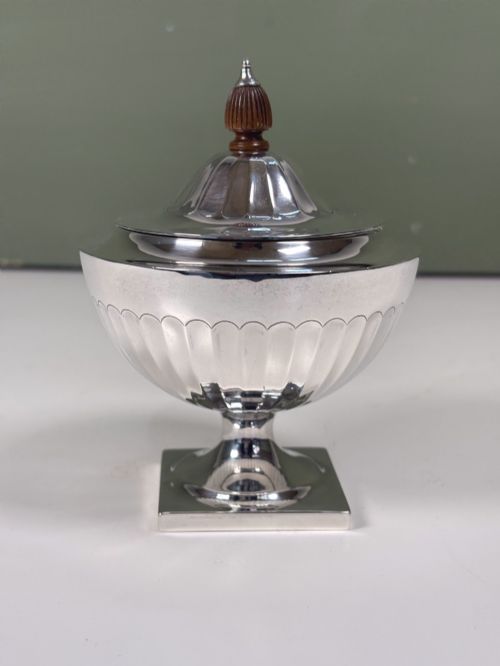
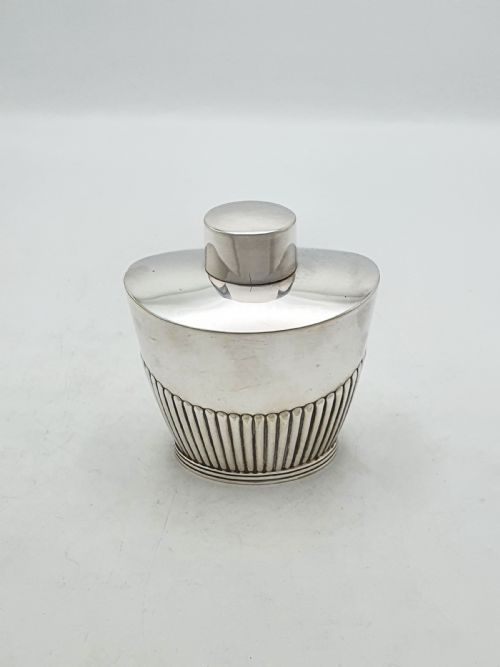


Fluted Silver Tea Caddy
These fluted silver tea caddys are domestic vessels designed to store dry leaves securely, prized by collectors for their tactile fluted surfaces.
What They Are
A fluted silver tea caddy is a container made to hold leaf tea safely on the dining table or sideboard. Examples on this page span the eighteenth century, the Victorian era, and the Edwardian period, appearing in sterling silver, silver plate, and nickel silver.
The forms vary across these dates, encompassing oval, bombe shapes, and bulbous bodies with distinct vertical or half-fluted channeling. The material evidence shows items produced by notable silversmiths alongside unmarked domestic pieces.
How They Were Made
The construction relies on solid sterling silver or silver plate over a base metal, shaped into bodies that frequently incorporate bone elements or ebonised wood details. Silversmiths formed the fluting through precise hammering and repousse techniques against specialised stakes.
Makers added hallmarks to sterling pieces to certify metal purity, while plated versions utilised base metals finished with a silver coating. Interiors sometimes retain traces of wood or bone fittings from their original manufacture.
Retail Price Guide 2026
Typical UK retail prices for fluted silver tea caddy, calculated from the Sellingantiques database of over a million retail prices indexed since 2003. This retail price guide relies exclusively on Sellingantiques data; no external sources or auction records are used, so the figures do not describe the wider market.
Listings feature sterling silver and silver plate items spanning the eighteenth century to the Edwardian era.
What Varies in Quality
Quality rests upon the gauge of the silver and the crispness of the fluted detailing across the body. Pieces with substantial weight and clear hallmarking sit at the upper end of the range compared to plated variants.
The integrity of the form, whether oval, bombe, or half-fluted, dictates visual balance. Master silversmiths achieved harmonious proportions that separate exceptional examples from standard production items.
Robert Hennell·Mappin And Webb·William Neale And Son
The Fluted Silver Tea Caddy Glossary
- Fluted
- Decorated with parallel vertical grooves or channels. This technique catches the light and adds textural depth to the metal surface.
- Bombe
- A bulging, convex shape swelling outwards towards the base. It is a distinctive profile found on select eighteenth and nineteenth-century vessels.
- Sterling silver
- An alloy containing a high proportion of pure silver combined with other metals for durability. British pieces typically bear standard hallmarks.
- Half fluted
- A design where the fluting covers only the lower portion of the body. The upper section remains smooth for engraving or plain display.
Frequently Asked Questions
How do I date my tea caddy?
Check for stamped hallmarks which indicate the assay office and the year of manufacture. Stylistic markers like an Edwardian form or George III styling also help narrow the period.
Compare the construction methods and any engraved ciphers against known benchmark examples from the same decade.
Were these used for green tea?
Tea caddys held valuable imported leaves safely under lock to preserve their precious aromas. Wealthy households stored both black and green varieties in matching pairs or larger wooden caddy boxes.
The fluted silver interiors kept the dry contents secure from damp air and light degradation in the parlour.
What is half fluting?
Half fluting describes a decorative pattern covering only the lower half of the caddy wall. The upper portion stays smooth, offering a contrast in texture.
This style gained particular favour during the Georgian and later Victorian periods for tableware items.
Is silver plate fragile?
Silver plate consists of a thin layer of silver bonded to a base metal like nickel silver. Regular gentle cleaning preserves the plating without wearing through to the base metal.
Avoid abrasive cleaners that strip the delicate silver layer from the underlying substrate over time.