
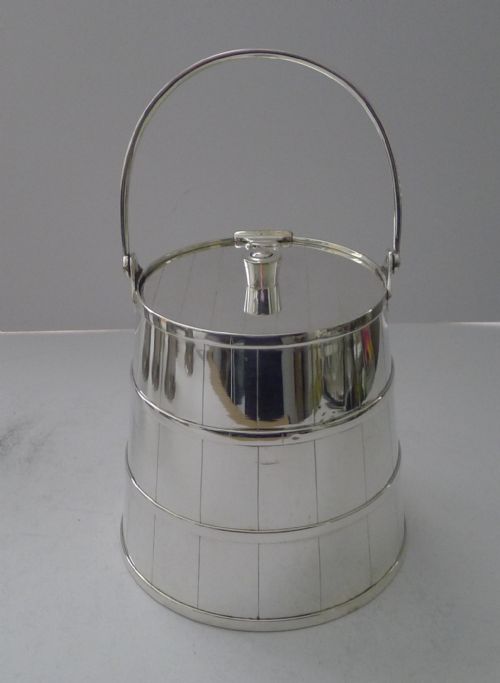
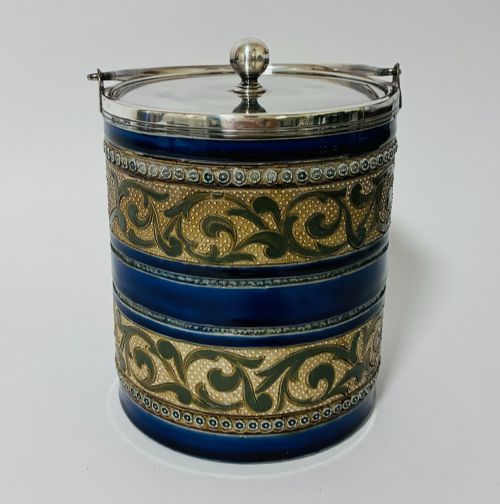
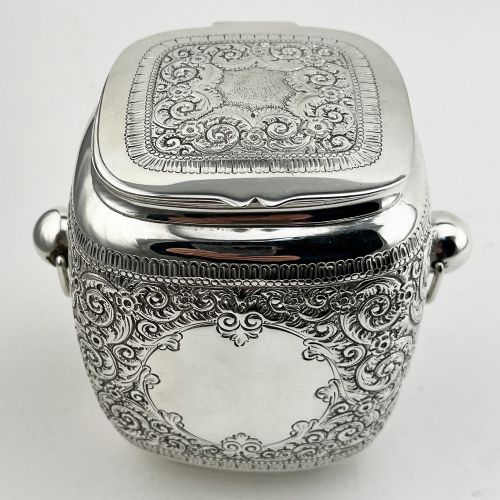
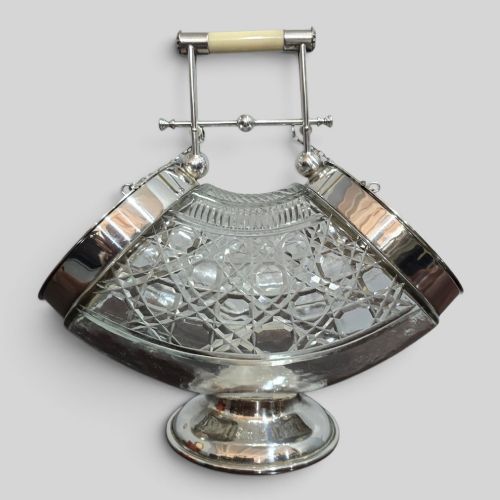
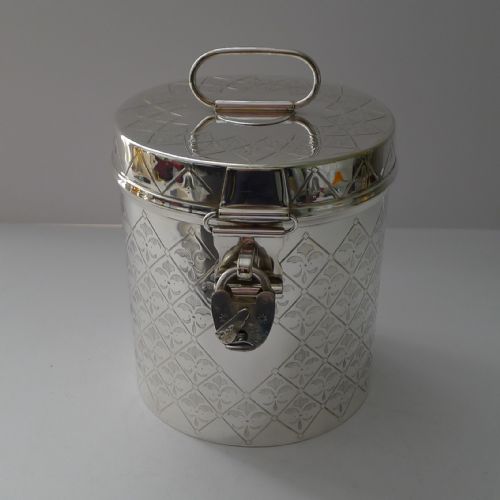

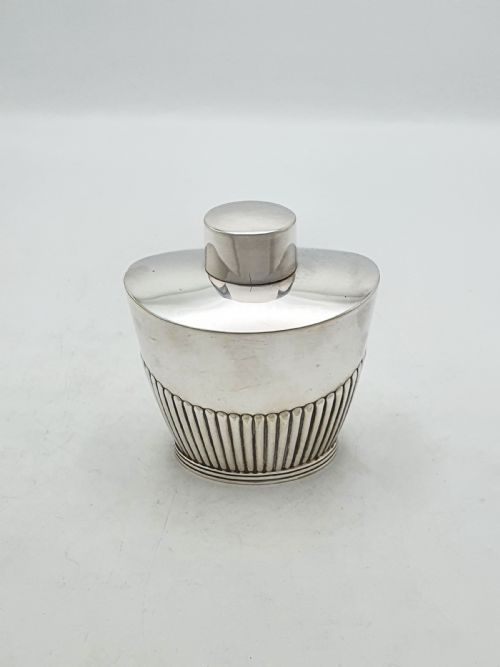


Silver Plated Tea Caddy
A silver plated tea caddy brings domestic metalwork from the Georgian, Victorian and Edwardian eras directly onto the modern table.
Understanding silver plated tea caddy forms
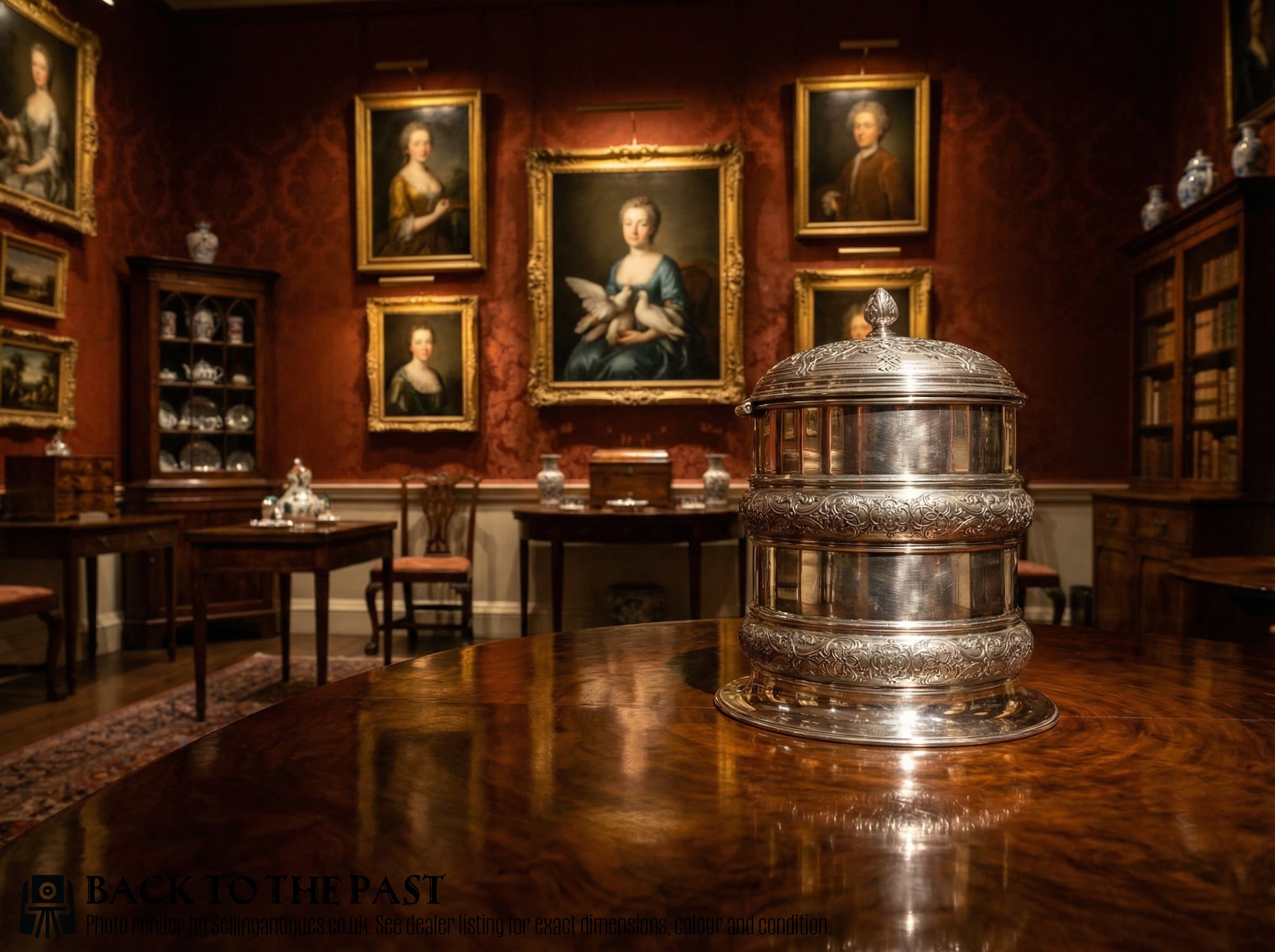
A silver plated tea caddy represents a container designed for storing loose tea leaves, bridging the practical needs of the tea table with decorative metalwork. The options seen here span Georgian, Victorian, Edwardian and later periods, capturing changes in domestic hospitality over two centuries.
The most common versions met on this page are Edwardian canisters and urns, alongside earlier Georgian and 19th-century interpretations in round, octagonal, rectangular and novelty shapes. Alongside traditional lidded canisters, the selection occasionally incorporates related domestic vessels such as oak biscuit barrels and tiffin boxes decorated with metal mounts.
Makers ranged from specialist silversmiths to large manufacturing firms, utilising styles that include Neoclassical, Empire Revival and Art Deco. These vessels reflect the changing social rituals of tea drinking, transitioning from locked luxury items to accessible dining table accessories.
Materials and construction methods
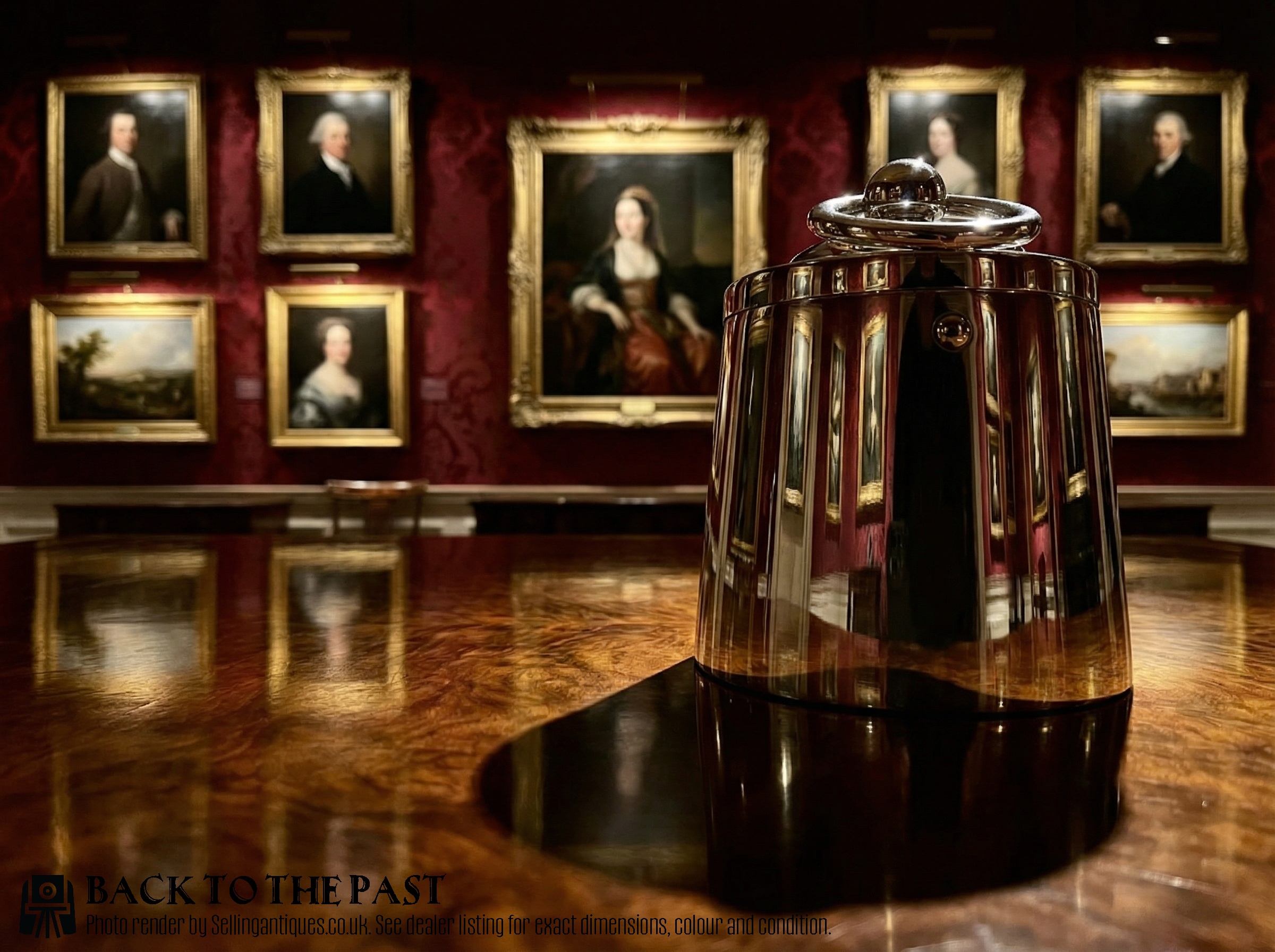
The underlying metal of these pieces commonly includes copper, nickel silver or brass, which serves as a base for applied silver layers. Early 19th-century pieces often utilise Old Sheffield Plate, a method of fusing a thin sheet of silver to a copper core.
Later Victorian and Edwardian examples employ electroplating, a technique developed in the 1840s that allowed silver to be deposited uniformly onto a base metal using electrical current. Many designs incorporate secondary materials such as oak bodies, brass fittings and interior linings.
Retail Price Guide 2026
Typical UK retail prices for silver plated tea caddy, calculated from the Sellingantiques database of over a million retail prices indexed since 2003. This retail price guide relies exclusively on Sellingantiques data; no external sources or auction records are used, so the figures do not describe the wider market.
Victorian makers occasionally transformed tea caddy designs into playful novelty shapes, casting metal containers to resemble stacked weights, motor cars and knife boxes.
Distinctions in manufacture and design
The distinction between standard commercial production and superior execution lies in the depth of hand-engraving, the crispness of cast relief work and the weight of the underlying metal. Pieces produced by prominent workshops display greater attention to interior finishing, tight lid closures and substantial hinge mechanisms.
The choice of base metal and plating method also signals the standard of production, with fused Old Sheffield Plate and heavy gauge electroplating showing distinct physical characteristics compared to lighter mass-market items. Additionally, the presence of original components, such as matched spoons, locking keys and fitted wooden interiors, elevates the integrity of an individual piece.
Mappin & Webb·Elkington & Co·William Hutton·Hukin & Heath·Christofle·Asprey·Atkin Brothers
The Silver Plated Tea Caddy Glossary
- Old Sheffield Plate
- An early method of fusing silver to a copper ingot before rolling them into sheets together. The underlying copper often shows at edges and wear points.
- Electroplate
- A technique using electrical current to coat a base metal, such as nickel silver or copper, with a thin layer of pure silver. This process largely replaced older fusion methods by the mid-19th century.
- Neoclassical
- A design style drawing inspiration from classical antiquity, featuring urn shapes, symmetry, swags and delicate engraving. This aesthetic appears frequently on Edwardian tea canisters.
- Empire Revival
- A decorative style reviving the grandeur of the French First Empire, noted for formal classical motifs and bold architectural lines. Pieces in this style often incorporate laurel wreaths or lion paw feet.
- Repoussé
- A metalworking technique where the design is hammered into relief from the reverse side. This creates tactile surface decoration on the body of the container.
Frequently Asked Questions
What is a silver plated tea caddy?
A silver plated tea caddy is a lidded container historically used to store dry tea leaves securely away from moisture and air. These vessels were kept in dining rooms or parlours during the Georgian, Victorian and Edwardian periods.
Because tea was a valuable commodity, early examples often included locking mechanisms to restrict access. Over time, the form evolved from a functional storage box into a decorative accessory for the table.
How were these caddies used originally?
In prosperous households, the mistress of the house kept the key to the tea storage and measured out the leaves personally for each pot. The container sat on the tea table alongside porcelain services and sugar bowls.
Many surviving examples include matched spoons or compartments designed for blending different varieties of black and green tea leaves. Their presence on the table signalled both hospitality and social status.
How can I tell Old Sheffield Plate from later electroplate?
Old Sheffield Plate involves a sheet of silver fused physically to a copper base, which frequently reveals a thin reddish copper line where the metal has worn down along sharp edges or high points. This fusion technique was largely superseded in the 1840s by electroplating.
Electroplated items generally show an even layer of silver over a white metal alloy like nickel silver, or a uniform silver coating over copper without the distinct edge-bleed characteristic of fused plates.
How do I care for a silver plated tea caddy?
Maintain the surface by dusting gently with a soft, dry cloth and avoiding abrasive chemical cleaners that can strip the thin silver layer. Store the piece away from damp environments to protect any interior wooden linings or base metals.
If polishing is necessary, use a specialist silver cloth or a mild, non-abrasive cream formulated specifically for plated antiques, applying light pressure along the contours of any engraving.