


Edwardian Silver Biscuit Box
An Edwardian silver biscuit box is a refined dining table accessory designed to store dry sweets, most frequently met here in silver plate and cut glass.
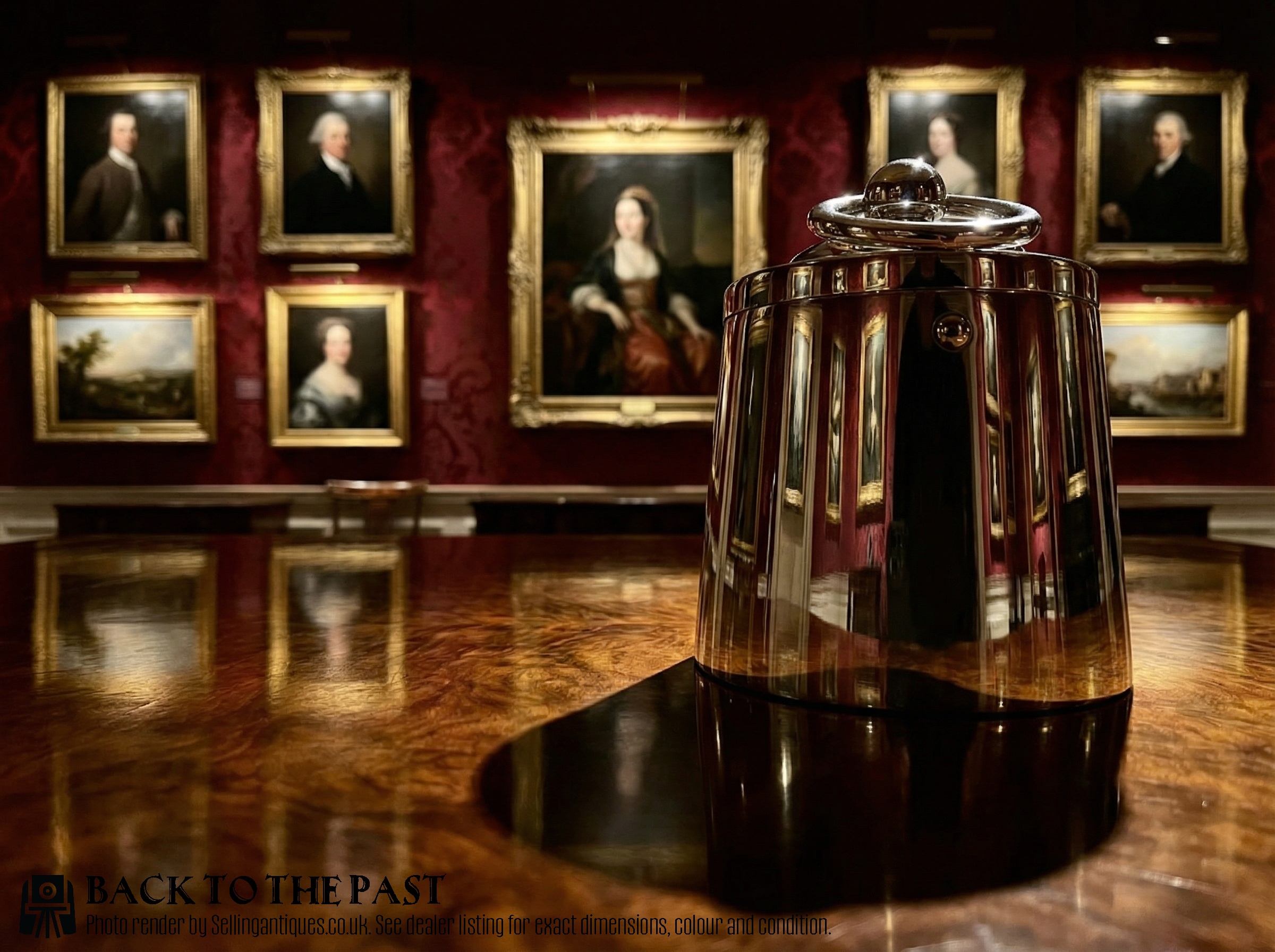
Edwardian Silver Biscuit Box
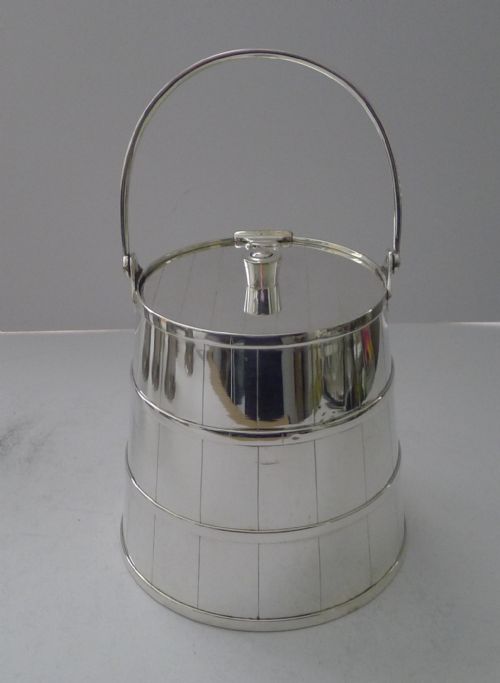
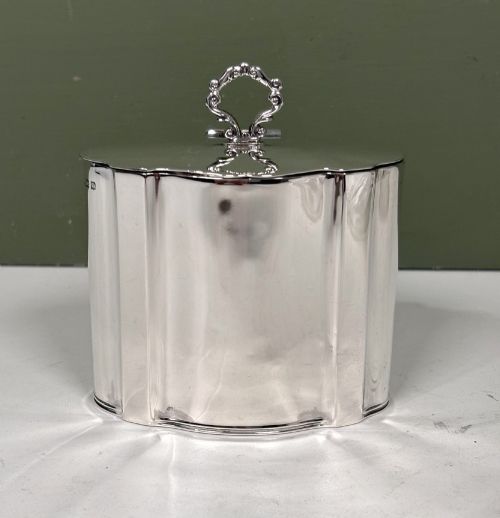
When you search for an Edwardian silver biscuit box, you encounter table containers created for formal domestic entertaining. The examples on this page span styles from Victorian through Edwardian and George V, taking the form of barrels, drums, and boxes.
Most pieces you meet combine silver plating with cut glass or oak, though solid sterling silver versions also appear. Makers adapted these vessels into novelty shapes like weights or ice buckets alongside traditional cylindrical forms.
The origin centres firmly on British manufacture, with prominent firms producing barrels featuring hinged lids and swing handles. These containers sat upon drawing room and dining tables to hold biscuits safely under lock or cover.
Materials and construction
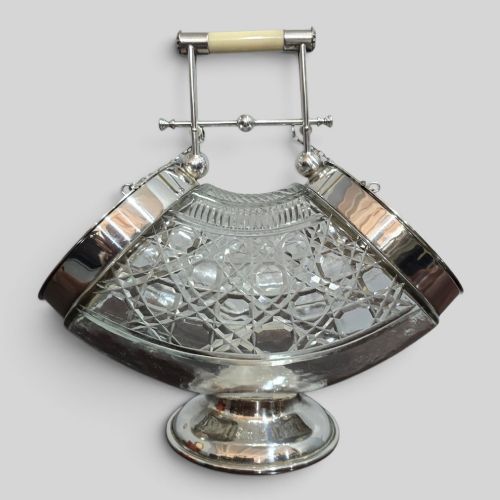
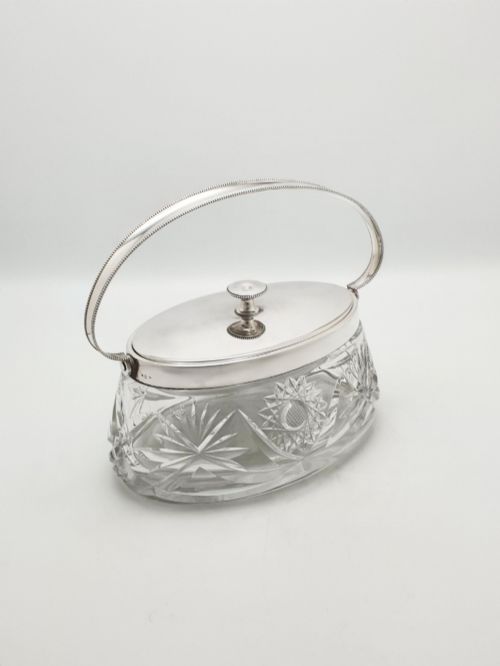
Silversmiths utilised sterling silver and electroplated nickel silver to form the mounts, lids, and swing handles that encase glass bodies or oak staves. Mounts often display pierced decoration, bright-cut engraving, or smooth polished surfaces.
Glass liners and bodies were heavy-gauge and frequently cut with hobnail, faceted, or twisted patterns to catch the light. Oak barrels relied on tight cooperage techniques, bound with metal hoops and fitted with hinged silver-plated lids.
Materials documented across the pieces include solid sterling silver, silver plate, cut glass, cranberry glass, and English oak.
Distinctions in quality
Quality rests upon the weight of the metal, the crispness of the glass cutting, and the integrity of the hinge mechanism. Substantial gauge silver plate and deep, sharp facets on cut glass elevate a piece above simpler utilitarian items.
Maker attribution and unusual forms, such as novelty weights or automated mechanisms, distinguish finer examples. The harmony between the fitted glass liner and its metal mount demonstrates superior craftsmanship.
Thomas Bradbury·John Grinsell And Sons·James Dixon And Sons·WMF
The Edwardian Silver Biscuit Box Glossary
- Silver plate
- A thin layer of silver fused to a base metal such as nickel silver. This technique allowed makers to produce substantial dining wares at a lower cost than solid silver.
- Hobnail cut
- A decorative pattern cut into glassware featuring a series of sharp, pyramid-like points. It provides a tactile surface that reflects light brilliantly.
- Swing handle
- A movable arched handle attached to the sides of a barrel or box via pivot pins. It allows easy lifting while resting flat against the rim when not in use.
- Sterling silver
- An alloy consisting of pure silver and other metals, usually copper, standardised for purity. Hallmarks stamped into the metal verify this specific composition.
- Cut glass
- Glass shaped and patterned by holding it against rotating abrasive wheels. Deep incisions create complex geometric designs across the body of the vessel.
Edwardian Silver Biscuit Box: Frequently Asked Questions
What is an Edwardian silver biscuit box?
These vessels are lidded containers made to hold biscuits on the dining or drawing room table. They combine metalwork mounts with glass bodies or wooden staves.
Craftsmen produced them in various forms, including cylindrical barrels, drum shapes, and novelty designs. They remain practical decorative objects for modern interiors.
How were these biscuit boxes used?
Victorian and Edwardian households placed them on sideboards or tables during afternoon tea and formal dinners. The lidded design kept biscuits dry and protected.
Servants filled the glass or wooden interiors before bringing them out for guests. The swing handle allowed easy transport around the room.
How do I clean a silver biscuit box?
Wipe silver-plated or sterling mounts gently with a soft microfibre cloth and specialised silver polish. Avoid abrasive cleaners that strip thin plating.
Remove glass liners for washing in warm soapy water. Dry wooden elements promptly to protect the grain and metal fittings.
How do I date an Edwardian biscuit box?
Examine hallmarks on solid silver pieces to find specific date letters and assay office marks. Stylistic cues like Jugendstil influences or heavy oak construction help narrow the era.
Many pieces rely on registry numbers or maker marks recorded in historical archives. Comparing the cut glass patterns also offers chronological context.