


Silver Plated Cookie Jar
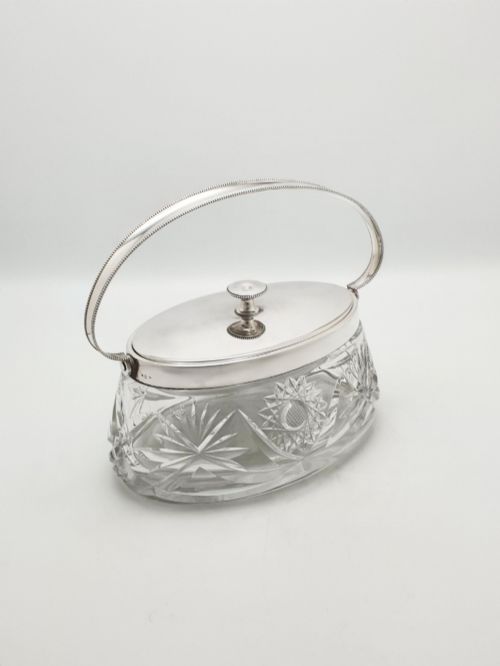
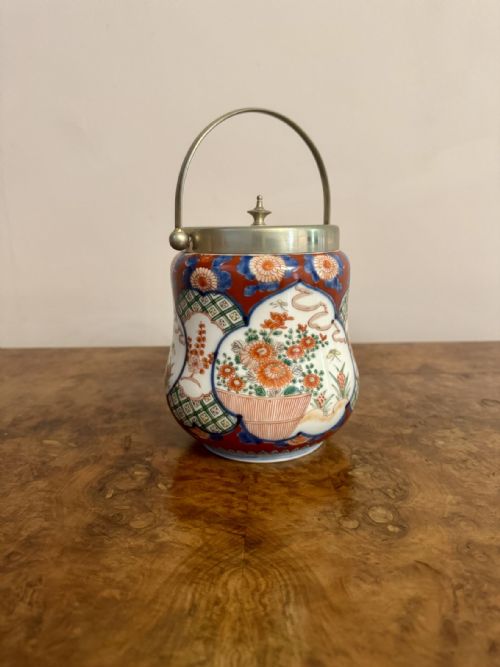
These silver plated cookie jar examples, known historically as biscuit barrels, combine silver mounts with glass or ceramic bodies for the dining table.
Silver Plated Cookie Jar
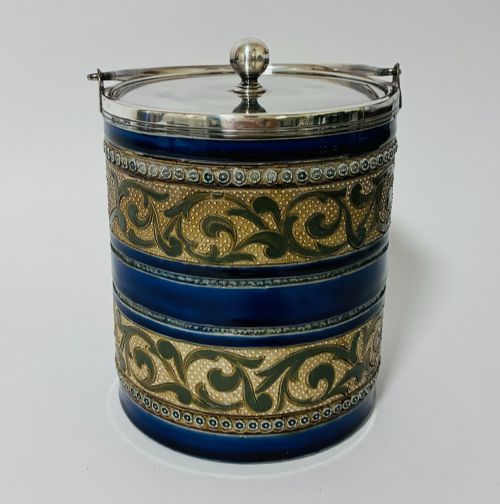
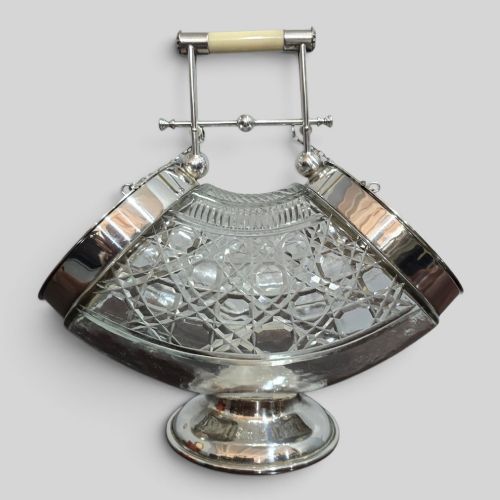
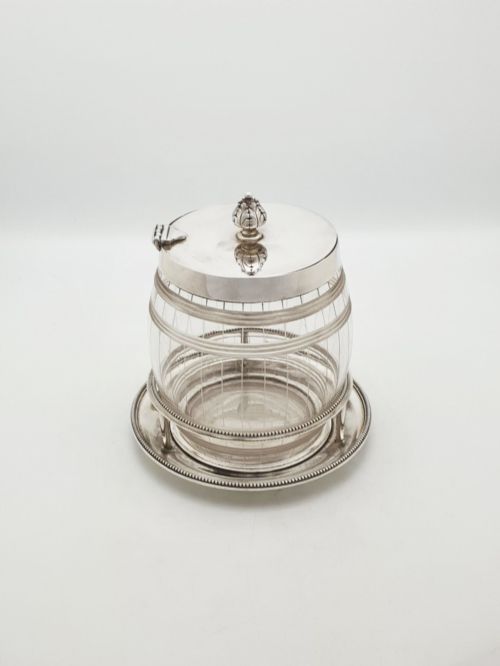
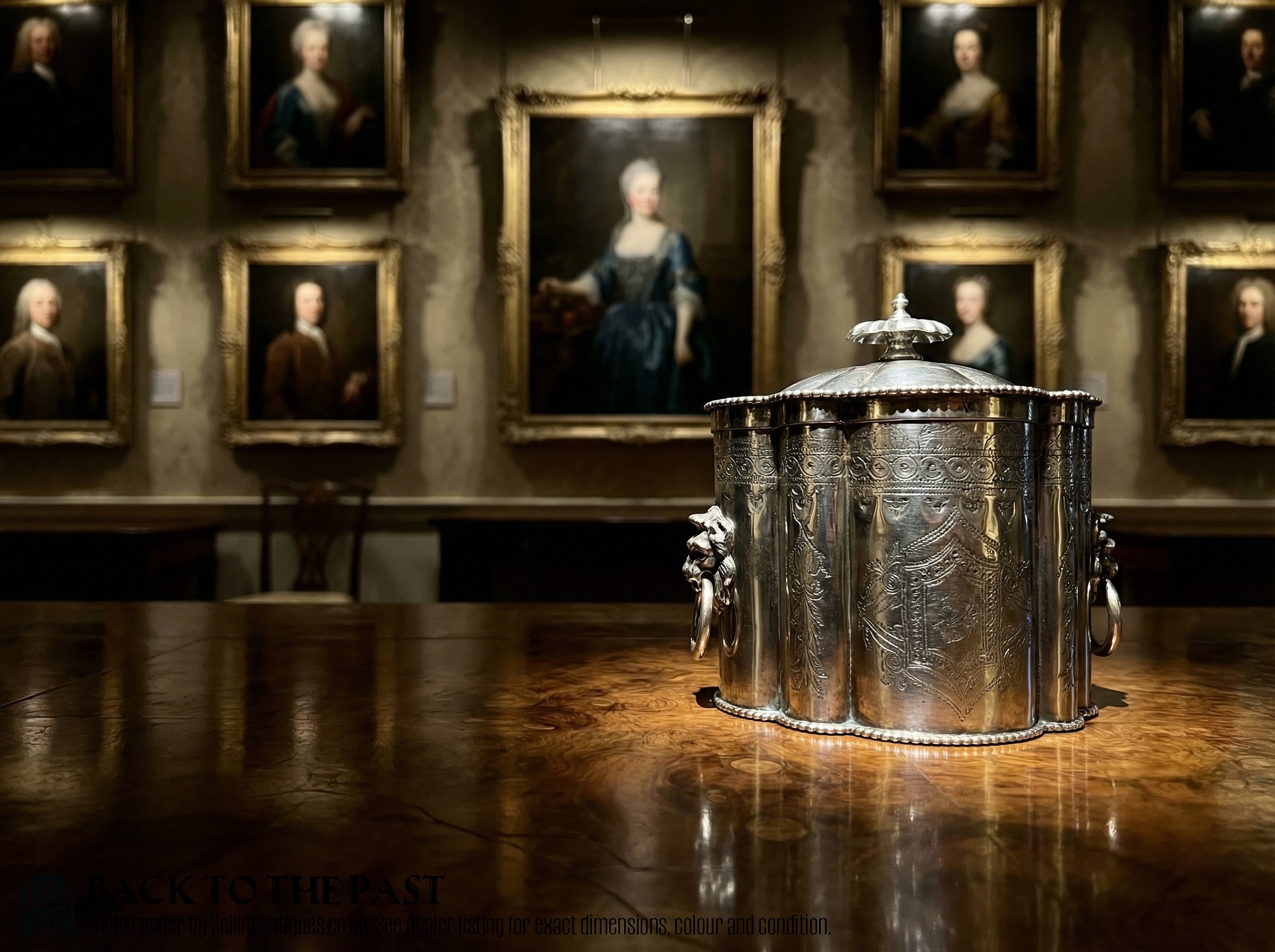
A silver plated cookie jar, historically termed a biscuit barrel or biscuit box, serves as a container designed for storing and serving dry baked goods. The pieces seen here span the Victorian and Edwardian periods, stretching from the eighteen sixties into the nineteen twenties. Buyers encountering this category will find a mix of ceramic bodies, glass liners, and wooden frames encased in silver plate.
Ceramic iterations feature bodies produced by potteries such as Doulton Lambeth, Wedgwood, Carlton Ware, and Crown Devon, often rendered in Jasperware or flow blue earthenware. Glass versions utilise cut glass, hobnail cut patterns, faceted designs, and cranberry glass. Oak is also utilised as a primary material for cylindrical drum forms and novelty shapes.
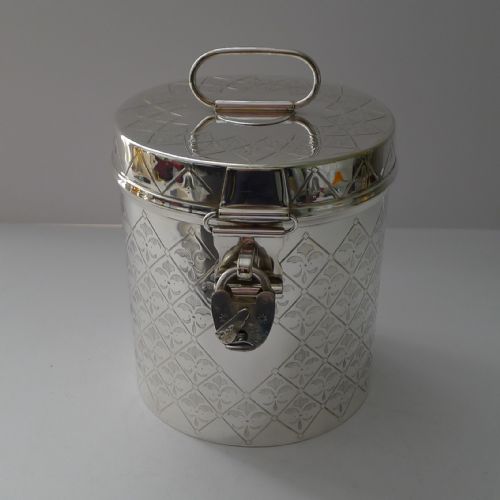
The dominant forms are table-standing barrels, boxes, and jars fitted with hinged lids, swing handles, and occasionally locking mechanisms or stands. Stylistic influences range from standard Victorian and Edwardian aesthetics to Neoclassical, Arts and Crafts, Jugendstil, and Japanese Imari.
How they were made
Makers combined silver plate with various non-metallic bodies by mounting rims, swing handles, lids, and footed bases onto ceramic inserts or glass liners. The metal components were electroplated onto a base metal foundation, while ceramic bodies were thrown or moulded in earthenware, stoneware, or Jasperware.
Glass bodies relied on hot-working techniques such as moulding, blowing, and subsequent cold-cutting to create hobnail, faceted, and twisted surface patterns. Oak elements were turned on lathes and fitted with metal bands, hinges, and heraldic finials.
Silver Plated Cookie Jar Retail Price Guide 2026
Typical asking prices for silver plated cookie jar among the pieces listed under this phrase on Sellingantiques today, from the lower quarter to the upper quarter. They describe what is for sale here now, not the wider market.
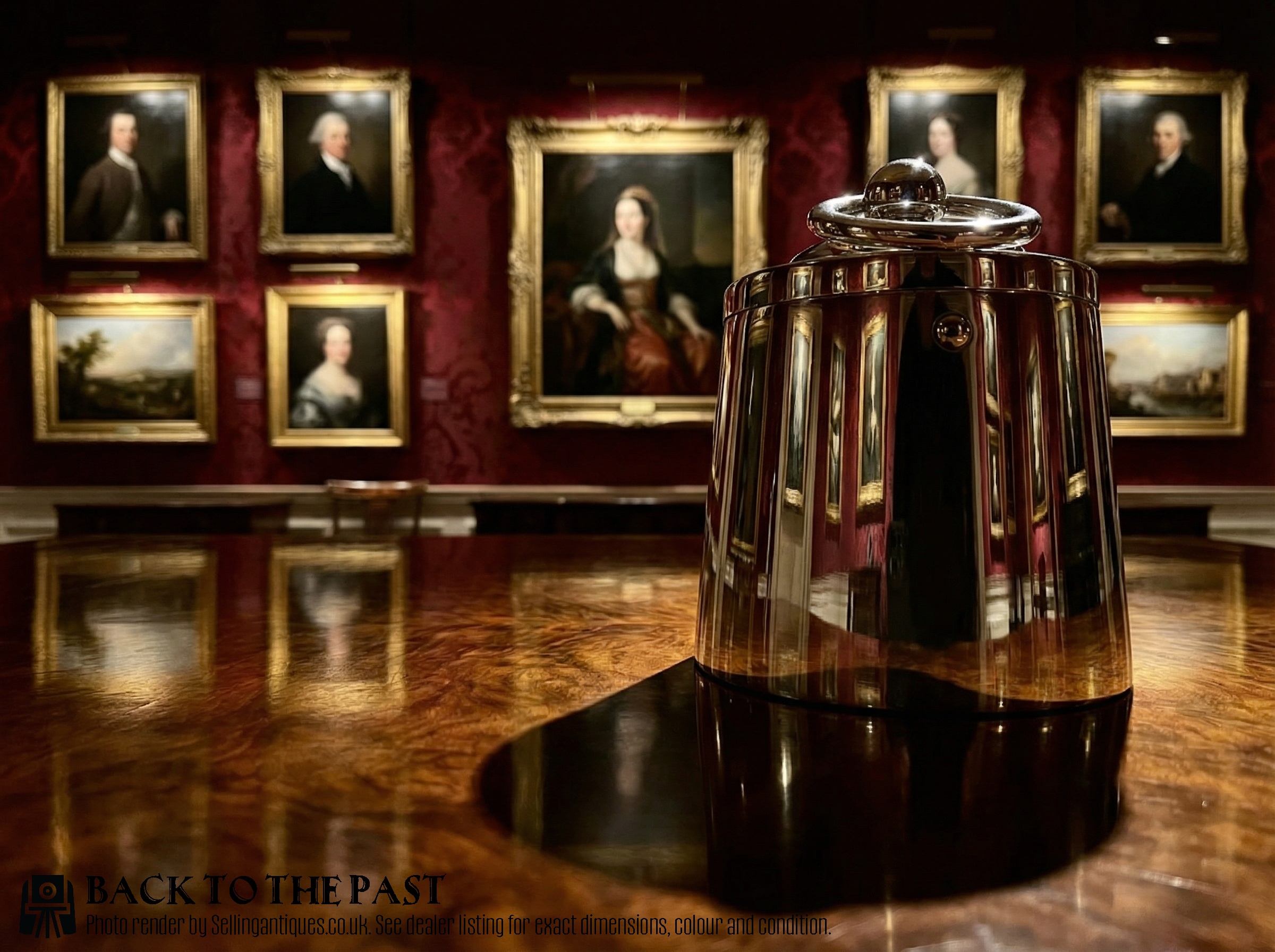
Several makers produced novelty biscuit boxes cast in the exact shape and weight of heavy twenty-eight pound metal trade weights.
What varies in quality
Quality rests upon the weight and thickness of the silver plating and the crispness of the chased or engraved ornament on the mounts. Heavier gauge metalwork and secure hinge mechanisms distinguish superior examples from lighter productions.
The clarity and depth of the cut glass or the precision of ceramic moulding from factories like Wedgwood and Doulton dictate the tier of the piece. Integrated stands, locking lids with keys, and unusual novelty forms elevate individual items within the broader range.
Mappin and Webb·Elkington and Co·Robert and Belk·Walker and Hall·John Grinsell and Sons·Doulton Lambeth·Wedgwood·Carlton Ware·Crown Devon·WMF
The Silver Plated Cookie Jar Glossary
- Biscuit barrel
- A covered container designed specifically for holding dry biscuits or cookies on the dining table. They gained popularity during the Victorian period.
- Silver plate
- A layer of silver bonded to a base metal core through electroplating or older fusion methods. It allowed manufacturers to produce durable tableware with the appearance of solid silver.
- Jasperware
- A type of unglazed stoneware developed by Wedgwood, characterised by a contrasting coloured relief applied against a solid background. Blue and multi-colour variations appear frequently.
- Cranberry glass
- A rich red-pink glass coloured through the addition of gold chloride during manufacture. It was blown and moulded into decorative tableware during the nineteenth century.
- Hobnail cut
- A raised, faceted surface pattern cut into glassware resembling the head of a traditional hobnail boot. This technique maximises light refraction across the body.
Silver Plated Cookie Jar: Frequently Asked Questions
What is a silver plated cookie jar?
A silver plated cookie jar is a covered tabletop container intended for biscuits, originating in British households during the Victorian era. These vessels protect baked goods from moisture while presenting them attractively during after-dinner socialising.
Most examples combine a glass liner, ceramic body, or wooden structure with silver plated mounts, lids, and swing handles. They were standard accessories in middle and upper-class dining rooms.
How were biscuit barrels used?
These containers sat on the dining table or sideboard, filled with dry biscuits or cookies served at the conclusion of a meal. Hosts operated the hinged lids to offer refreshments to guests.
Some iterations included locking mechanisms to restrict access to the contents, while others featured matching stands or dedicated serving tongs.
How do I date an antique biscuit barrel?
Dating relies on stylistic clues, ceramic factory marks, and the presence of maker stamps on the silver plated mounts. Victorian pieces often display heavier ornamentation, while Edwardian examples lean towards lighter floral motifs and brighter glass.
Makers such as Elkington, Walker and Hall, and Wedgwood often stamped their output with specific registry or manufacturing ciphers that narrow down the year of production.
How do I care for silver plate?
Silver plate requires gentle cleaning with a soft cloth and a specialised silver polish formulated to avoid abrasive damage to the thin metal layer. Regular dusting prevents tarnish accumulation on the mounts and handles.
Glass liners and ceramic bodies should be washed separately in warm soapy water, ensuring no moisture remains trapped beneath the metal mounts where corrosion might occur.