


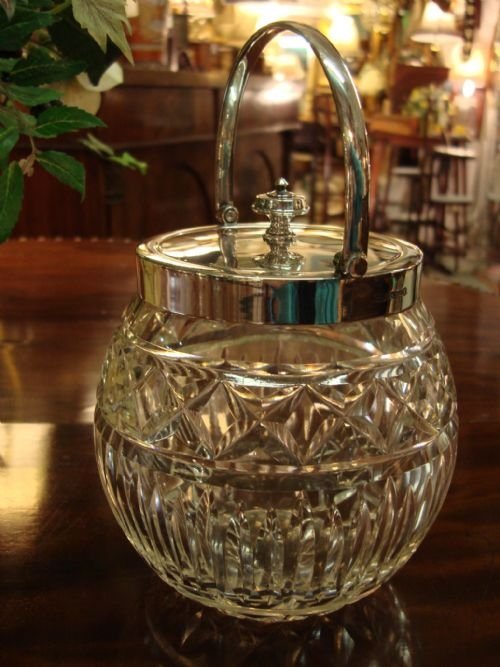
Cut Glass Biscuit Jar
A cut glass biscuit jar is a heavy, lidded container designed for the drawing room, combining brilliant glass bodies with metal mounts.
Cut Glass Biscuit Jar
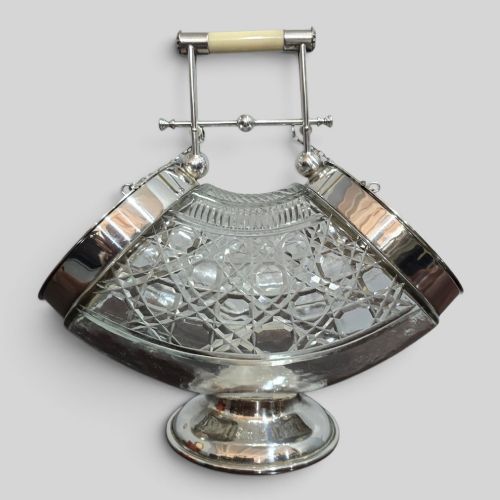
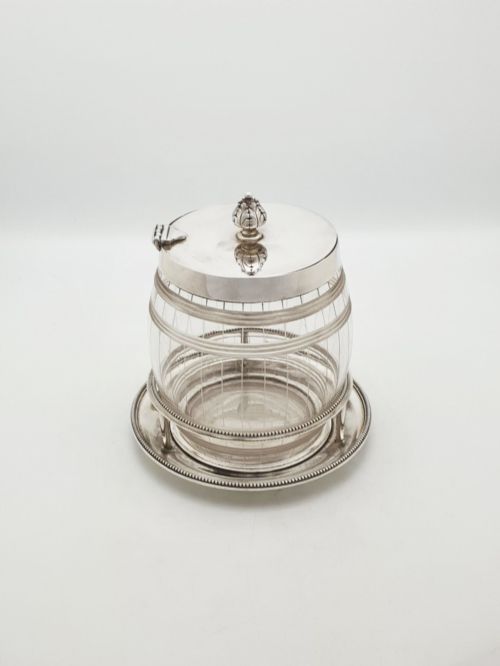
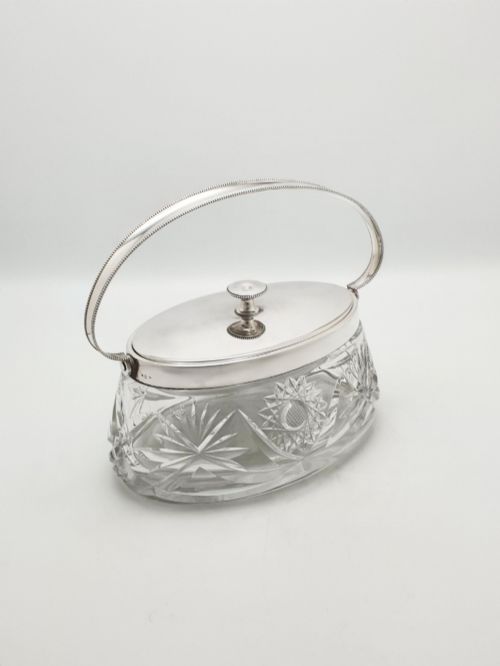
When you search for a cut glass biscuit jar, you encounter heavy containers designed to hold dry biscuits and sweets on a Victorian or Edwardian sideboard. These vessels appear in forms such as barrels, boxes, and jars, frequently accompanied by matching stands or swinging handles.
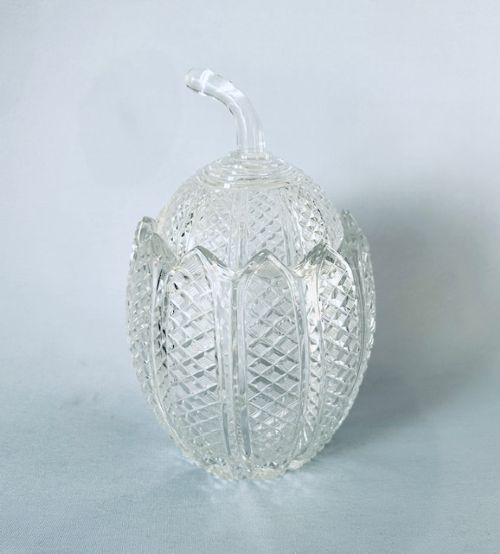
The pieces on this page span several decades, reaching from the Georgian period through the Victorian and Edwardian eras into Art Deco and the 1930s. Victorian and Edwardian examples dominate the selection, offering hobnail patterns, cranberry glass, and novelty shapes like melons.
Makers utilised heavy lead crystal and cut glass bodies, pairing them with silver plate, sterling silver, or specialised metalwork from firms like Elkington, WMF, Walker and Hall, and James Dixon and Sons.
What varies in quality
Quality rests upon the depth and crispness of the glass cutting, where sharper facets catch the light more intensely than softer, moulded alternatives. The weight of the lead crystal and the clarity of the material further separate standard production from superior examples.
The metal mounts dictate the upper tier of the range, distinguishing simple silver plate from hallmarked sterling silver mounts or elaborate cast finials like heraldic dragons and novelty melon shapes by notable makers.
Cut Glass Biscuit Jar Retail Price Guide 2026
Typical asking prices for cut glass biscuit jar among the pieces listed under this phrase on Sellingantiques today, from the lower quarter to the upper quarter. They describe what is for sale here now, not the wider market.
Certain Victorian biscuit containers take the form of a ribbed melon complete with a stem-like lid, mimicking the fruit on the sideboard.
Elkington·WMF·Walker and Hall·James Dixon and Sons
The Cut Glass Biscuit Jar Glossary
- Hobnail cut
- A pattern of raised, sharp-pointed tetrahedral studs cut into the glass surface. This tactile geometric decoration maximises the refraction of light across the barrel.
- Silver plate
- A thin layer of silver bonded to a base metal foundation. It provides the bright finish seen on the handles and rims of many Victorian examples.
- Sterling silver
- An alloy containing a high proportion of pure silver, marked with official hallmarks. It appears on mounts and lids produced by silversmiths.
- Cranberry glass
- A rich red glass coloured by the addition of gold chloride to the molten batch. It lends a deep ruby tone to certain Victorian biscuit containers.
- Jugendstil
- The continental European manifestation of Art Nouveau style. This aesthetic influences the flowing metal mounts found on select period boxes.
Cut Glass Biscuit Jar: Frequently Asked Questions
What were cut glass biscuit jars used for?
These vessels held dry biscuits, shortbread, and sweet treats served during afternoon tea in formal nineteenth and early twentieth century households. They sat upon sideboards or dining tables, ready for the host to offer guests refreshments.
The close-fitting lids kept the contents dry and fresh within the heavy crystal bodies, while the metal handles allowed servants or hosts to carry them easily between rooms.
How do I date a biscuit barrel?
Dating relies on combining the stylistic details of the metal mounts with the manufacturing techniques visible in the glass. Victorian pieces often feature heavy hobnail cutting and elaborate silver-plated frames, while Edwardian and later examples lean toward cleaner faceted designs.
Silver mounts frequently carry hallmarks or maker stamps that pinpoint the exact year of manufacture. Examining the registry marks or maker signatures on the metal components provides a reliable chronological anchor.
What is the difference between a jar and a barrel?
Makers and sellers use terms like jar, barrel, box, and caddy interchangeably across historical records. The distinction generally lies in the profile, with barrels often featuring slightly rounded, stave-like proportions and horizontal handles.
Jars and boxes present straighter or faceted vertical walls with hinged or lift-off covers. Despite the terminology, all served the identical domestic function of storing and presenting biscuits.
How do I care for antique glass and silver?
Wash the glass body in warm, soapy water using a soft cloth, avoiding harsh abrasives that might scratch the surface. Dry the crystal thoroughly immediately after washing to prevent water spots.
Polish the silver-plated or sterling silver mounts gently with a dedicated silver cloth, taking care not to let polish residue build up in the cut glass crevices.