


Embossed Silver Tea Caddy
An embossed silver tea caddy brings tactile decoration and period weight to the table, holding dry leaves safely in style.
Embossed Silver Tea Caddy
When you search for an embossed silver tea caddy, you look at hollowware containers designed to hold tea leaves safely away from light and dampness. These vessels range from Georgian origins to Victorian and Edwardian revivals, appearing in oval, square, and rectangular forms.
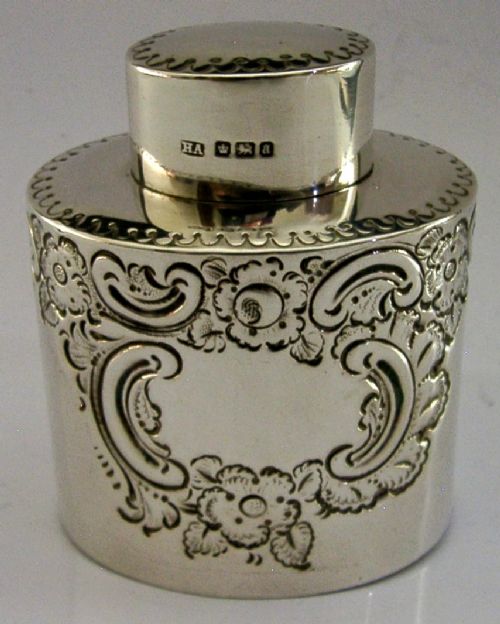
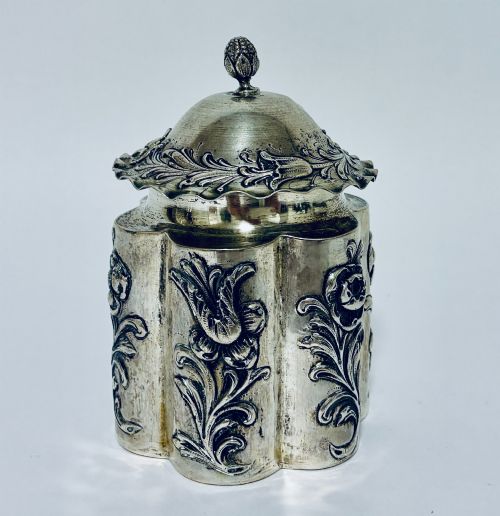
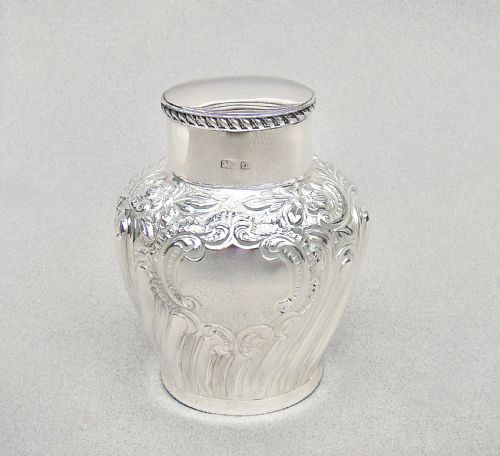
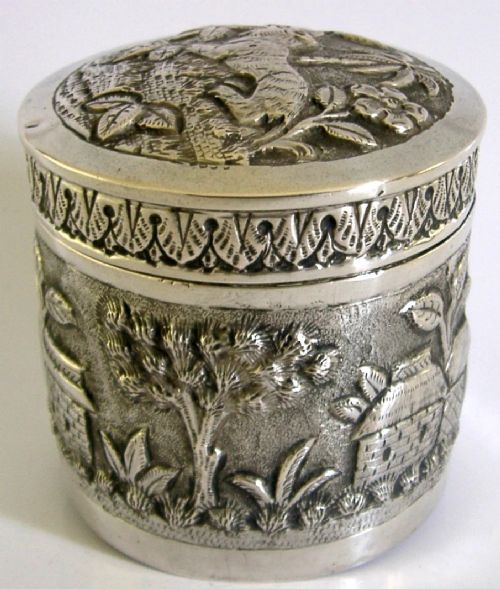
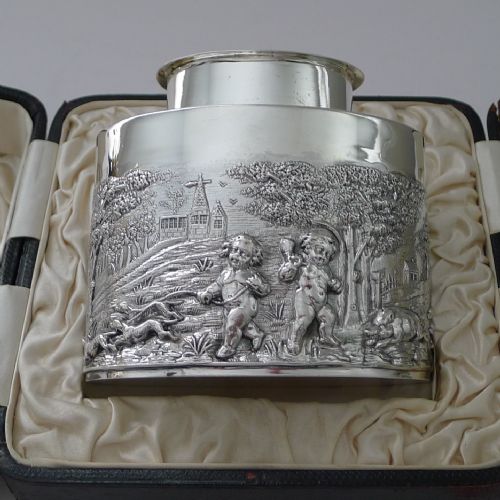
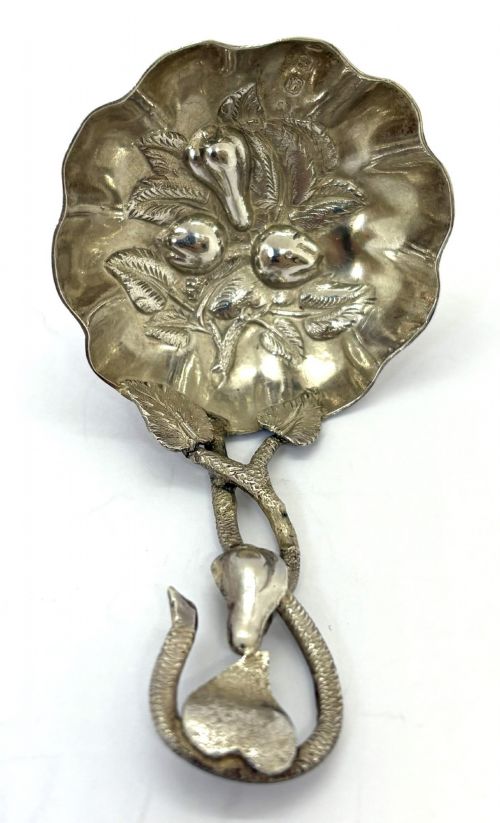
The version you are most likely to meet on this page is a Victorian or Edwardian sterling silver container decorated with repoussé and chased floral or scroll motifs. Alongside standard caddies, the selection occasionally includes related items such as caddy spoons and canisters.
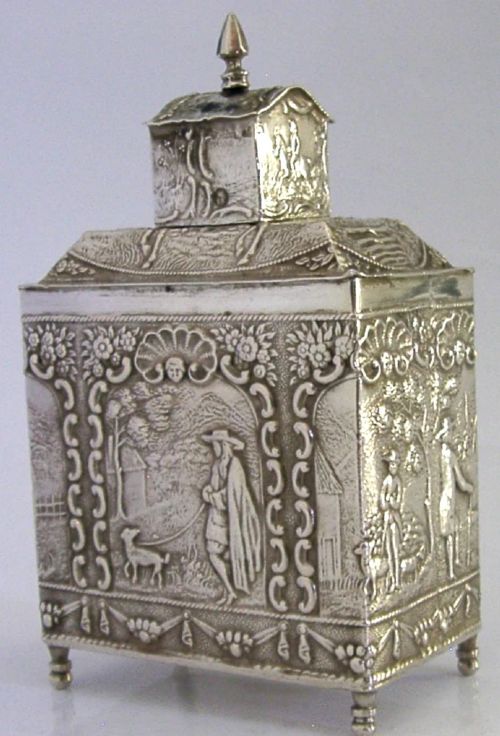
Origins stretch across English workshops, continental European centres, and Anglo-Indian makers, reflecting diverse global tastes in domestic silver. Each piece bears the distinct aesthetic of its period, whether through Dutch Rococo revival designs or classic British oval shapes.
How They Were Made
Silversmiths formed these containers primarily from solid sterling silver or silver plate, hammering flat sheets into hollow bodies. Workshops utilised techniques like raising and seaming to build the central canister before applying lids and mounts.
Decoration relied heavily on repoussé and chasing, where artisans pushed and hammered the metal from both sides to create raised relief patterns. This process resulted in deep textures of scrolls, flowers, and occasional figural scenes that defined the surface.
Listings feature items spanning the Georgian period, the Victorian era, and the Edwardian years, executed in sterling silver, silver plate, and copper.
What Varies in Quality
The standard of a piece rests largely on the crispness and depth of the metalwork. Sharply defined chasing and substantial metal weight distinguish finer examples from lighter, flatter stampings that lack tactile presence.
Maker reputation and structural integrity further divide the range. Fully legible hallmarks, well-fitted lids that close securely, and thick-gauge metal indicate superior workshop output compared to unmarked or heavily worn alternatives.
Thomas Hayes·William Hutton & Sons Ltd·Thomas Shepherd·William Comyns·Deakin & Francis
The Embossed Silver Tea Caddy Glossary
- Repoussé
- A metalworking technique where the artisan hammers metal from the reverse side to create a raised design on the front. This method gives embossed tea caddies their characteristic three-dimensional surface texture.
- Chasing
- The complementary process to repoussé, worked from the front side to refine details, push back background metal, and sharpen lines. It adds crisp definition to floral motifs and scrolls.
- Sterling Silver
- An alloy consisting of ninety-two point five percent silver and seven point five percent other metals, usually copper. It provides the durable standard for British domestic tableware.
- Sheffield Plate
- An early fused metal process involving a layer of silver melted onto a thicker copper base. It appears on older serving pieces before electroplating became common.
- Hallmark
- An official stamp applied to precious metals indicating the purity standard, assay office, and year of production. These marks allow collectors to date pieces accurately.
- Pull Off Lid
- A simple cover that lifts straight off the neck of the container without hinges. Many oval and cylindrical tea caddies utilise this form.
Embossed Silver Tea Caddy: Frequently Asked Questions
What is an embossed silver tea caddy used for?
These vessels originally stored expensive loose-leaf tea in wealthy households, protecting the dry leaves from moisture and air.
Today, buyers use them as decorative mantel ornaments, vanity containers, or practical desk storage for small items.
How do I clean my silver tea caddy?
Maintenance requires gentle washing with warm soapy water and a soft cloth to remove dust and oils.
Harsh abrasive polishes should be avoided because they wear away the fine chased details and thin the metal over time.
How can I tell a Victorian caddy from a Georgian one?
Georgian examples often display simpler, cleaner lines or restrained classical engraving typical of the late eighteenth century.
Victorian and Edwardian pieces tend to feature heavier, more exuberant repoussé decoration inspired by earlier revival styles.
Are all tea caddies made of solid silver?
Many surviving examples consist of solid sterling silver or continental silver grades marked accordingly by assay offices.
Others utilise silver plate or old Sheffield plate, where a thin layer of silver covers a base metal core.