
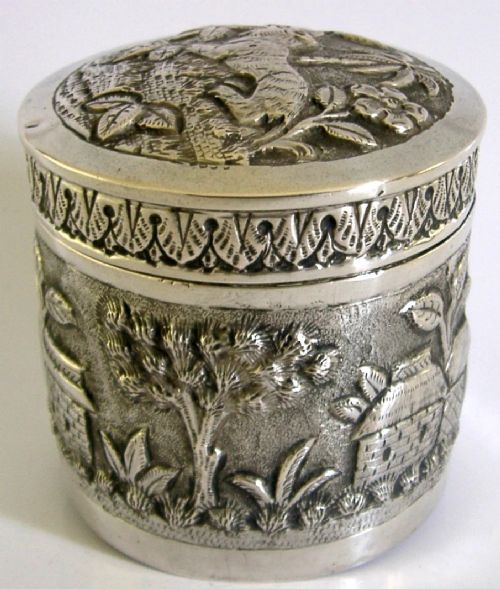
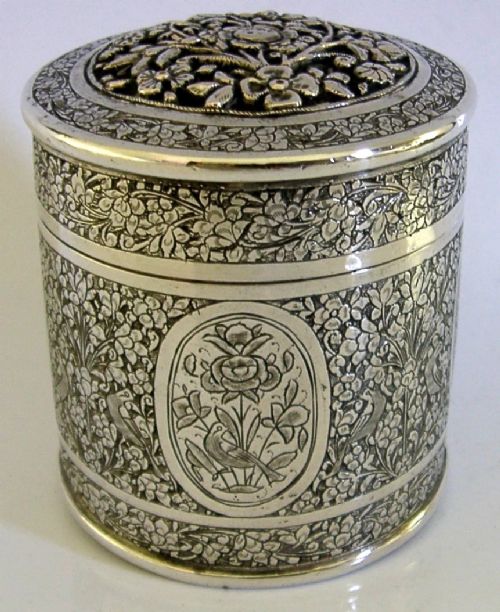
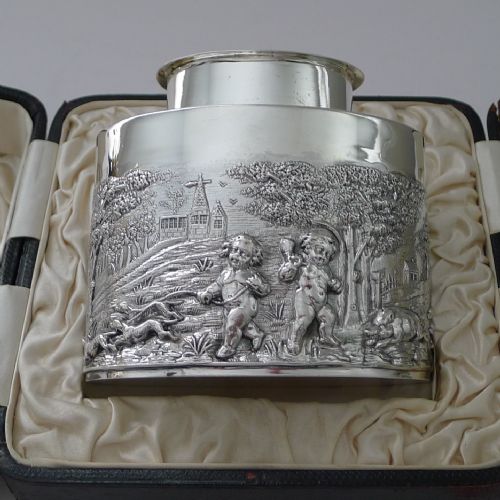
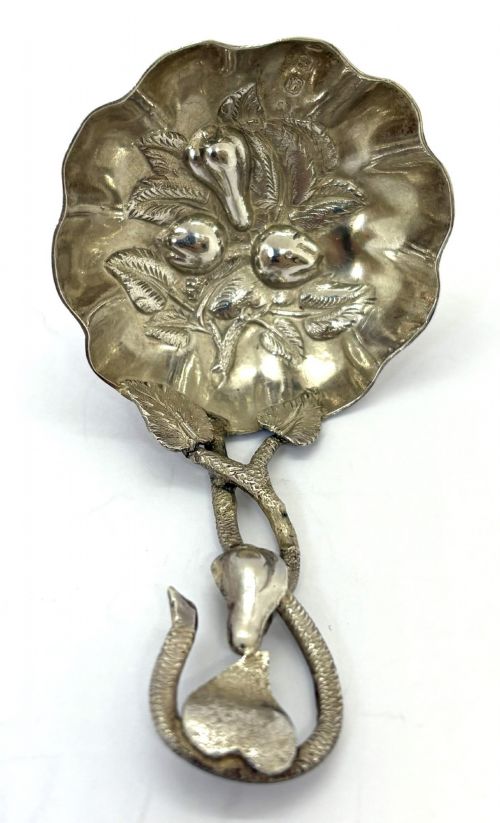


Repousse Silver Tea Caddy
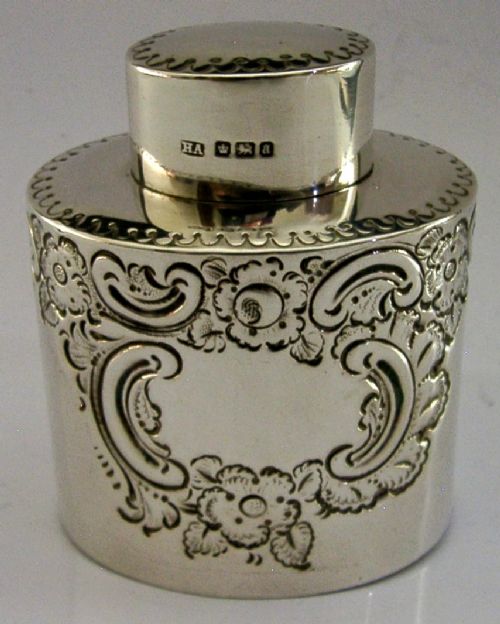
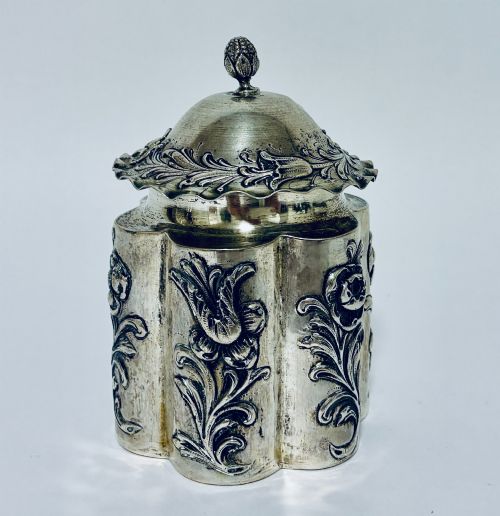
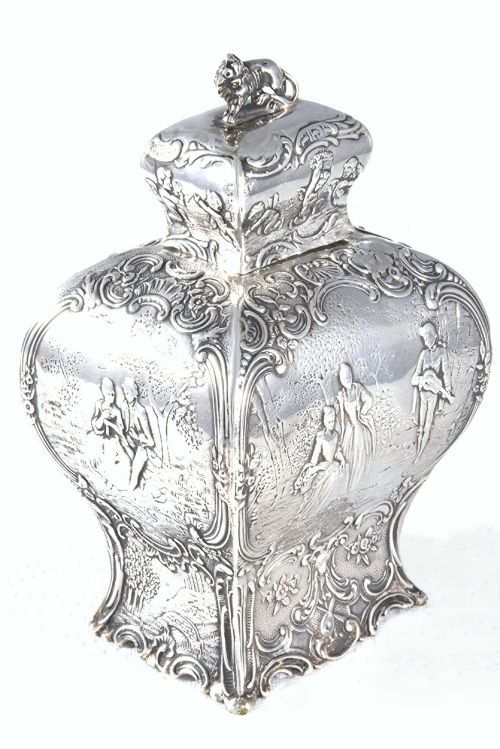
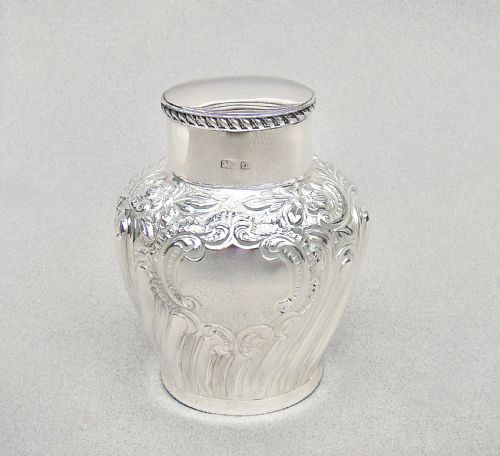
These repousse silver tea caddy examples offer functional storage with textured relief work that brings historical design directly into a room.

What they are
A repousse silver tea caddy is a lidded container designed for storing loose leaf tea leaves, shaped in oval and standard forms. These pieces appear across Georgian, Victorian, and Edwardian periods, alongside a Georgian Revival style.
The selection includes specific items such as an oval sterling silver tea caddy with a pull-off lid from 1890, alongside examples originating from London in 1902 and Birmingham by William Hutton & Sons Ltd in 1905.
How they were made
Makers utilised sterling silver as the primary material for constructing these containers, shaping the metal into distinct forms like oval bodies. The construction incorporates lidded designs, featuring components such as pull-off lids.
Decoration relies on repousse techniques, hammering the metal from the reverse side to raise ornamental designs in relief on the exterior surface. This method creates tactile surface patterns across the body of the caddy.
Retail Price Guide 2026
Typical UK retail prices for repousse silver tea caddy, calculated from the Sellingantiques database of over a million retail prices indexed since 2003. This retail price guide relies exclusively on Sellingantiques data; no external sources or auction records are used, so the figures do not describe the wider market.
Listings feature sterling silver tea caddy examples spanning Georgian, Victorian, and Edwardian periods alongside Georgian Revival styles.
What varies in quality
Quality differences emerge in the crispness and depth of the repousse hammering, where sharper relief work demonstrates greater skill from the silversmith. The definition in ornamental motifs separates standard production items from finer workshop output.
The weight of the sterling silver and the precise fit of the pull-off lid indicate the overall standard of manufacture. Thicker gauge metal and well-balanced proportions distinguish superior examples within the range.
William Hutton & Sons Ltd
The Repousse Silver Tea Caddy Glossary
- Repousse
- A metalworking technique where the artisan hammers the reverse side of a sheet of silver to form a raised design in relief on the front. This process allows detailed ornamental scenes and patterns to emerge across the surface.
- Sterling silver
- An alloy consisting of pure silver and other metals, usually copper, to increase durability while maintaining a bright lustre. This material forms the primary construction medium for the caddies.
- Pull-off lid
- A snug-fitting cover that lifts vertically off the opening of the container without a hinged mechanism. This lid type relies on precise metal shaping to secure the contents.
- Georgian
- A historical period spanning the reigns of the first four Georges, known for classical proportions and refined decorative arts. Items from this era reflect distinct eighteenth and early nineteenth-century design tenets.
- Edwardian
- The period covering the reign of King Edward VII, characterised by lighter decorative styles and sophisticated manufacturing techniques. Pieces from this era often display refined detail and structured forms.
Frequently Asked Questions
What is a repousse silver tea caddy?
A repousse silver tea caddy is a metal container created for holding loose tea, decorated with hammered relief ornamentation on the exterior.
These pieces span periods from the Georgian era through to Edwardian times, offering functional storage with detailed surface work.
How were these tea caddies used?
These containers were utilised in the home to store valuable dry tea leaves securely away from moisture and light in a domestic setting.
The inclusion of lids, such as pull-off versions, helped preserve the aroma of the contents between uses in the dining or drawing room.
How do I date a silver tea caddy?
Dating relies on examining hallmarks stamped into the sterling silver, which indicate the assay office, standard, and year of manufacture.
Stylistic elements such as the Georgian oval form or Edwardian shaping also provide guidance on the approximate period of production.
How should I live with silver tea caddies?
These objects function well as decorative display pieces on sideboards or mantelpieces, bringing historical craftsmanship into everyday interior spaces.
Occasional gentle cleaning helps maintain the lustre of the sterling silver without disturbing the textured repousse relief details.